Follow Us on Google

By Henry Uche
The Human and Environmental Development Agenda (HEDA Resource Centre) and the Michael Imoudu National Institute for Labour Studies (MINILS) have called on the Federal Government to strengthen regulatory enforcement, improve transparency in the extractive sector and prosecute financiers behind illegal mining as part of efforts to address corruption, environmental degradation and labour exploitation in Nigeria.
The call formed part of resolutions adopted at the Joint National Conference on Illegal Mining, Corruption and Climate Implications, organised by MINILS in partnership with HEDA on 3 November 2026 at the MINILS campus in Ilorin, Kwara State.
The conference, themed “Safeguarding the Future: Addressing the Nexus of Illegal Mining, Corruption and Climate Resilience in Africa”, brought together government institutions, anti-corruption agencies, labour unions, civil society organisations, professional associations and community representatives to examine the economic, environmental and social consequences of illegal mining.
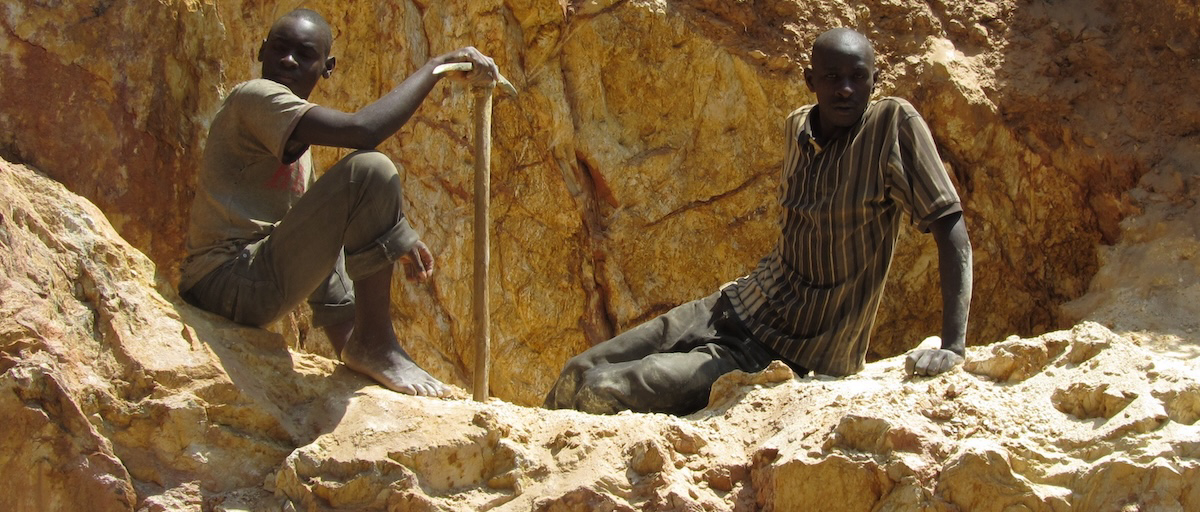
The conference identified illegal mining as more than an environmental offence, describing its growing implications for national security, economic stability, public accountability and the livelihoods of mining communities.
Participants raised concerns over the loss of national revenue through illicit mineral extraction and the export of unprocessed resources, alongside environmental pollution, destruction of agricultural livelihoods and the exposure of host communities to hazardous substances.
The deliberations also highlighted the relationship between illegal mining, organised criminal networks and insecurity, with participants calling for stronger collaboration among regulatory and law enforcement institutions to tackle the financiers and beneficiaries of illicit mineral operations.
A major concern raised at the conference was the need to ensure that economic development activities and energy transition programmes did not undermine workers’ rights and livelihoods.
Discussions under the panel theme, “Labour Unions and the Just Energy Transition in Nigeria: Protecting Jobs, Livelihoods, and Workers’ Rights”, examined the implications of asset transfers by international oil companies, the potential loss of workers’ accrued benefits, pension defaults, employment casualisation and the need to guarantee decent work in emerging green energy and climate adaptation sectors.
The conference stressed that the transition to cleaner energy and sustainable economic practices must be guided by the International Labour Organization’s Decent Work standards, with adequate safeguards for workers and host communities.
Among its major recommendations, the conference called for the establishment of a multi-agency monitoring task force and reporting mechanism involving labour unions, the Economic and Financial Crimes Commission (EFCC), the National Environmental Standards and Regulations Enforcement Agency (NESREA) and the Nigeria Security and Civil Defence Corps (NSCDC) to identify, monitor and report suspicious mining activities.
It further commended the EFCC on its recent busting of the illegal lithium processing site and crude oil refinery in Ifere, Ogun State.
Other News
It also called for the implementation of a comprehensive beneficial ownership registry in the extractive sector to expose individuals and corporate interests operating behind illegal mining activities.
Participants further urged the Federal Government to integrate targeted anti-corruption measures into the implementation of Nigeria’s Climate Change Act and establish a credible Just Transition Fund, alongside a Workers’ Charter of Demands developed with the direct participation of affected workers.
Other recommendations include enforcing a “No Agreement, No Licence” policy, requiring Community Development Agreements and Labour Impact Clearances before the issuance of mining licences or approval of asset transfers; mandating at least 30 per cent local processing and value addition of extracted minerals before export; and directing 30 per cent of statutory mining royalties to host communities for environmental remediation, infrastructure and social protection.
The conference also advocated the formalisation, training and support of artisanal miners through cooperative frameworks, while urging security agencies to intensify efforts against criminal financing networks.
It called for stronger environmental and health safeguards, the adoption of cleaner technologies, improved security along mineral transportation routes and increased community education on the social, economic and environmental consequences of illegal mining.
On labour rights, participants emphasised the need to protect trade union independence, strengthen inter-union solidarity and ensure that workers’ terminal benefits were preserved during industry restructuring and asset transfers.
They also called for structured social dialogue among government, employers, trade unions and civil society organisations to ensure that workers and affected communities were meaningfully represented in decisions concerning the energy transition.
The conference further recommended the launch of a nationwide Green Accountability Campaign to sensitise workers and host communities to the links between illegal mining, climate threats, economic sabotage and the erosion of local livelihoods.
A communiqué was formally adopted by representatives of the two convening institutions, including the Director-General/Chief Executive Officer of MINILS, Issa Aremu, and the HEDA chairman, Olanrewaju Suraju.
The resolutions provide a framework for coordinated action by government institutions, regulatory agencies, labour organisations, civil society and host communities towards tackling illegal mining, strengthening accountability, protecting workers’ rights and advancing climate resilience in Nigeria.