Follow Us on Google

Doctors seek drug subsidy as patients rush to prayer houses for solution to soaring cases of hypertension, high blood pressure and obesity
From Okwe Obi, Abuja
Nigeria’s medical sector is in dire strait, as millions of citizens battle underlying illnesses without proper medication.
Some of these illnesses silently killing Nigerians are hypertension, high blood pressure, glaucoma, obesity, diabetes and lung diseases.
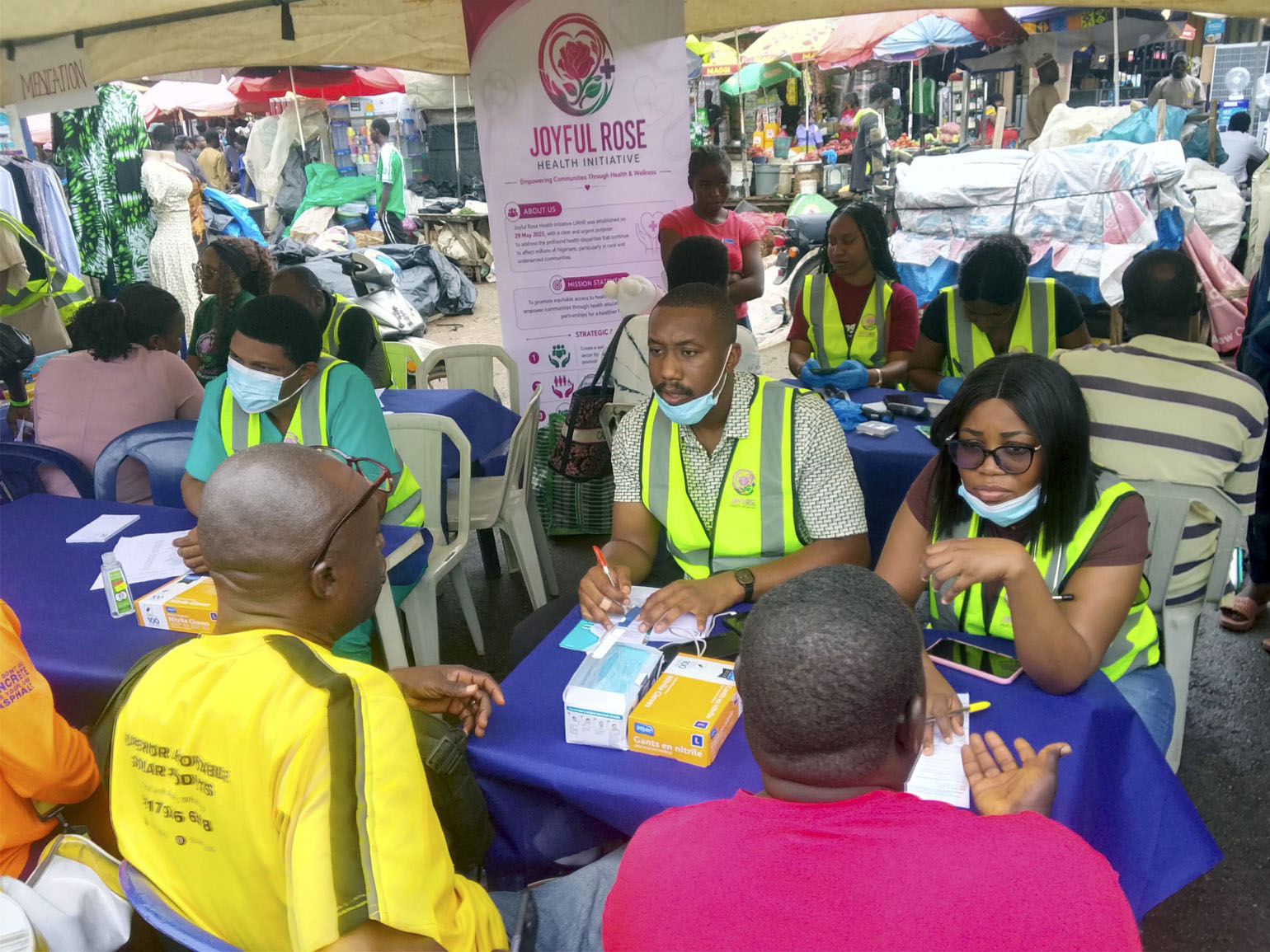
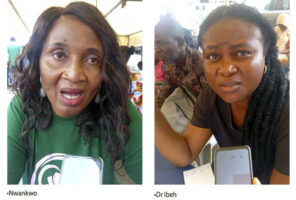
The scale of imminent collapse resonated recently in Abuja when the Deputy Director, Nursing Services at the Federal Medical Centre, Abuja, Joy Chioma Nwankwo, led a team of medical personnel to carry out an outreach at the Karu market.
Nwankwo noted that her medical practice and experiences spanning over 30 years revealed that most people are not aware of their condition, adding that even those who are aware resort to traditional medicine without proper medical drug prescription.
The nurse stated that there was nothing new under the sun as it concern medical services and the trauma of patients that she has not seen, heard or read about.
She said the recurrent cases nudged her to picked up the gauntlet to bridge the gap through her health initiative by reducing the mortality rate, especially among traders.
“As a nurse I have been in medical profession for over 30 years. And I have come across so many patients. Those that came early, those that didn’t come early. Those that have a promising outcome.
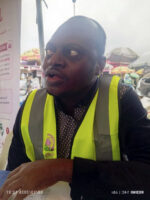
“Those that their conditions were treated and those that couldn’t make it. So with that in mind, it has been my dream to see that I bridge the gap through my health initiative. Which is Joyful Rose Health Initiative.
“Our clear vision is to address the disparities in healthcare. And these disparities affect thousands and millions of Nigerians. In vulnerable communities and underserved communities of which Karu is not an exception. This is where I live. I shop here as well.”
She expressed worry that most traders do not know their health condition because of their quest to make money, which also prompted her to look out for them.
“And I believe that information is key in everything. Some of these traders are not well informed on how to take care of themselves. Because of their busy schedules.
“So, I deemed it fit to be here today. To educate them, to help them in any little way I can, by
carrying out a basic test for them, and with doctors around, nurses and lab technicians around.
“We will be able to address some issues and those that we can’t, we refer them to a higher institute.
“We have hypertension particularly and cardiac. If you notice now, some of the deaths that normally occur now. Somebody went to bed and couldn’t come out or slumped in the toilet and all what not.
“So those are the cardiac issues, and mostly it has to do with hypertension overweight.”
Beyond medical condition, she pointed out that most people do not know how to eat right, saying that “if you do not eat right, you are most liable to be overweight. So those are the health education we are bringing to the public.
“I need them to know the right way to handle their health in terms of nutrition and regular exercise, especially those that are in the market from morning till night. They are seated one place. They do not move around.
“They keep accumulating fats and before you know it, the person becomes hypertensive or becomes obese. So, we are trying to let them know that despite the fact that you are in your shop you can have an exercise as well.
“You move around, you stand up, you walk around, so that the blood in your body can flow. We are talking about alcohol as well.
“Most of them are exposed to all these herbal medications because they find it difficult to go to hospital. They do not want to leave their shops. So, whatever herbal medication that gets to their reach they just consume.
“Even any type of food they consume. So those are the health talks we are giving. If you listen to what we have been saying it is basically hinged on lifestyle changes. So that the little things they can do to help themselves they can start doing it.”
At the inaugural edition, the health worker disclosed that 200 traders were targeted for the exercise but the turnout was more than expected.
Also, a Principal Medical Officer with the Federal Medical Center Abuja, Dr. Kachi Nwakeme, said the government had a lot to do in the healthcare reforms.
According to him, an average Nigerian prioritises sustenance than medication for obvious reasons.
“People are more concerned with sustenance and survival forgetting that health is an integral part of sustenance and survival. So people look more at the financial implication of being healthy which, I must be fair to them, is quite expensive.
“But when you consider that you need to be healthy to be alive then you see that there is need for you to constantly check your health,” he said..
Other News
Nwakeme did not spare the government, as he scored it low in investment in the health sector.
He said: “They are not doing enough. Working as a doctor, I have had a lot of cases. Even for someone that works in a government facility, I have had a lot of cases where you have patients that will come, with obvious health challenges, and they require surgical intervention and everything and due to the cost.they will go and not come back again.
“And for some people only God knows what became their fate.”
On what the government can do, he said: “The economy needs to improve. It is a part of the larger problem. It is a subset of the larger problem. The economy needs to improve to the extent that people can afford to take care of their health.
“Where people are not able to feed and when they have health issues many of them will resort to unwholesome practices which ultimately is inimical to their health. Some resort to going to take the local health and all those things.
“With the appendicitis effects on the kidneys and the liver some resort to prayer houses.
Don’t get me wrong. I am a Christian. I pray.
But you have to be practical about these things. Because a lot of cases they go to these prayer houses and they come back worse off.
“Because I believe that while you are praying you should also be doing the practical aspect of taking care of your health. But many of them they do this because they do not really have the money.
“Not that when they have the money. They wouldn’t go for the health care. So the government needs to do much to empower the people to be able to take care of themselves.
“How do you do that? People need to be a bit afloat so a lot of things need to change. Then in terms of directly subsidizing health care when the government is removing subsidies from the things like petroleum.
“They need to tailor resources to help indigent patients that actually need these things to survive and to stay alive.”
For medical personnel, he divulged that most of his contemporaries have left the country for better pay, which raises the question about the number of doctors still in the country.
“So, in terms of personnel, we do not have enough.These are part of the general issues we are complaining about when you hear repeatedly that doctors are going on strike.
“Most of the senior and experienced doctors are leaving. You are only as good as the quality of your personnel because many of them will only render services to the extent.to which they know what they are doing.
“So the situation where many of the experienced ones are leaving and everything is becoming a health emergency.
“I can give an example where I work. I know when we started how much we were paid and how many of us have chosen to remain. Most of my colleagues are no longer in the country.
An Optometrist at the Federal Medical Centre, Dr. Ureana Ibeh, remarked that women bear the brunt of a faulty healthcare system, as most of them battle allergic as a result of environmental problems.
Ibeh said: “Based on the people I have seen so far most of the population are women in this market. Most of them have allergic conditions and reading problems which have not been taken care of.
“So most of the glasses we are prescribing here are reading glasses and then allergic issues.
“There are patients who always itch their eyes. Maybe due to environmental factors. So it affects their eyes. And then they itch a lot. So we give them eye drops.
“To alleviate those conditions. We also give them glasses to enable them read better.”
The doctor pointed out that if not because of the benevolence of the foundation, most patients would go blind, as the financial cost is beyond them.
“Most of them are not able to afford the bills. They prefer tis kind of outreach where they can access care because that way it’s affordable, it is accessible it is closer to them.
She corroborated Nwakeme’s concern on the lack of medical personnel to address most of the health challenges.
We do have enough eye care practitioners. But the issue is that most of them are in the urban centers.
“So the people in the rural communities are the ones who are suffering the situation. So this kind of arrangement is to reach out to those in the rural communities.
“However. We can do better to send in eye care practitioners in the rural communities.to help these kind of things. Life is not very expensive,” she said.
Apart from Nigeria not having enough trained medical experts, she identified the quality of eye drugs and the cost implication as some of the challenges still bedeviling the sector.
“In this outreach programme, they make these eye drops affordable and easy for patients to access. But then they are also cheaper eye drops. But they will not be as effective. As the other ones especially the ones that we are giving here.
“The ones imported from outside the country are very expensive medications of which I know that patients will not be able to afford this one on their own.
“So I think it is a government problem that should be addressed especially in the pharmaceutical industry they should bring down the cost,” she concluded.