Follow Us on Google
A civic accountability group has unveiled a nationwide platform to track public spending and assess whether increased revenues accruing to states and local governments following the removal of fuel subsidy are translating into development.
The Nationwide Service Delivery Accountability Network (NISDAN) said it would monitor government projects across the 36 states and 774 local government areas, physically inspect projects and publish its findings for Nigerians to assess the performance of elected officials.
Founder of the initiative and Ambassador of the Corporate Affairs Commission (CAC), Michael Obinna Nwabufo, popularly known as Mike Premium, said evidence of alleged diversion of public funds uncovered by the network would be forwarded to the Economic and Financial Crimes Commission (EFCC), Independent Corrupt Practices and Other Related Offences Commission (ICPC) and other relevant agencies.
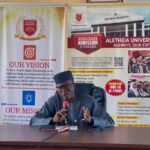
Nwabufo, who is also National President of the Practitioners of Content Creators, Skit-Makers and Influencers Guild of Nigeria (PCCSIGN), announced the initiative at a national youth conference organised by the guild and other organisations.
He said the substantial increase in revenues available to the different tiers of government should be reflected in improved roads, schools, healthcare, water, electricity and other basic services.
Nwabufo urged Nigerians to demand measurable results from governors and local government chairmen, arguing that public office holders must account for funds entrusted to them.
“You are servants of the people, not gods or kings. Nigerian governors receive hundreds of billions of naira every year from FAAC. Some collect over N600 billion in four years.
“Yet, most of them spend only a small fraction of these funds, while the rest is mismanaged or diverted.
“Why do many communities still lack basic infrastructure despite the substantial allocations that go to states and local governments every year?” he asked.
He argued that Nigeria’s development challenges could not be effectively addressed without closing the gap between public revenues and services delivered to citizens.
Nwabufo particularly focused on the country’s 774 local government areas, saying increased revenues accruing to the councils should produce tangible development at the grassroots.
“There are 774 local government areas in Nigeria. Together they receive between N400 billion and N500 billion or more every month.
“What exactly is being done with these funds?
“What did the local government receive? What was budgeted? What was delivered? Where is the evidence?” he asked.
Nwabufo said NISDAN would comprise bloggers, influencers, content creators, actors, musicians, civil society actors and other citizens and would operate as an independent accountability platform.
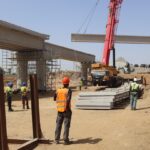
According to him, the network would monitor and document roads, schools, health centres, water schemes, electricity projects and other public infrastructure across the country.
“We will visit states and local governments without notice. We will inspect every project.
Other News
“A road that was budgeted for but abandoned will be documented. A health centre announced as completed will be physically inspected.
“A school reported as renovated will be visited. A water project commissioned for a community will be checked to confirm whether it is actually working.
“The objective is simple: follow the money to the service,” he said.
He explained that the network would not restrict itself to exposing failures but would also publicise projects and governments found to be delivering on their commitments.
“If you perform well, we will gladly share the good news. If you fail and divert public funds, we will expose the facts.
“We will use social media, blogs, newspapers and television to inform Nigerians,” he said.
Nwabufo added that where the network obtained evidence suggesting diversion of public resources, petitions would be forwarded to relevant anti-corruption agencies.
“We will petition the Economic and Financial Crimes Commission, the Independent Corrupt Practices and Other Related Offences Commission and other relevant agencies. Accountability must not be partisan.
“A government that performs should receive recognition, while a government that fails should face legitimate public scrutiny,” he said.
He stressed that NISDAN would not become a political platform for attacking perceived opponents, saying its credibility would depend on evidence, documentation, transparency and consistency.
According to him, Nigerians, particularly young people, needed to develop a culture of civic engagement that went beyond participation in elections.
He said voting should mark the beginning rather than the end of citizens’ involvement in governance, with the electorate consistently asking what governments promised, what was budgeted, how much was released and what was eventually delivered.
Nwabufo also commended the current leadership of the Niger Delta Development Commission (NDDC), saying it had executed visible projects in its mandate states.
He argued that such projects should be properly identified to ensure that the institutions responsible received appropriate credit.
Nwabufo said the establishment of NISDAN was ultimately intended to strengthen the culture of accountability by ensuring that Nigerians could independently assess the relationship between public revenue and service delivery.
“Nigeria will be built by Nigerians,” he said.