Follow Us on Google
By Chinwendu Obienyi
When the incumbent administration embarked on its fast-paced reforms, it is expected that cost-cutting measures would be deepened to reduce national bleeding, since Nigerian citizens are already bearing increased cost pressures amid stagnant income.
However, the reforms- subsidy removal and FX market reforms, which showed promise at first, have now heightened the frustrations of citizens as they have been left to bear the significant brunt of reforms.
Although, the government, in a bid to alleviate the price pressures stemming from the reforms, rolled out the N35,000 provisional wage increment for all federal government workers for six months and N25,000 cash transfer to 15 million households for three months, which started in October 2023. But, the funds reportedly, have not reached most households.
President Bola Tinubu’s administration stated that it is seeking robust economic reforms aimed at delivering a $1 trillion economy with 50 million new jobs in eight years. Apart from the removal of fuel subsidies and unification of FX windows, the government also said it intends to streamline tax collection, merge agencies, optimize dead capitals and decongest ports. While it is not too early to meet these targets, a host of factors is expected to shape the economy this year.
According to economic analysts, the 2023 performance of the Nigerian economy was nothing good to write about as the policies by the old and new administrations dealt blows to several households and businesses. Here are salient factors that could shape economic outcomes this year.
Fiscal reforms
Based on the public debt profile released by the Debt Management Office (DMO) recently, Nigeria experienced a marginal increase of 0.61 per cent in its total public debt, reaching N87.91 trillion.
This substantial rise reflects a notable 99.5 per cent year-on-year increase from the corresponding period in 2022 when the total debt stood at N44.06 trillion. This indicates that the total debt encompasses both domestic and foreign obligations of the federal government, the 36 state governments, and the federal capital territory.
The comprehensive breakdown of this debt, amounting to N87.91 trillion ($114.4 billion at an exchange rate of N768.76), encapsulates the combined financial obligations of the federal government, the 36 state governments, and the federal capital territory.
The debt composition is dichotomized into N31.98 trillion in external debt and N55.93 trillion in domestic debt. Similarly, data released by the Budget Office of the Federation showed that FGN’s retained revenue settled lower at N7.15 trillion in the 9 months of 2023 – 10.6 per cent higher than the pro-rated budget (N6.47 trillion). Meanwhile, aggregate expenditure (N12.70 trillion) under-performed the prorated budget (N18.62 trillion) by 31.8 per cent due to the under-performance across the non-debt recurrent (-32.4 per cent vs prorated budget: N6.99 trillion) and capital (-75.3 per cent vs prorated budget: N5.97 trillion) expenditure.
Given the higher expenditure underperformance relative to revenue, the fiscal deficit (excluding GOEs and project-tied loans) settled lower at N4.05 trillion (vs prorated budget: N10.33 trillion).
On the domestic debt structure, it is noteworthy that the N50.19 trillion allocated to the federal government far surpasses the N5.74 trillion designated for the sub-national entities, including the federal capital territory. This delineation emphasizes the federal government’s predominant role in domestic borrowing, a trend attributable to the multifaceted economic challenges faced by both federal and state governments.
The upswing in domestic debt is ascribed to concerted borrowing initiatives by the federal and state governments, particularly aimed at mitigating the economic reverberations of the Petroleum Motor Spirit (PMS) subsidy removal.
This strategic borrowing, however, underscores a pertinent concern regarding the prioritization of recurrent expenditure over capital expenditure, a facet that warrants careful scrutiny for sustainable fiscal management.
Hence, to restore the economy to the path of prosperity, the current administration must see through the ongoing economic reforms bordering on efficient taxation, blockage of fiscal leakages, public sector optimization, and judicial sector reform. Also, to support the pressured traditional revenue sources, the Mining Sector Road Map (2015-2025) must be given the right attention to fully harness the potential of the over 45 solid mineral assets spread across the country.
Monetary policies
In response to the global uncertainties, especially inflation, central banks around the world raised their interest rates. The CBN, following the footsteps of other banks, increased interest rates across 2022 and 2023 to curb inflation. For the seventh consecutive time since April 2022, the CBN in July raised its benchmark interest rate, the Monetary Policy Rate (MPR). But, since its last rate hike of 18.8 per cent in July 2023 at its Monetary Policy Committee (MPC), there has not been another meeting.
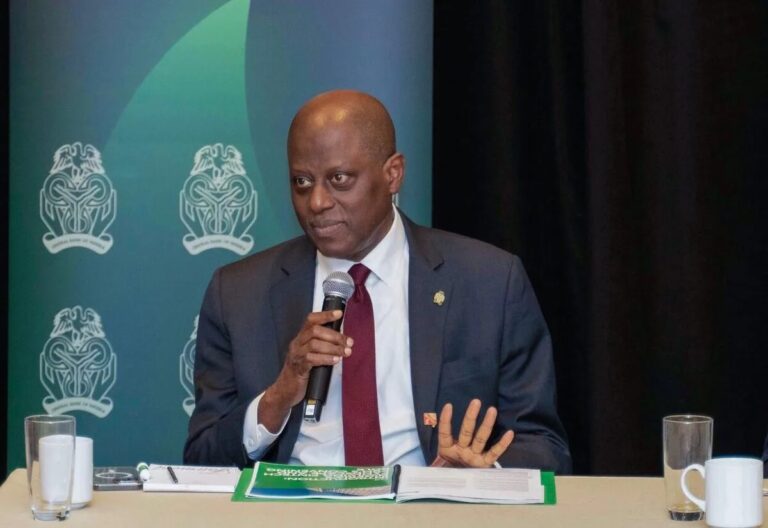
The new CBN Governor’s first public speech since assuming office during the Chartered Institute of Bankers of Nigeria (CIBN) dinner in November last year, noted that the key priority areas of the apex bank is to introduce inflation targeting mechanism to enhance disinflation strategy, end quasi-fiscal interventions, introduce better policy communication and the recapitalization of the banking sector to support the administration’s ambition of growing the economy to $1 trillion over the next 8 years.
Although the key priority focus areas of the new CBN governor are lofty and necessary to turn the economy around in the medium-to-long term, self-compromise and misalignment of fiscal and monetary policy strategies are major downside risk factors to the expected favourable outcomes.
Based on growth expectations of the domestic economic activities which is expected to remain resilient as the negative impact of the reforms last year subside. Accordingly, the non-oil sector is expected to grow higher than 2023 FY levels, complementing the anticipated oil sector’s growth.
Analysts at Cordros Securities in their report titled; Nigeria in 2024: Unravelling the tapestry: Crisis or Confidence?, said that the growth outlook will give the MPC members some comfort to march on with interest rate hikes while tracking real-time data to know how to react when there is a sharp deviation from expectations.
They said, “Consequently, we think the MPC may opt for up to a 300 basis points (bps) increase in the Monetary Policy Rate (MPR) over H1 2024 before keeping the rates steady by H2 2024. Barring any significant deviation from our current expectations, reducing the interest rate is not under our baseline scenario”.
Inflation
Domestic consumer prices have risen to levels not seen in the last 18 years. Notably, price pressures have maintained an uptrend in eleven months of 2023, with a more profound price increase since the PMS subsidy and FX reforms in June FX liquidity
To put things in proper perspective, consumer prices increased, albeit softly, over the first five months of the year, driven by the below-average harvest season from the prior year, lingering security challenges in the food-producing states, high transport costs induced by intermittent PMS scarcity, and electioneering spending.
Currently, the inflation index is standing at a 20-year high of 28.2 per cent in November, according to data obtained from the National Bureau of Statistics (NBS). The data also revealed that food inflation was steeper at 32.84 per cent year-on-year, which is 8.72 per cent higher than the 24.13 per cent food inflation rate recorded in November 2022.
Whilst analyzing the factors shaping domestic prices in the full year of 2024, the Head, Research and Strategy at Cordros Capital Limited, Jolomi Odonghanro, said, “we expect inflationary pressures to persist next year, more so that our model shows that the disinflationary process from the current price increases may likely not be firmly established until the second half of next year.
The preceding implies that the sticky prices in H1 2024 will be enough to counterbalance the price moderation we anticipate in H2 2024. Consequently, our base-case scenario suggests headline inflation will average 24.65 per cent year-on-year (y/y) in 2024 FY, with the year-end figure settling at 21.07 per cent y/y”.
FX liquidity
The FX market started the year 2023 with the same FX controls and limited interventions witnessed since the COVID-19 pandemic, resulting in a wide premium between the official and parallel market rates over the year’s first five months. However, with the coming on board of a new administration, the CBN embarked on FX unification and introduced the “willing buyer, willing seller” model at the Nigerian Autonomous Foreign Exchange Market (NAFEM) on June 14, 2023.
In line with the preceding, the official and parallel market exchange rates converged briefly before pressures started building up. Given the underwhelming FX supply to support the local currency at the official window, pressures started building up in the parallel market as unmet demand was channeled to the unofficial FX market, leading to the re-widening of the parallel market premium. Hence, all attention will be on the CBN to continue its reforms especially as regards FX liquidity to avoid further FX pressures at the official and parallel markets because FX queues are expected to be longer at the official market without liquidity.
According to Macroeconomic strategist at Cordros Securities Limited, Abdulazeez Kuranga, said, this may be a signaling tool by the CBN to shift attention away from the parallel market and reduce the pressure of the official market playing a catch-up game with the unofficial exchange rate.
He noted that while removing demand-side restrictions is necessary, significant FX liquidity is sufficient to complete the reform process, giving the local currency breathing space.
“To this end, we think that higher short-term interest rates, large borrowing from multilateral & bilateral sources, and ramping up crude oil exports to a range of 1.50mb/d – 1.70mb/d (8M 2023 average: 783.75kb/d) amid the supportive oil prices are paramount to boosting short term FX liquidity and closing the parallel market premium. Over the medium-to-long term, diversifying the economy’s export base is paramount to solving the reoccurring exchange rate issues. The country needs to look beyond crude oil and earn more from stable exports’ ‘, Kuranga said.
Exodus of Companies
Recently, six major multinationals including Unilver, GSK, Sanofi, Equinor, P&G, and Jumia Food announced the cessation of their operations in Nigeria, citing hash business operating environment and FX crises as top reasons for their exit. This trajectory, if continued in 2024 could put Nigeria on the edge, stoking increased unemployment and high cost of essential commodities in the near term. Hence, the FG should create a better operating environment for the current multinationals in the country.
Refinery Streams
African Energy Chamber (AEC) projects a drastic reduction in the continent’s crude oil production in the years ahead. However, the onboarding of Dangote and BUA refineries could temper supply concerns for Nigerians given that fossil energy remains core to Nigeria’s development potential.
Structural Gaps
The current administration must double efforts to address infrastructure gaps that constrain access to stable electricity, reliable healthcare service, good transport networks, and hinder economic integration for the country to optimise its large market size and the opportunities provided by the AfCFTA arrangement.
National Security
In recent years, the national security architecture has failed on its primary objective of securing lives and assets given the rampant activities of non-state actors and loss of valuable assets. Hence, there is a need for a comprehensive reform package that includes a new social compact to protect the poor and most vulnerable, to maximise the collective impact on growth, job creation, and poverty reduction this year.
External shocks
The lingering Russia-Ukraine tension and more recently, the Israel-Hamas crisis, could devastate Nigeria’s economic fortune in 2024, especially if these crises boomerang to affect oil prices (Nigeria major export and the projected source for 43.9 per cent share of budgeted revenue) in the global market. Hence, this present administration has to come up with strategies or plans to avoid global shocks.