Follow Us on Google
From Idu Jude, Abuja
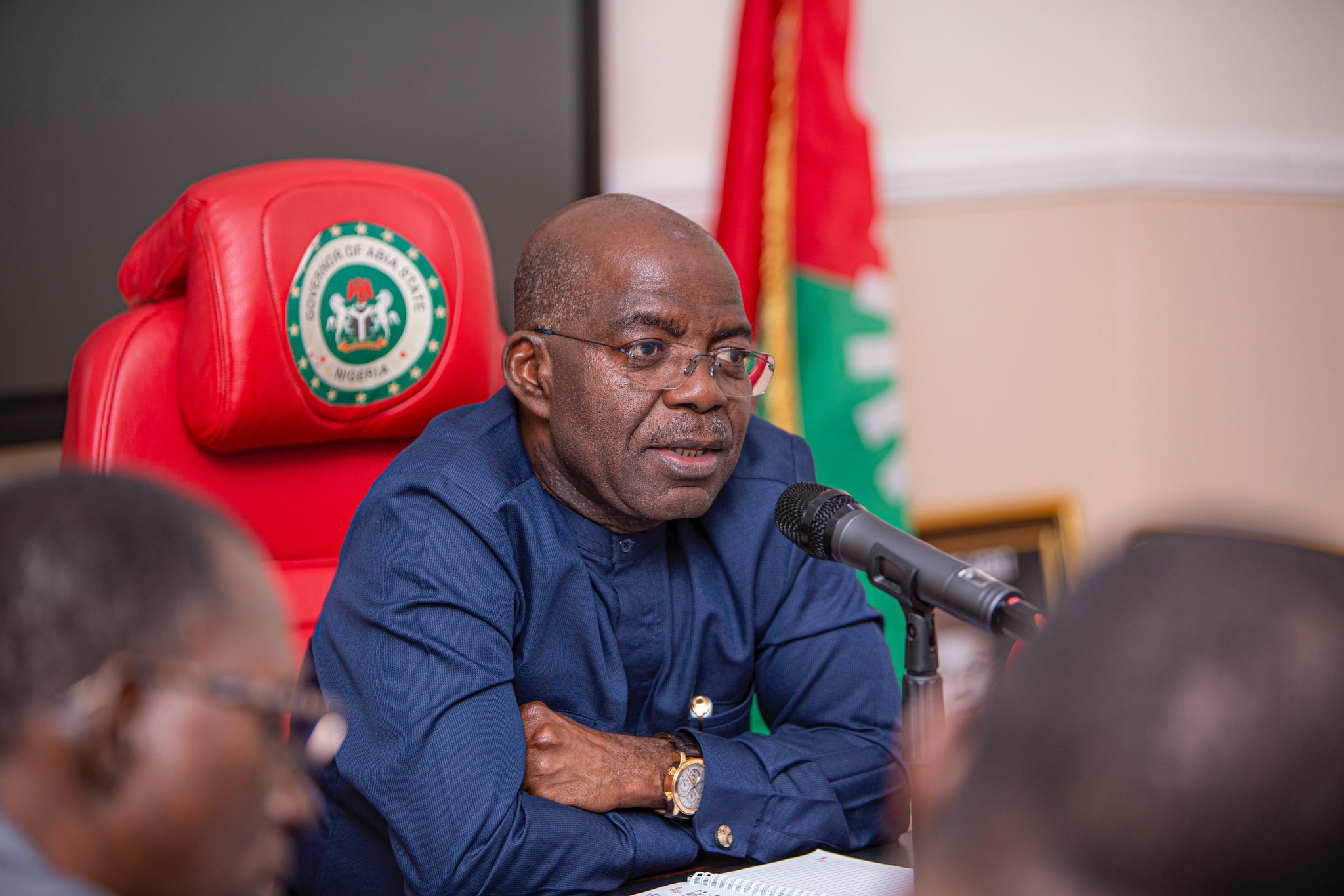
The Governor of Abia State, Alex Otti, has charged the federal government of Nigeria and transportation industry players on the need to professionalize the sector to meet global challenges.
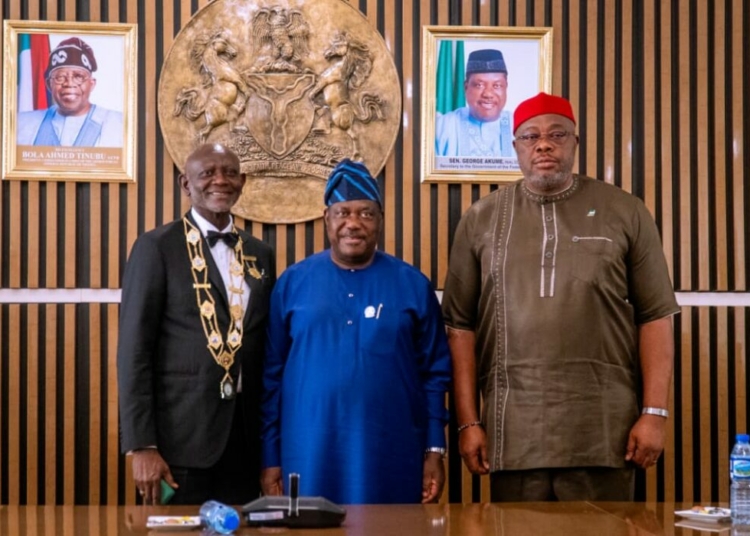
Governor Otti gave the charge in Abuja on Wednesday, while making a presentation at the ongoing National Transportation Conference organized by the Chartered Institute of Transport Administration (CIOTA)
The Governor, who was represented at the occasion by the Abia state commissioner for transportation, Dr. Chimezie Ukaegbu, highlighted that for the country to reposition the transport sector for global competitiveness, it needs all hands on deck.
He said that policymakers need to create the enabling legislation and master plans.
Also, investors need to bring capital, technology, and expertise.
The Governor further emphasized that “Regulators should operate transparently and professionally that the
Academia and innovators, should drive local solutions and research,
Citizens should demand accountability and support reform efforts”.
He further notes that repositioning Nigeria’s transport infrastructure and governance models is not a task for tomorrow, but an imperative of today.
“The road to global competitiveness begins with a single step a bold, coordinated, and unwavering commitment to doing things differently.
Let us be the generation that redefined Nigeria’s trajectory.
“Let us build the roads, the rails, the ports, and the policies that will carry Nigeria into a future of prosperity.
While underscoring the nation’s abundant resources, he said, “Our nation, which is rich in talent, abundant in natural resources, and strategically positioned on the African continent, has all it takes to be a globally competitive economy. Yet, one major lever that must be pulled decisively is the transformation of our transport infrastructure and the governance models that sustain it.
He said that transportation is not merely a means of movement. It is the bloodstream of commerce, the enabler of productivity, the bridge between rural potential and urban markets.
“Around the world, nations that have unlocked economic prosperity, such as Singapore, the UAE, China, and Germany, have done so by building world-class transport systems underpinned by forward-thinking governance models.
“Unfortunately, Nigeria’s transport sector has for too long been weighed down by:
Outdated infrastructure,
Fragmented regulatory frameworks,
Inefficient intermodal connectivity,
And chronic underinvestment”.
While listing some of the requirements, Otti, said that the result is a sector that struggles to meet domestic demand, let alone position Nigeria as a competitive player on the global stage.
He said, “We must shift from reactive maintenance to strategic, future-proof investments. Roads, railways, seaports, and airports must be designed for the economies of tomorrow, not yesterday.
“Our transport networks must work together not in silos. A truck leaving Kano must seamlessly connect to a rail hub in Kaduna, a port in Lagos, or an air cargo terminal in Abuja.
“There shall be digital transport systems, smart logistics, GPS-enabled fleet tracking, e-port systems—it is here. We must embrace it boldly.
“We must ensure that our national transport policy is not only visionary but also predictable and stable”.
Other News
Meanwhile, Governor Otti, has called for decentralization and Private Sector Participation, stressing that
Governance must shift from centralized command to collaborative frameworks, just as state governments and the private sector must be empowered and incentivized to develop and manage transport assets.
On the overlapping agencies and bureaucratic bottlenecks, he said these stifle innovation. He emphasized that Nigeria needs a streamlined, transparent regulatory environment that facilitates rather than frustrates.
He also called for the strengthening of Public-Private Partnerships (PPPs) as a catalyst for development.
“The government must move from being the sole financier to being an enabler. Viable PPP models with clear risk-sharing frameworks can unlock billions in infrastructure financing.
On railway services, he said the world is waiting to see a Nigeria where rail connects every commercial hub from Lagos to Maiduguri, Port Harcourt to Sokoto.
Where Apapa and Onne ports operate 24/7, digitally, with minimal congestion and maximum efficiency.
“Where airports are economic zones, not just terminals, and Murtala Mohammed becomes a West African aviation hub.
Where rural farmers in Taraba can get their produce to urban markets within hours, not days.
He opined that a unified transport database enables real-time logistics management for businesses, cutting costs and boosting productivity.