Follow Us on Google

By Michael Anthony
The sustainability of political leadership is not determined solely by a political party’s ability to win elections, secure political power or establish itself as the dominant force in government. Equally important is its capacity to govern itself, maintain institutional discipline, confront internal weaknesses, prevent corruption and continually renew its relationship with the people.
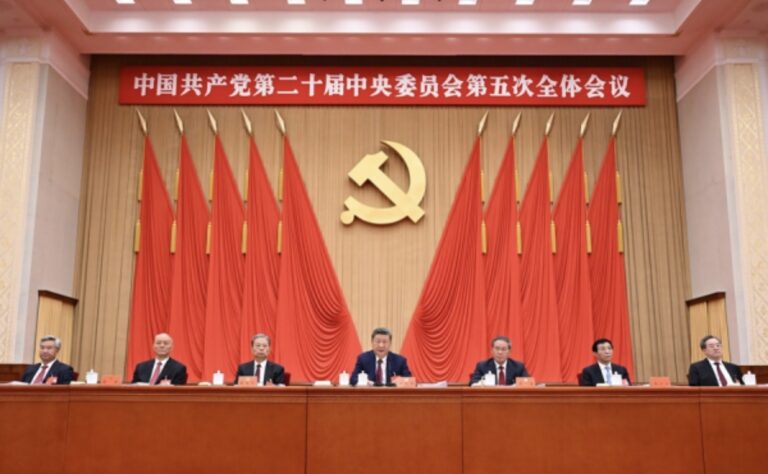
This is one of the central messages emerging from the Communiqué of the Fifth Plenary Session of the 20th Central Committee of the Communist Party of China (CPC), adopted in Beijing on October 29, 2026.
The Communiqué, which deliberated on the Resolution concerning major issues of persevering with full and rigorous Party self-governance, provides an insight into how the CPC understands the relationship between political leadership, institutional integrity and national development.
More significantly, it presents an account of the party’s evolving philosophy of self-reform and its determination to ensure that the organization remains capable of providing political leadership in a rapidly changing domestic and international environment.
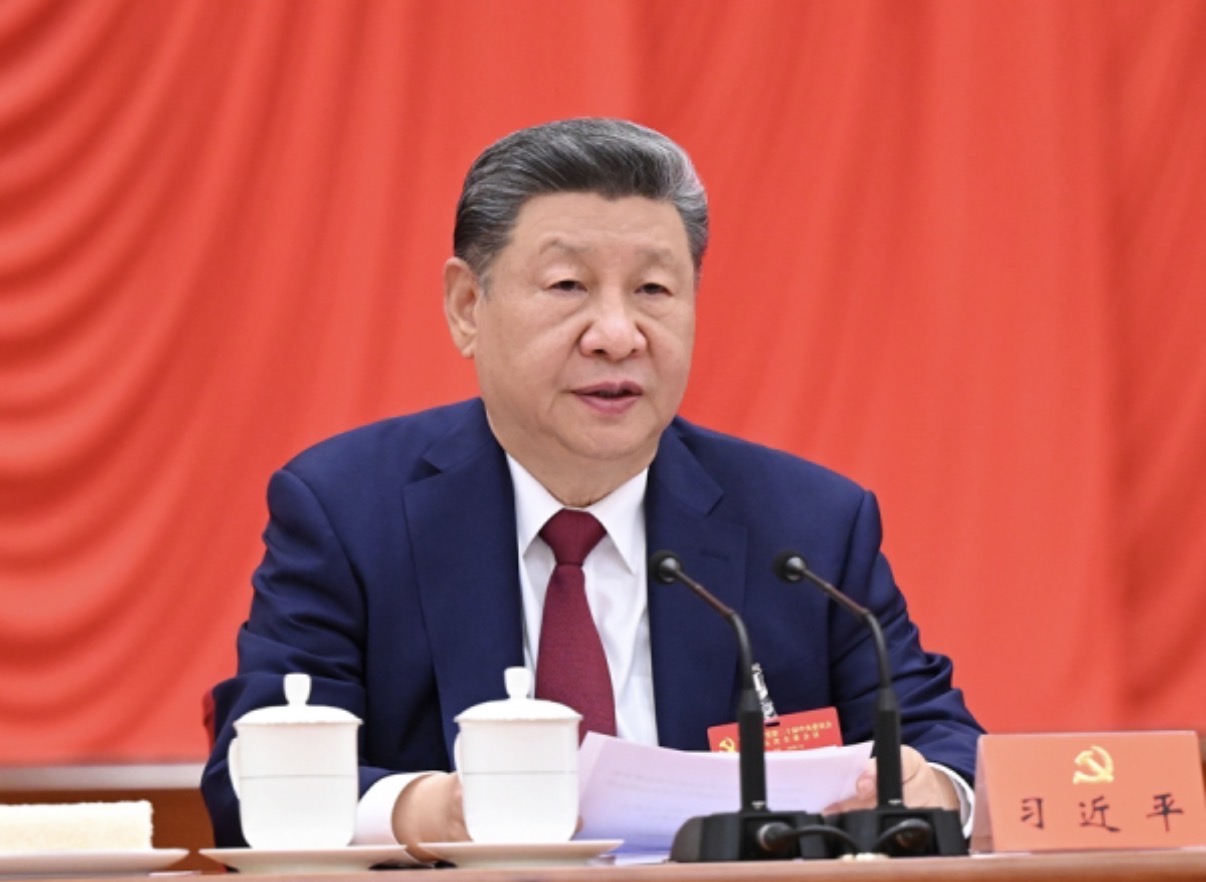
At the centre of this undertaking is President Xi Jinping, General Secretary of the CPC Central Committee, whose leadership has placed party discipline, anti-corruption, institutional accountability and the continuous improvement of party governance at the forefront of China’s political agenda.
Full and Rigorous Self-Governance: The Foundation of Party Sustainability
One of the most significant propositions in the Communiqué is that a political party cannot sustainably govern a country without first establishing effective mechanisms for governing itself.
The CPC’s approach to what it describes as full and rigorous Party self-governance goes beyond conventional internal disciplinary procedures. It encompasses political accountability, organizational restructuring, ideological development, the regulation of official conduct, anti-corruption enforcement, institutional oversight and the strengthening of party members’ commitment to public service.
The Communiqué acknowledges that the party previously confronted serious internal challenges, including weak leadership, ineffective self-supervision, lax discipline and entrenched unhealthy tendencies. Rather than treating these problems as isolated incidents, the party’s resolution identifies them as institutional challenges requiring sustained and comprehensive intervention.
This recognition is important. Political organizations, particularly those that have remained in power for extended periods, can become vulnerable to complacency, bureaucratic inefficiency, abuse of authority and the emergence of privileged interests. The longer a political organization exercises power, the greater the importance of establishing mechanisms capable of identifying and correcting internal failures.
The CPC’s response, as presented in the Communiqué, is to institutionalize self-governance as a continuous political responsibility rather than an occasional disciplinary exercise.
It identifies seven guiding principles: serving the party’s missions and tasks; strengthening the party politically; exercising rigorous governance across the board; adopting a problem-oriented approach; upholding fundamental principles while breaking new ground; adhering to a top-down approach; and running the party according to regulations.
These principles are supported by concrete institutional measures, including strengthening party spirit, implementing democratic centralism, improving the quality of officials, reinforcing grassroots party organizations, tightening discipline, combating corruption and improving oversight mechanisms.
The implication is that party integrity must be sustained through an interconnected system of political values, organizational structures and enforceable regulations.
Xi Jinping’s Leadership and the Institutionalization of Self-Reform
President Xi Jinping occupies a central position in the political and institutional direction outlined by the Communiqué.
The document credits the Central Committee, with Xi Jinping at its core, with demonstrating political resolve and responsibility in confronting the weaknesses that had undermined party discipline and internal supervision.
Under his leadership, full and rigorous Party self-governance has been elevated into a central component of the CPC’s approach to maintaining its governing capacity and advancing China’s national development objectives.
An important feature of this leadership philosophy is the recognition that a governing party must possess the capacity to reform itself. Political authority, in this understanding, is not a permanent guarantee of institutional effectiveness. It must be continually reinforced through discipline, accountability, organizational renewal and responsiveness to emerging challenges.
The Communiqué identifies Xi Jinping Thought on Party Building as a major theoretical development arising from the party’s practical experience in the new era. It describes this body of thought as an attempt to answer two fundamental questions: what kind of long-term governing Marxist party should be built, and how should such a party be built?
This emphasis on theory and practice is significant. The CPC presents its current approach to party building not simply as an administrative programme but as an evolving framework that draws from Marxist theory, China’s specific national conditions, traditional Chinese culture and the collective experience of the party and the people.
The leadership question is therefore closely connected to institutional continuity. The Communiqué does not present party renewal as dependent solely on individual political authority. It seeks to translate the leadership’s priorities into regulations, organisational responsibilities, supervision arrangements and mechanisms that can sustain implementation throughout the party.
This distinction between leadership direction and institutional implementation is particularly relevant to understanding the CPC’s approach.
The Anti-Corruption Campaign: Beyond Punishment to Prevention
Another major theme of the Communiqué is the determination to combat corruption through an integrated system of prevention, detection, punishment and institutional reform.
The document articulates a three-dimensional objective: ensuring that officials do not have the audacity, opportunity or desire to commit corruption.
This formulation is noteworthy because it recognizes that corruption is not merely an individual moral failure. It can also be enabled by institutional weaknesses, inadequate oversight, opportunities for the abuse of power and organizational cultures that tolerate misconduct.
Consequently, the CPC’s stated approach combines severe punishment, targeted remedies and effective prevention.
It also emphasizes stronger checks on the exercise of power, improved supervision, ethical foundations for integrity and coordinated anti-corruption institutions.
The Communiqué’s account of the plenary session further demonstrates that disciplinary accountability is intended to extend to senior political and military officials. It records the deliberation and adoption of disciplinary reports concerning numerous officials accused of serious violations of discipline and the law, as well as confirmation of previous expulsion decisions.
This aspect of the resolution raises an important governance principle: political seniority should not automatically place an individual beyond the reach of institutional accountability.
However, the effectiveness of any anti-corruption system must ultimately be assessed not only by the number of investigations, disciplinary actions or punishments undertaken, but also by the transparency of procedures, consistency of enforcement, fairness, institutional independence and measurable reduction in opportunities for corruption.
For political parties around the world, the broader lesson is that anti-corruption campaigns require more than political declarations. They need credible institutions, enforceable rules, transparent procedures and sustained oversight.
Democratic Centralism, Discipline and OrganizationalEffectiveness
The Communiqué also gives considerable attention to democratic centralism, which it describes as the CPC’s fundamental organizational principle and leadership system.
The resolution emphasizes the need to encourage intraparty democracy while maintaining effective centralized leadership. It also calls for improved deliberation procedures, better decision-making arrangements and greater regulation of the exercise of authority by leadership teams.
This illustrates the CPC’s attempt to balance participation within the organization with institutional cohesion and the capacity to implement collective decisions.
The emphasis on organizational discipline is complemented by the proposed strengthening of grassroots party structures. The Communiqué argues that party organizations at every level must possess the political and organizational capacity to translate central decisions into coordinated and effective action.
This is an important consideration for political organizationswhose policies frequently fail to move beyond national headquarters, conference resolutions and campaign promises.
A political party’s effectiveness depends substantially on the quality of its organizational infrastructure, the competence of its officials and its ability to communicate and implement decisions at the grassroots.
The CPC’s approach therefore places considerable importance on the relationship between central leadership, intermediate organizational structures and primary-level party institutions.
For political parties in Africa and elsewhere, this offers an opportunity to examine how internal structures can become more functional, accountable and responsive to the needs of their members and the communities they seek to represent.
In summary, there are several areas in which the CPC’s experience deserves serious comparative study.
First, self-governance must become a permanent institutional responsibility. Political parties should establish internal mechanisms for monitoring leadership conduct, enforcing ethical standards and addressing organizational weaknesses. Party constitutions and codes of conduct should be more than ceremonial documents.
Second, political leadership must be translated into institutional systems. The experience presented by the CPC demonstrates the importance it attaches to connecting leadership priorities with organizational responsibilities, regulations and implementation mechanisms. Political parties should examine how leadership commitments can be converted into sustainable institutional practices rather than depending exclusively on individual personalities.
Third, corruption must be addressed systematically. Political organizations need transparent financial systems, credible disciplinary procedures, independent oversight where appropriate and mechanisms for preventing the abuse of political and administrative authority.
Fourth, grassroots structures must be strengthened. Political parties cannot effectively understand or respond to the needs of citizens if their organizational presence exists mainly during election campaigns. Functional grassroots institutions are essential for continuous engagement, feedback and policy implementation.
These are governance questions that transcend ideological and geographical boundaries.
For political parties in developing countries, particularly across Africa, the experience provides an opportunity to reconsider how internal party administration, political accountability, leadership development and grassroots organization contribute to national development.
Anthony, an international affairs analyst, writes from Lagos.