Follow Us on Google

From Abel Leonard, Lafia
In the heart of Nasarawa State’s political arena, a riveting and complex saga has unfolded; a fierce battle for the legitimacy of the state’s gubernatorial election results. The Nasarawa State Governorship Election Tribunal stands as the stage for this high-stake legal showdown, where the destiny of the state’s leadership hangs in the balance.
At the centre of the legal battle are the candidates of the Peoples Democratic Party (PDP), David Ombugadu, and the incumbent Governor, Abdullahi Sule, of the All Progressives Congress (APC). Ombugadu is challenging Governor Sule’s victory on allegations of electoral irregularities, malpractices, and identity discrepancies that marred the March 18, 2023 gubernatorial elections.
This comprehensive coverage, according to observers, delves into the intricate details of the unfolding political drama. It navigates through the key players, legal arguments, and discrepancies that have come to define the case. From the technical intricacies presented by the defence to the ambiguous identity of the proclaimed winner, and the issues surrounding the transparency of the electoral process, the narrative scrutinizes every facet of the dispute.
Ombugadu’s decision to approach the tribunal stemmed from his conviction that the electoral process was tainted by alleged irregularities and electoral malpractices during the critical gubernatorial elections held earlier this year. As the tribunal’s decision looms, it has become a focal point of discussion among political observers and citizens alike.
According to some political pundits, who believe the case has been closely followed by Nasarawa State residents and political enthusiasts, it has underscored the significance of transparent and credible electoral processes in shaping the state’s leadership.
They noted that the impending verdict is not only expected to determine the fate of Governor Sule but also holds the potential to influence the direction of Nasarawa State’s political trajectory in the coming years.
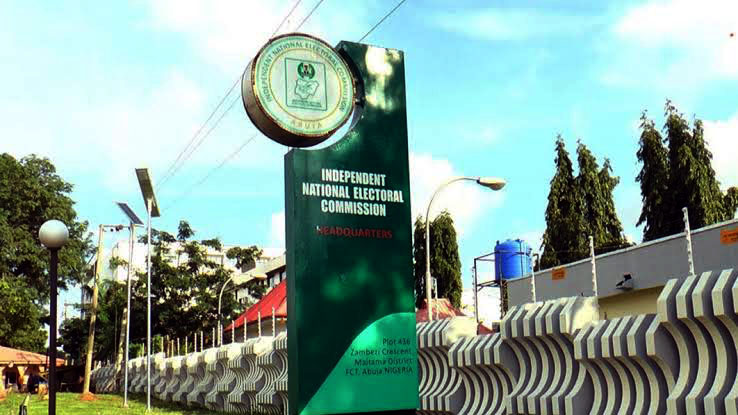
In the riveting closing address session held last Thursday at the Nasarawa State Governorship Election Tribunal, the legal battle between Ombugadu, and Governor Sule reached a climactic juncture. The first respondent during the adoption of written Addresses, Isiaka Mudi Dikko (SAN), representing the Independent National Electoral Commission (INEC), has vehemently defended his client’s declaration of Sule as the authentic winner of the Nasarawa State gubernatorial election. In his appeal to the tribunal, Dikko firmly urged the court to uphold the INEC’s decision.
He went on to assert that the petitioners, in this case, failed to provide substantial evidence to substantiate their claim of victory in the election. He argued that the alleged figures presented by the petitioners in their complaint were not credible, and raised doubts about their own certainty regarding the election results.
According to analysts, the declaration by the INEC’s counsel underscores the central dispute of the case, which revolves around the credibility of the election results, and the validity of the figures presented by both parties. The tribunal’s eventual decision will hinge on its assessment of the evidence and arguments presented by both sides, and it will play a pivotal role in determining the rightful occupant of the Nasarawa State Governor’s Office.
They posited that one notable tactic employed by the defence counsel was to cast doubts on the clarity of the collated figures presented by the petitioners. They added that discrepancies and ambiguities in the figures made it difficult to conclusively determine the extent of any irregularities.
However, a pivotal moment during the INEC’s presentation added a new layer of intrigue to the proceedings. The INEC’s legal team seemingly acknowledged the fact that their client had also been a victim of vote rigging by INEC at polling units different from those contested by the petitioners. They likened the acknowledgment to a popular aphorism: “What is good for the goose is good for the gander.”
This statement left many observers and legal experts speculating about the INEC’s stance in the case, with some interpreting it as a subtle admission of wrongdoing. In response, counsel to the petitioners raised the intriguing point that INEC appeared to be positioning itself as both the “goose and gander” in the complex electoral dispute.
In a spirited defence of their client, Gov Sule, Chief Wole Olanipekun (SAN), representing the second respondent, laid considerable emphasis on the technical errors that he believed permeated the petitioners’ case. He pointed out several flaws and inconsistencies that he argued should lead the tribunal to dismiss the petitioners’ appeal and uphold his client’s victory.
The second respondents, Chief Olanipekun, pointed out the technical errors made by the petitioners themselves. He called the tribunal’s attention to the errors, insisting that they undermined the credibility of the petition. Additionally, Olanipekun highlighted discrepancies in the consistency of the petitioners’ witnesses, some of whom were sworn in, while others were not.
Furthermore, Olanipekun questioned the reliability of the Bimodal Voter Verification System (BVAS) and IReV, which the petitioners presented in court. He argued that it was not properly displayed for the court’s assessment, casting doubt on its validity as evidence.
Another critical argument put forth by Sule’s legal team was that the petitioners failed to secure the necessary 25 percent of votes cast in all the 13 local government areas of the state, which is a requirement under electoral law.
Lastly, Olanipekun expressed concern that the tribunal appeared to be tasked with the responsibility of compiling figures for the petitioners, a task he deemed beyond the tribunal’s purview.
The legal arguments and technical observations by Sule’s counsel, according to observers, have added complexity and depth to the ongoing legal battle.
In a resolute defence of the APC, Dr. Hassan Mohammed Liman (SAN), representing the third respondent, contended that the petitioners lacked a substantial case to support their claims. He urged the court to set aside the petition and affirm the APC’s victory in the elections.
Dr. Liman emphasised the significance of focusing on specific election forms, including forms EC8Bs, EC8Cs, and EC8D, as pivotal elements in extracting a fair judgment. He maintained that the forms hold the key to assessing the credibility of the election process.
One of the central arguments put forth by the APC’s legal counsel was the petitioners’ alleged uncertainty and lack of a clear understanding of the total vote count they achieved in the elections. Dr. Liman argued that elections are fundamentally about figures, and the petitioners’ inability to provide a precise and consistent figure raised doubts about the validity of their claims.
In conclusion, Dr. Liman characterised the petition as a mere waste of time and state resources, appealing to the tribunal to dismiss it summarily.
However, Ombugadu’s legal team, led by Kanu Agabi (SAN), former Attorney General of the Federation, during the closing written address presented a compelling array of evidence in their bid to overturn the election results. Among the highlights of the legal showdown was the meticulous presentation of several pieces of evidence by the PDP’s legal team. The pieces of evidence were strategically chosen to bolster Ombugadu’s claims of electoral irregularities and malpractices that allegedly marred the March 18, 2023 gubernatorial elections in Nasarawa State.
Agabi, while adopting the petitioners’ final written addresses, urged the Lordships to rely on the polling unit results (Form EC8A’s Series) which need no witness to determine the winner of the March 18, 2023 Nasarawa State Governorship Election.
He also established before the Tribunal the facts that, “The respondents didn’t file a cross petition before the tribunal to determine their alleged claims of vote reduction in favour of the petitioners. It then means that the respondents have not in any way during the hearing exhibited defence against the petitioners’ petition, rather they abandoned the issues laid in the petition and were building castles in the air leaving the petition unchallenged.”
Hence, his client, the first petitioner, Ombugadu, who is the candidate of the second petitioner, the PDP, should be declared as winner of the election considering the evidence (Form EC8A’s series, BVAS machines screenshot reports and CTC IRev Portal reports) tendered before the tribunal by the petitioners.
He insisted that the 2022 Electoral Act enshrined that, “Election is won and lost at the polling unit,” and the above listed documents are key to that effect.
Daily Sun gathered that the petitioners are contending some ward results of Gayam, Ciroma, Azara, Kanje/Abuni electoral wards in Lafia and Awe Local Government Areas, which were alleged to be inflated in favour of the second/third respondents and the wrongful cancellation of votes in Ashige electoral ward, Lafia LGA.
Agabi also noted that the petitioners vividly and specifically proved their case by presenting all the agents in the wards under contention, and the CTCs of Form EC8A’s (PU Results) gotten from the advisory of the first respondent (INEC), as well the duplicate copies issued by the first respondent to the party agents.
The former Attorney General of the Federation and Minister of Justice responded swiftly to the allegation raised by the lead counsel to the second respondent, Olanipekun, that the lordships’ hands are not in any way tied to the outcome of the PEPC judgement in relation to Subpoenaed witnesses, who were ordered by the court from the advisory body.
Also, he reassured the lordships on the issue of the BVAS machines that the technology gadgets were brought by the petitioners through the first respondent upon the order of the tribunal and the purpose to which the machines were brought was achieved before they were returned in contrast to what is being alleged.
Consequently, to put the matter straight, the tribunal’s lordships’ records to this effect were read, in parts, to the respondents.
Critical observers argue that both legal counsels’ testament raises serious concerns about the integrity of the electoral process, and the accuracy of the results declared by the INEC. They also underscore the importance of adhering to the electoral regulations outlined in the Electoral Act of 2022 to ensure free, fair and transparent elections.