Follow Us on Google
By Ngozi Nwoke
Recently, the Abuja Electricity Distribution Company (AEDC) made the announcement to review the electricity tariff soon which is influenced by the fluctuating exchange rate.

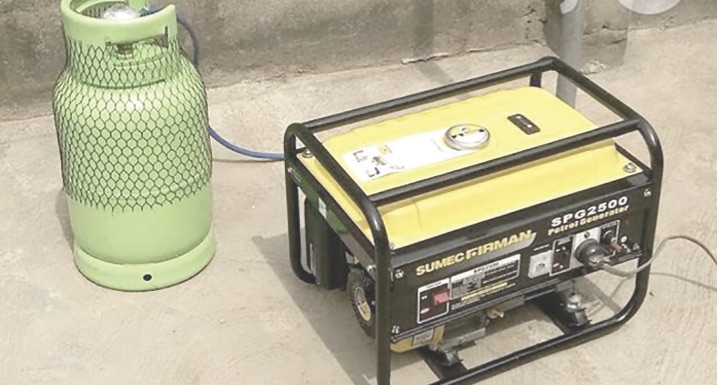
In view of this development, several residences and businesses would have to bear the high cost of electricity which is why many have resorted to converting their petrol-powered generators to run on cooking gas.

The recent developments on the removal of petrol subsidy have led to the hike in pump price of petrol, and have increased the rate of conversion of petrol generators to LPG generators in the states.
Despite assurances from industry stakeholders that installing cooking gas into generators is safe, the Lagos State Safety Commission has warned residents of the state to only employ qualified technicians to convert their generators.
The Commission’s Director-General, Mr Lanre Mojola, welcomed the innovativeness of Nigerians, saying the idea presents cost-saving benefits to consumers over the long term.
“These fuels are cleaner and so do not contaminate the air as much as petrol and diesel do. Natural gas and LPG are often more abundant and domestically sourced in certain regions compared to petrol. This administration is committed to ensuring safety of lives and property of its citizens.
“CNG and LPG are generally cheaper than petrol, offering potential cost savings over the long term. These fuels are cleaner, and so do not contaminate the air as much as petrol and diesel do. Natural gas and LPG are often more abundant and domestically sourced in certain regions compared to petrol,” Lanre said.
Regardless of these advantages, he pointed out that gas-powered generators have some safety risks.
“Spark or heat from the generator can cause a fire outbreak if gas leakage occurs from the hose or cylinder valve. Explosion could occur if the generator house is not properly ventilated, thereby allowing gas leak build-up in enclosed space. LPG is bottled under high pressure with potential for explosions if not properly handled,” he said.
In the same vein, the president of the Nigeria Liquefied Petroleum Gas Association, NLPGA, Felix Ekundayo, emphasised the safety of using gas for generators.
He explained that LPG (liquefied petroleum gas), commonly known as cooking gas, is similar to other fuels we use regularly, while highlighting that LPG is a cleaner fuel compared to petrol, which is a fossil fuel.
He explained the safety of the practice and encouraged Nigerians to consider it.
Ekundayo addressed the perceived risk associated with using LPG for generators, emphasising that it is more of a human handling issue rather than a problem with the fuel itself. He stated that LPG, when handled properly, is as safe to use as petrol.
In his explanation, he compared the handling of LPG for generators to its use in homes for cooking and kitchen tasks, highlighting that there is no difference. As more people are already using LPG for cooking, the transition to using it for generators poses no issue.
Furthermore, Ekundayo discussed the process of switching between petrol and gas in generators. He mentioned that the change in the generator carburetor can facilitate this switch. Some individuals may choose to retain the carburetor and add a converter, enabling the generator to run on both fuels. Others may opt to use gas directly.He stressed the importance of making alterations to generators in a safe and approved manner. Qualified technicians should be sought to perform these conversions, rather than relying on just anyone.
Overall, Ekundayo reassured that using LPG for generators can be a safe and viable choice. Proper handling and seeking professional expertise are crucial for a smooth transition and safe operation.
Using compressed natural gas (CNG) as an alternative to LPG has been suggested due to its lighter nature, potentially offering enhanced safety. However, Mr. Ekundayo expressed his view stating that using CNG for home and small portable generators is not practical.
While it may work, the distribution mechanism for CNG is not feasible in this context. He emphasized that each variant of natural gas has its specific applications and purposes.
In expanding on this point, it can be understood that while CNG may have advantages in terms of being lighter and potentially safer, its distribution infrastructure and requirements may not be suitable for home and small portable generators. LPG, on the other hand, is widely available and has an established distribution network, making it a more practical choice for such applications.
The statement by Ekundayo indicates that different forms of natural gas, including CNG and LPG, have specific uses depending on the intended purpose and the existing infrastructure to support their distribution.
Ekundayo highlighted that the prevention of gas leaks can be achieved by ensuring the use of appropriate accessories. These accessories encompass regulators, hoses (which should undergo regular checks and replacement every 2-3 years), valves, cylinders, and clips used to secure the gas until it is ready to be ignited.
In emphasizing the importance of safety, Ekundayo states that the same level of safety measures employed for cooking with gas at home should also be maintained for using gas in generators and other appliances. Furthermore, he pointed out that gas-fired appliances, such as those used for washing machines and dryers in laundry services, follow similar safety practices.
The statement made by Ekundayo underlines the need for proper equipment and adherence to safety protocols to prevent gas leaks and ensure the safe use of gas in various applications. It emphasizes the parallels between safety practices in cooking and other gas-powered activities.
According to Ekundayo, gas cylinders/canisters should be changed every 15 years but recertified every five years.
Despite the benefits, concerns have been raised by some users regarding the safety of using LPG to power generators, regardless of their size.
Eteobong Ita noted that actions that might seem extreme under normal circumstances are appropriate during adversity.
He said: “The fuel subsidy removal has resulted in mixed reactions, no surprise there. The good news is the stoic and resilient nature of Nigerians is helping to cushion the shocks and hardships following a sharp increase in food prices, goods and services. Removal of the fuel subsidy has also brought in its wake more than a 100% increase in the cost of fuel/litre.
“Hence, many are meeting the various socio-economic challenges head-on. For instance, to reduce costs associated with electricity generation, a growing number of Nigerians have resorted to powering their generating sets with Liquefied Petroleum Gas (LPG).
“So, what can be said about natural gas – also known as fossil gas or simply, gas? It is a naturally occurring mixture of gaseous hydrocarbons consisting primarily of methane in addition to various smaller amounts of other higher alkanes. Although present in low levels, gases like carbon dioxide, nitrogen, hydrogen sulphide and helium can also be found in natural gas.
“Natural gas is a non-renewable resource that is formed when layers of organic matter (mainly marine micro-organisms) decompose under anaerobic conditions and are subjected to compaction or compression, intense heat and pressure in the earth for over millions of years.
“The potential energy that the decayed organisms originally obtained from the sun through photosynthesis is stored as chemical energy within the molecules of methane and other hydrocarbons. When burned for heat or to generate electricity, natural gas emits fewer toxic air pollutants, less carbon dioxide and almost no particulate matter compared to other fossil and biomass fuels.
“In this regard, it could be argued that natural gas is environment-benign – this depends on other variables including applications. CNG is a cleaner and also cheaper alternative to other fuels such as petrol. By the end of 2014 there were over 20 million natural gas vehicles worldwide, led by Iran at 3.5 million, China at 3.3 million, Pakistan at 2.8 million, Argentina at 2.5 million, India at 1.8 million and Brazil at 1.8 million. The energy efficiency is generally equal to that of petrol engines, but lower compared with modern diesel engines. Besides use in road vehicles, CNG can also be used in aeroplanes.
“The big question is how safe is it to run a generating set using natural gas? Foremost, natural gas is not inert because it can react with oxygen in an exothermic reaction. It is combustible! Explosions resulting from natural gas leaks are not uncommon. Homes, small businesses and other structures are most frequently affected when an internal leak builds up inside a structure. A blast is powerful enough to significantly damage a building, with injuries to people ranging from minor to moderate or even fatal.
“The gas may accumulate in high enough quantities to cause a deadly explosion destroying several buildings. Whilst gas is said to usually dissipate readily outdoors, it can sometimes accumulate up to dangerous levels where flow rates are significant. However, considering the tens of millions of structures that use the fuel, individual risk of using natural gas is low.
“With desperate times require desperate measures, necessity becomes the mother of invention. Ideally, the physical conversion of your generating set from petrol to natural gas is not a Do-It-Yourself (DIY) undertaking. Seek the services of an expert. Thoroughly inspect your gas cylinder and hose. Place generating set and gas cylinder in an open and well-ventilated space.”
On her part, the Permanent Secretary of the Ministry of Energy and Mineral Resources, Ms Shola Shasore, said that it is important to note that converting a petrol generator to use alternative and less expensive fuels may require modifications and the installation of appropriate conversion kits by qualified professionals.
Shasore said: “The general public is hereby advised to engage only qualified technicians for this service. When in doubt, please contact the Lagos State Ministry of Energy and Mineral Resources or Lagos State Safety Commission for guidance on professional vendors and installation as well as appropriate safety guidelines.”