Follow Us on Google
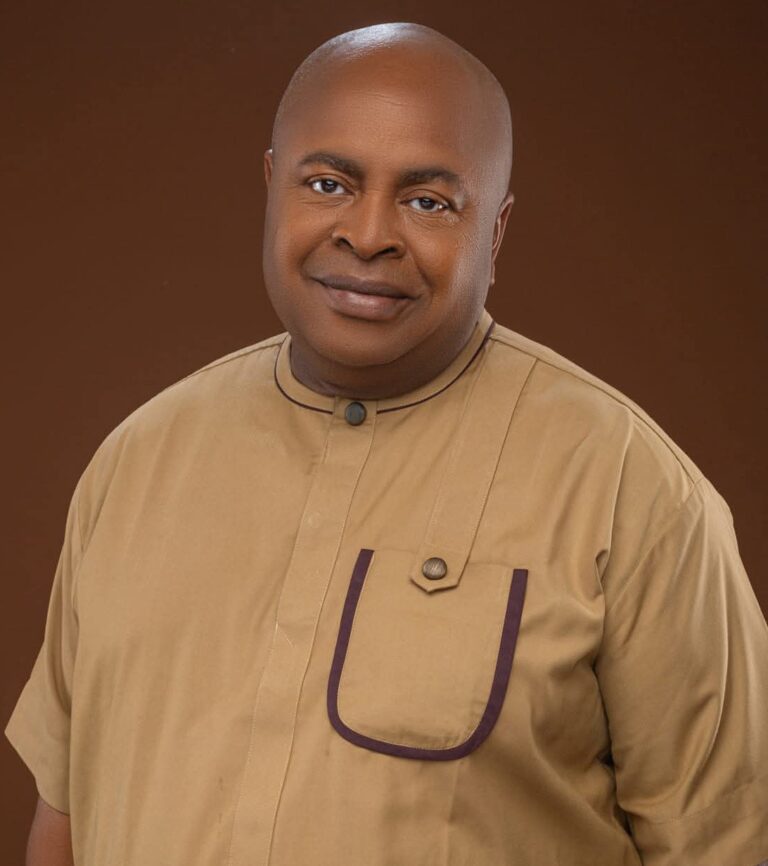
By Bellarmine Nneji
The recently updated curriculum for Nigerian schools is a welcome development. One significant point in the updated curriculum is the reintroduction of history. The removal of the subject leaves a lot of questions in the appreciation of the relevance of our existential progress and development as a nation and society. There is no gainsaying the fact that history contributes to national development. History has a multidisciplinary contribution towards all sectors of our national development. This is one of the reasons it is said that any nation or individual that ignores the past (history) is likely to repeat the mistakes of the past. History has economic, political, social, and other important aspects. One important dimension of history as a subject, which underscores its cogency, is the geographical dimension – historical geography. Africa was forced into many unholy marriages during the scramble and partitioning of African. It has been the major source of conflicts among African nations. The appreciation of these facts, through the teaching of history, can contribute to a better understanding of the need for peaceful coexistence or other peaceful options.
From a critical perspective, the new and updated curriculum raised a lot of critiques and left a lot of loopholes. It appears that those that drafted the curriculum ignored important facts. There is a school of thought that believes that Nigerians are too forgetful. This appears to have played out in the recent updating of the curriculum. There are major grouses with the curriculum.
The first is the level of appreciation of the subject French Language. The Nigerian National Policy on Education (NPE) has French enshrined as the second official language of Nigeria. It was made our second official language by the military government led by the late Gen. Sani Abacha in 1985. If French is our second official language why make it an optional subject at the basic education level. French, as our second official language, should be compulsory at the basic education levels. No Nigerian naturally speaks English, as it is not a mother tongue to any of the ethnic nations in Nigeria. This equally applies to French language. English is our first official language and the medium of instructions at all levels of our educational systems. As it is being taught and studied, people begin to pick interest and develop the needed acumen. This can be equally obtainable once French is made compulsory at certain levels in our educational system. The bottom-line is that, just as many of our children were not born into the English language as mother tongue but later begin to develop interest and professionalism in it, the same can be obtained with French. There are people who do not like English language and would not have offered it if it were to be optional. However they end up being proficient in it and even go further to major in the subject.
The introduction of French language as compulsory at the basic education level has a lot of advantages for students and Nigerians in general. It creates employment opportunities for current and future graduates. Making French language optional at all levels will dampen the opportunities of many French graduates. Definitely, many schools will not offer it and would not waste time and resources employing a French teacher. There are many prospects for French students even if they stop at the basic education level.
It is surprising that those who drafted the new curriculum intentionally downplayed French language, our second official language. It points to the level of our seriousness with regards to how we take our policies as a nation. One can say that we like highfalutin policies but lack the necessary willpower to implement them. Our problem with policies is their implementation. We made national policy on French as our second official language but lack the willpower to implement it. Was the National Policy on Education gleaned at as this curriculum was being updated?
Secondly, our approach to the sustainability of our local languages is very lukewarm. Many of our local languages are threatened by extinction. How does the policy help in curtailing this? The updated curriculum should be specific on the local languages to be taught at the schools. Some questions are raised on what is meant by’One Nigerian Language’. Is every society free to introduce their own local language into the schools in their localities? If they do this, will such be accommodated at the various national competitive exams like WAEC, NECO, JAMB, etc. UNESCO has been at the forefront in campaigning for the development and sustenance of the mother tongue. UNESCO established in its educational goals, the rights of the child to his or her mother tongue. The minorities and their languages should be accommodated by the updated curriculum. Dying minorities’ languages can be given windows of opportunities for official revival, growth and development. We should not kill our identities by ourselves.
It is crucial to begin to look into the issues of minorities languages before the AI scourge closes its doors. Definitely a time will come when the internet will not allow any other language to coexist. Those who control the algorithms will definitely control the languages in the future and might determine which language to be forced into extinction. Local languages are part of our rich cultural heritage.
Thirdly, the Trade Subjects raises a lot of questions. How prepared are we as a nation to ensure the achievement of these various areas of knowledge outlined by the curriculum? The subjects pointed out in the curriculum are entirely perfect but are the basic facilities available for their smooth take off? A critical look at the subject of Computer Hardware and GSM Repairs raises serious concerns. Are the schools in the localities or hinterlands adequately equipped for the take of this particular subject or are they condemned to those of Fashion Designing and Garment Making and Beauty and Cosmetology subjects? How many of the schools in the rural areas have power supply, computers, internet, security, etc. for the success of such programmes? Digital literacy is not a theoretical subject. Policy implementation is still a serious challenge in Nigeria. One of the ways of checkmating urban drift is by ensuring that the schools at the rural areas are equally and adequately equipped like their urban counterparts. Researches indicate that schools in the rural areas are understaffed with regards to STEM teachers. The current curriculum will further make pronounced the deficiencies or highfalutin nature of the policy of equal educational opportunities for all citizens, as contained in the National Policy on Education.
Finally, the team should be commended for their work. It is an effort to be in tune with the current challenges and developments across the globe. There are however manifest lacunae that needs to be taken adequate care of. Equality of educational opportunities should be ensured before this type of policy is floated. This is to ensure and guarantee that no section and region of the society and nation is left foot-dragging in the development of its citizens. Education remains the bootstraps through which nations lift themselves up in the ladder of civilization.
• Dr. Nneji is a lecturer at Alvan Ikoku Federal University of Education, Owerri, Imo State