Follow Us on Google
By Doris Obinna
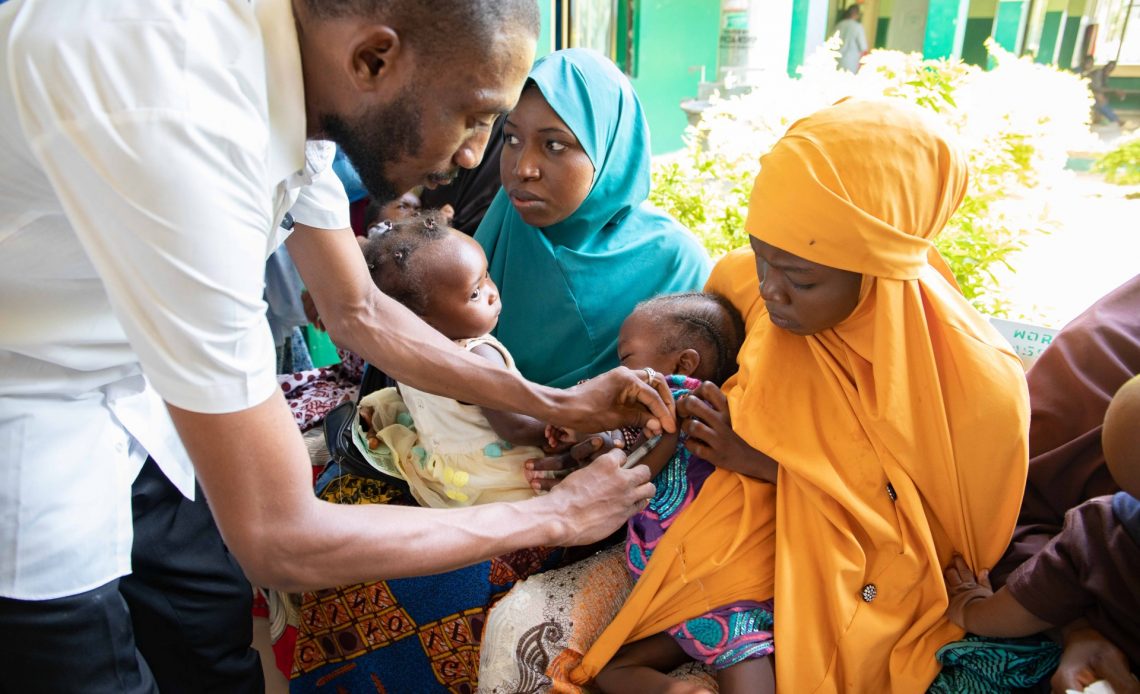
Declining donor funding is putting Nigeria’s child immunisation gains at risk, with health advocates warning that without urgent domestic investment, millions of vulnerable children could be left unprotected.
At an advocacy meeting in Lagos, Save the Children International (SCI) sounded the alarm, urging government and private sector players to step up funding and take ownership of immunisation programmes as external support continues to shrink.
The organisation’s Policy and Advocacy Coordinator for the BOOST project, Itunu Dave-Agboola, said Nigeria must prepare for a future where donor assistance is no longer guaranteed. She stressed that sustaining progress will depend on stronger local financing, wider stakeholder engagement, and a deliberate push to reach underserved communities.
“We need to learn how to stand on our own, even if donor funding disappears completely,” she said, warning that failure to act could reverse years of hard-won progress.
The BOOST initiative is targeting improvements in routine immunisation while tackling the growing number of “zero-dose” and under-immunised children many of whom live in hard-to-reach or densely populated areas.
Dave-Agboola pointed to persistent gaps in healthcare infrastructure, revealing that some wards in Lagos still lack basic health facilities, leaving families with limited or no access to vaccination services. In high-density areas such as Alimosho, she said, population pressure is overwhelming already stretched resources, complicating service delivery.
She added that beyond funding, critical investments are needed in healthcare personnel; vaccine supply chains, logistics, and transportation systems to ensure vaccines reach every child.
Efforts are underway to expand outreach to remote communities, including ongoing interventions in parts of Kano State, but stakeholders say scaling these programmes will require sustained financial backing.
Officials at the Lagos State Ministry of Health echoed the call for action, urging stronger collaboration with major private sector organisations to close funding gaps and support immunisation efforts.
However, concerns over the attitude of some health workers also surfaced during the meeting, with participants alleging that patients particularly volunteers are sometimes neglected, discouraging community participation.
To address this, stakeholders proposed the introduction of special identification cards for volunteers, granting them access to free healthcare services as an incentive to boost grassroots support for immunisation campaigns.
Responding to the concerns, a senior monitoring and evaluation official at the ministry, Andy Lateefah, assured participants that the recommendations would be forwarded to the Permanent Secretary for consideration.
With donor support waning, experts warn that Nigeria faces a critical test: build a resilient, self-sustaining immunisation system or risk leaving its youngest population exposed to preventable diseases.