Follow Us on Google
The Minister of Mines and Steel Development, Dele Alake, has said that President Bola Tinubu deserves praise and accolades rather than condemnation for his decision to remove the fuel subsidy.
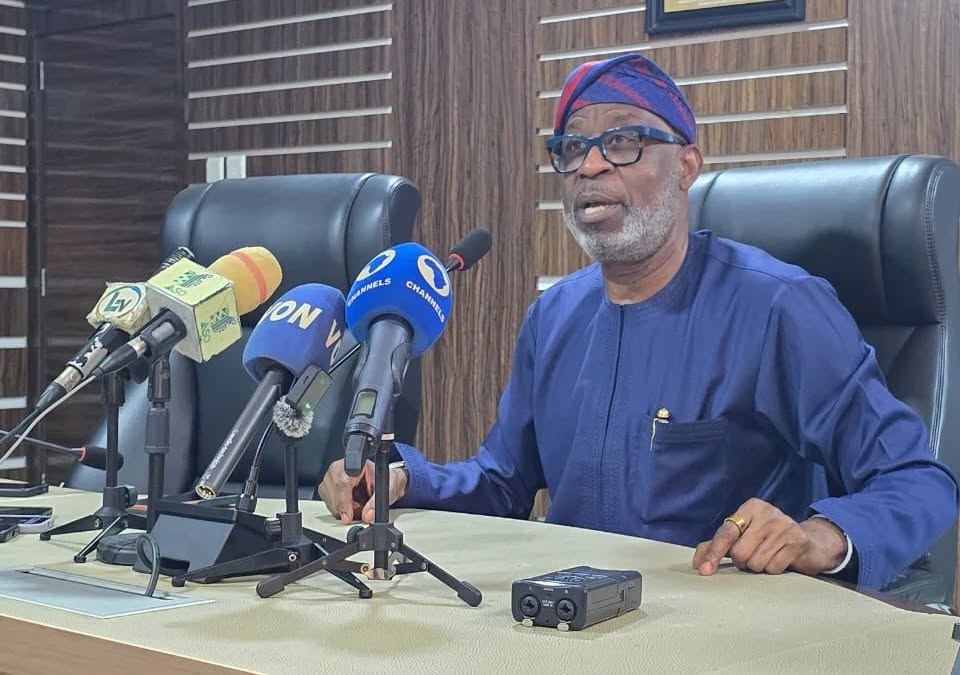
Speaking to newsmen in Abuja on Wednesday, he said that President Tinubu inherited a battered economy, which left him with no option but to take such drastic action by removing the fuel subsidy.
Justifying the decision to remove the subsidy, Alake likened the situation Nigeria found itself in then to a man inside a hole, left with no option but to stop digging, stressing that the more he digs, the deeper he sinks.
Apparently disagreeing with the position of the presidential candidate of the African Democratic Congress (ADC), Alake argued that it takes a leader with courage to take such a decision.
“It does not need me to tell you or elaborate on the fact that we knew what the Nigerian economy was before 2023. And it does not need me to inform you that all the reforms and the policies that were and are necessary to correct these distortions and contradictions in the Nigerian society were there and identifiable by those previous governments. The only thing lacking was the courage to take those decisions.
“And there is no shortcut. They say, our elders say, when you are in a hole, what do you do? You stop digging. Because the more you dig, the deeper you sink.
“But because those previous governments lacked that courage to stop digging, for short-term political expedience, they were afraid of elections, they were afraid of bringing them back to office and all that. So they shifted those decisions, the hard decisions they ought to have taken. I recall, and most of you will be aware, many years ago there was this issue of removal of subsidies, which dominated the space in Nigeria.
“And there were protests, subsidies should not be removed. The government at that time knew they were removing them, they should be removed. But the fact of the matter was, it went back on the process of removing them.
Other News
“When there were protests, it backtracked, because there was an election coming. And so people swallowed the bitter pill. But somebody came and decided to swallow the bitter pill, to take the bullets on behalf of Nigerians.
“It shows in all sense of fairness and objectivity. Give commendation to who it is due. If a man, who is a politician himself, who should be very sensitive to elections, government back to office, decided to take the bullets, regardless of the consequences on his own political career, on behalf of the nation, because the nation had to be reset, it is just very important for us to appreciate that. And that is the kind of person Nigeria needs, for consistency,” he said.
Speaking further, Alake said: “Those hard decisions have been taken. The hard decisions must have their own pertinent challenges. There is no government policy everywhere in the world that is 100% foolproof, especially when it has to deal with human beings. And like I always say, human beings are the most difficult factors of economic production or economic growth.
“There will never be the right time, except you have the vision and the knowledge and the courage to take that decision at the psychological moment. If we hadn’t taken that decision, if the President hadn’t done it the day he did it, three, four months thereafter, you would be using a wheelbarrow to carry currencies to buy one loaf of bread,” he argued.
“We don’t want dictatorship in any form. And the President we have, I smile at the ignorance of those who believe that he is a good people. There is no politician in the political firmament of Nigeria today, to the best of my knowledge, who is more of a democrat than a liberal.
“And they have empirical verification on ground. I worked with him before he was governor, during his reformation, and after, up to today. So I’m not speaking out of partisanship.
“When people who have nothing tangible, landmarks, they have been in public office, they have been governors or vice presidents or whatever. Ask them what landmarks did they leave in their various spheres of authority when they were in public office. That will justify their coming or aspiring to become a leader.
“Ask them. None of them can point to several landmarks as much as I should. And these things take courage. It’s not a wishful thinking. And governance is not a teapot,” he said.