Follow Us on Google
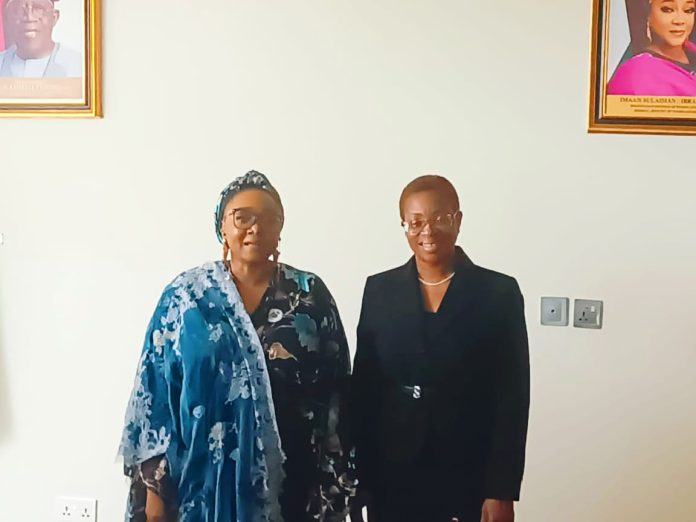
A former governorship candidate of the African Democratic Congress (ADC), in Edo State and chieftain, Mabel Oboh, has condemned the recent fuel subsidy removal by the government of President Bola Tinubu.
Oboh, who was the candidate of ADC at Edo 2020 gubernatorial election said the recent announcement by the Nigerian government on fuel subsidy removal is a significant policy change that has garnered a wide range of reactions from different segments of society.
She said that despite the widespread outcry trailing the removal of fuel subsidy in the country, the newly-sworn in government has insisted that fuel subsidy was gone for good, claiming that there is no funds for it anymore.
“Nigeria’s 16th democratically elected President, Bola Tinubu, sparked off the fuel subsidy controversy during his inaugural address on May 29, when he announced that petrol subsidy was gone. Their reason was that the immediate past administration of Muhammadu Buhari did not make provision for subsidy in the 2023 budget beyond June 2023.
“To the dismay of Nigerians, within 24 hours of the President’s announcement, the price of petrol, Premium Motor Spirit (PMS),
across the country increased to between N488 and N557 per litre. That was from the former price of about N150. This threw Nigerians off balance. Many are confused as they have not been reached with clarifications on what is really going on.
Some filling stations stopped selling petrol to motorists, awaiting a new price regime, while others set arbitrary prices in Lagos, Abuja and other major cities across the country. Tripling the cost of living for a population already considered the poorest in the world is a smirk of insensitivity, a leadership flaw, which in this case, is capable of making the world’s poverty capital transit quickly to grave-yards status.”
She continued: “Putting into account the economic woes Nigerians are currently facing, there is no doubt that the decision to remove fuel subsidy is expected to have a notable impact on inflation, particularly concerning transportation costs, food prices and the prices of imported goods.
“Public policies are meant to always protect the interest of the masses and not force them to wipe away their means of livelihood and make them destitute and beggars. It is inhumane to put out a policy without consulting stakeholders and considering the interest of the public. Once the impact on the common man has been considered, gradual implementation of the policy then follows.”
Oboh, who is a Nollywood veteran, said that to alter the price of an essential commodity like the PMS by 300 percent in one full swoop is beyond comprehension and a public policy disaster that is certain to create very many unintended consequences. No magic wands, spin-doctors media fireworks and President Tinubu’s deployment of his far reaching connections will ever make this approach the best way to address the troubling issue of fuel subsidy.
“From the negative results, it is obvious that neither were the masses’ interest considered nor implementation properly thought out. In any case, the policy was a complete hoax in the first place as claimed by some analysts, who have argued that fuel subsidy in Nigeria was never in existence but a ploy all along for some elites to siphon the country’s hard earned foreign exchange into private pockets.
“However, it is important to note that fuel subsidy reforms have been carried out successfully by many countries such as Indonesia and India without crippling their economy. These exemplary successes can serve as a guide to the Nigeria government. Take Egypt for instance. They embarked on a long term well-structured subsidy reform stretching from 2014 to 2022. Fiscal pressures, economic reforms and IMF support drove the reform. Also, the government implemented gradual price increase, automatic pricing mechanisms and social protection measures. Most significantly, Egypt is using the fuel subsidy savings to expand social safety nets, health insurance and other public services.”