Follow Us on Google

• Commuters switch to cheaper alternatives
Boat operators in Lagos State are lamenting a sharp decline in patronage due to rising fuel prices and higher passenger fares.
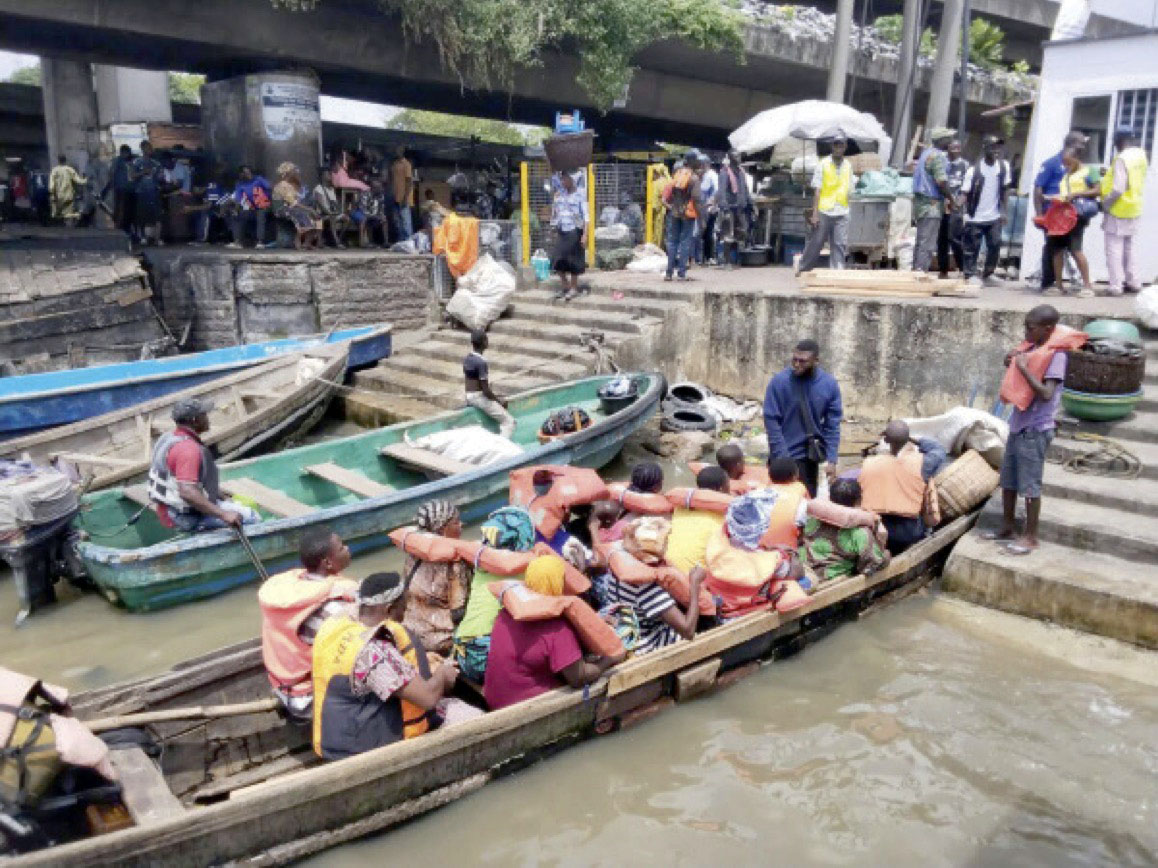
The usually busy Apapa jetty was deserted when Daily Sun visited on Monday, as a boat with a capacity of over 60 passengers struggled to fill just 25, leaving several seats vacant.
A boat driver who spoke with Daily Sun attributed the decline to rising fuel prices, increased operational costs and higher fares, which have forced commuters to seek cheaper alternatives through road and rail transport.
Boat operators described the trend as a threat to the survival of water transportation in the country.
Daily Sun learnt that before the increase in fuel prices, passengers paid N500 for a boat trip from Apapa jetty to CMS. However, the cost of the short trip has now risen to N1,000. More so, a boat trip from CMS to Badagry cost about N7, 000, which makes road transportation a more economical option for many commuters.
This comes as the National Bureau of Statistics (NBS) revealed in its recent Transport Fare Watch that the cost of travelling by water in Nigeria has risen significantly, with waterway passenger fares jumping by 30.88 per cent year-on-year in May 2026. The NBS data showed that the average fare paid for waterway passenger transportation rose from N1,739.32 in May 2025 to N2,276.48 in May 2026.
However, boat owners and operators called on both the federal and state governments to subsidise water transportation,
The operators lamented that improved road networks, cheaper public transportation and rising operational costs had reduced patronage on several waterways routes, leaving some boat services inactive and forcing operators to consider alternative means of livelihood.
Boat owners and operators said the sector would continue to lose passengers to road and rail transport without government intervention to address the high cost of water transportation.
The operators called for subsidies to cushion the effects of rising fuel costs, make fares more affordable and boost patronage, as they even warned that the survival of water transportation businesses depended, in part, on their ability to compete with alternative means of transport.
Speaking with Daily Sun, a tourism and maritime expert, Frank Meke, said that there had not been serious government interest in water transportation, although attention had been given to safety, which he described as a good development.
Meke explained that the government had left the responsibility of making boat parts, accessories and engines easily accessible to the private sector, saying that acquiring these items was expensive, making it difficult for boat operators to maintain their businesses effectively.
“Many Nigerian boat operators had learned how to maintain their boats because they had to take care of the equipment they owned. Some operators had effectively become engineers overnight to maintain their boats, adding that acquiring new boats and two boat engines, including the body, was very expensive,” he said.
However, he questioned why the government, which was spending considerable money on bringing Compressed Natural Gas (CNG) buses into the transportation system, could not also invest in climate-compliant boat engines.
He suggested that the government should consider engines powered by solar energy or electricity for boats so as to cushion the effects of the rising fuel prices and high cost of water transportation.
According to Meke, adopting solar-enabled or battery-powered boat engines would make water transportation cheaper, adding that operators would no longer need to spend money on fuel and engine oil, and such modern engines could also last longer.
Meke also expressed concern over the lack of business education and fact-finding missions to countries such as Singapore, where some of these technologies were already in place.
He said the government should send teams to learn how such systems work and bring the knowledge back to make the technology more affordable for Nigerian boat operators.
He pointed out that 28 out of Nigeria’s 36 states were surrounded by or located around water, yet water transportation had not received the attention it deserved. He lamented that people continued to die in boat accidents, some of which, he said, were caused by poor engine conditions and inadequate maintenance.
Meke explained that when boat engines stopped working, boats could drift, causing passengers to panic and sometimes leading to accidents, urging the government to take a holistic approach to addressing the challenges faced by boat operators, stressing that they were going through a lot despite playing key roles in transportation.
“Boats were essential to many communities in water-surrounded states, particularly those located far from other areas of development. Boats helped transport people from these communities to the upland, as it was not possible to build bridges everywhere. Water transportation should also be developed in line with global environmental practices,” he explained.
Meke maintained that the government had neglected water transportation by failing to focus on making boats and their accessories cheaper and more readily available to operators.
He said improved access to boats and equipment would attract more key players to the sector, adding that ferry services to places such as Onitsha, Akwa Ibom and Benue could encourage people to leave the roads, facilitate the movement of goods and services through waterways, and reduce pressure on roads.
Other News
He pointed out that Nigerians were yet to give water transportation the attention it deserved.
Meanwhile, Mr. Ayomikun Aworetan, Secretary of the Association of Tourist Boat Operators and Water Transporters of Nigeria (ATBOWATON), Lagos Chapter, said water transport operators were struggling to compete with road and rail services because of the disparity in fares.
Aworetan explained that while some commuters had little choice but to use waterways, because of traffic congestion, others were increasingly opting for road transportation where improved infrastructure offered cheaper and more convenient alternatives.
He identified the Ikorodu corridor as one of the routes where water transportation remained important, because of limited road alternatives and persistent traffic congestion.
According to him, commuters travelling from Ikorodu to Victoria Island could arrive in about 30 minutes by boat, compared with the longer journey by road through Fadeyi, Costain and CMS.
He said the route continued to attract passengers because of the time saved, particularly for workers and business owners travelling to Victoria Island.
However, Aworetan said the situation was different on the Badagry corridor, where improved roads and rail services had made water transportation less attractive to passengers.
He explained that travelling to Mile 2 by train cost about N1,000, while the connecting road journey from Mile 2 to Badagry cost approximately N2,000.
In comparison, he said a boat trip from CMS to Badagry cost about N7,000, making road transportation a more economical option for many commuters.
Aworetan argued that government subsidies would help reduce the cost of water transportation, attract more passengers and enable operators to remain in business.
He added that the availability of alternative transportation options, although beneficial to commuters, had put boat operators under increasing financial pressure.
“As business owners on the waterways, it is really affecting us. So we have to look for a means of surviving and look for alternative livelihoods,” he said.
Similarly, Comrade Stephen Ayodeji, Secretary of the Maritime Workers Union of Nigeria (MWUN), Liverpool Boat Unit, said rising fuel prices had increased the cost of operating boats and pushed up fares, discouraging passengers from travelling by water as frequently as they previously did.
Ayodeji also attributed the decline in patronage to reduced maritime activities and improved road infrastructure, which had weakened demand for boat services along some routes.
He disclosed that the Liverpool–Badagry and Liverpool–Agbara routes had become largely inactive following improvements in the state of the roads serving the areas.
According to him, operators had not seen regular boat services from Liverpool to Badagry for about 10 months, as passengers increasingly preferred road transportation because of its lower cost.
Ayodeji added that private boat services from Liverpool to CMS were no longer operating regularly, while trips to Ikorodu had become infrequent.
He said a state government-linked LAGBUS service operated on the Liverpool–Ikorodu corridor on weekdays, usually arriving at about 5 p.m. to convey passengers, further limiting opportunities for private operators to attract commuters.
On his part, Public Relations Officer of the Waterfront Boat Owners and Transporters Association of Nigeria (WABOTAN), Chief Raymond Gold, attributed the decline in patronage to seasonal weather conditions and growing commuter concerns over flooding across the state.
He explained that passengers who choose water transportation during the rainy season generally prefer covered boats, noting that standard water transit vessels offer greater comfort and protection from the rain.
“Ordinarily, patronage is always on the lower side during the rainy period, particularly at the peak that we are experiencing now. With the flooding, everybody is very careful. Many people prefer to travel by road as opposed to by water. We have always advocated for standards. For long-distance trips, the best option is a covered boat so that passengers do not get drenched while on the water,” he stated.
According to him, routes such as CMS-Marina to Ikorodu are largely served by modern covered ferries operated by LAGFERRY and a few private operators, making open boats less attractive on those corridors.
Gold, however, acknowledged that open-roof boats remain operational on several routes where commuters have limited alternatives.
“People would rather board a covered boat than an open boat. The LAGFERRY service is also subsidized, making it cheaper and more attractive to commuters. What usually happens is that once the rain starts, operators use tarpaulin covers to protect passengers. Most times, the driver remains uncovered so that he can see clearly and navigate safely,” he explained.