Follow Us on Google
…CPPE cautions against excessive import liberalisation
By Adewale Sanyaolu
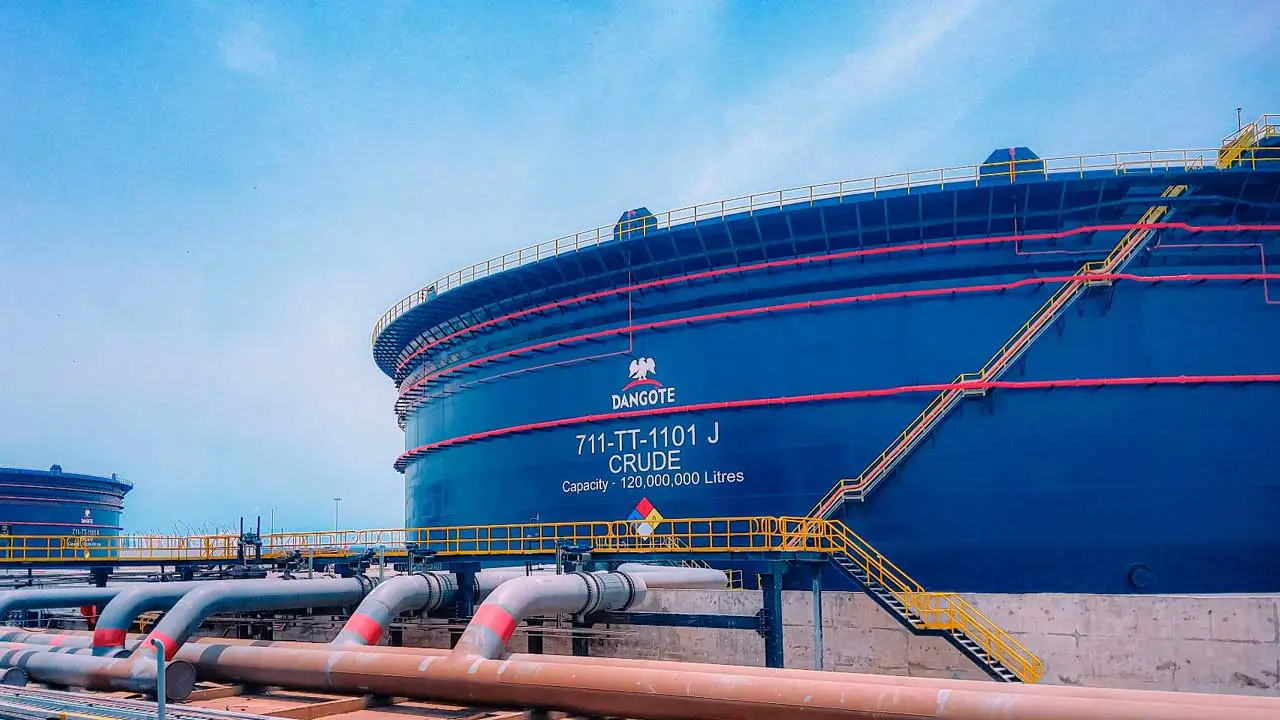
Renewed tensions resurfaced in Nigeria’s downstream petroleum sector at the weekend as the Nigerian National Petroleum Company (NNPC) Limited, the Nigerian Midstream and Downstream Petroleum Regulatory Authority (NMDPRA) and petroleum marketers have resisted efforts by the Dangote Petroleum Refinery to halt petrol imports into the country.
The dispute, now before the Federal High Court in Lagos, centres on Dangote Refinery’s attempt to invalidate import permits recently issued by the NMDPRA to NNPC Limited and several fuel marketers.
The refinery argued that the approvals contravene an earlier court directive for parties to maintain the status quo, insisting that petroleum imports should only be allowed where local production is unable to satisfy domestic demand.
However, in its response before the court, NNPC maintained that restricting fuel import licences could expose the country to supply shortages and disrupt the stability of the petroleum market.
The national oil company argued that allowing only one dominant supplier in the market could create serious concerns for energy security and price stability, particularly if local production falls short of national consumption needs.
It further contended that Nigeria’s petroleum market should remain open to multiple operators in line with existing regulatory provisions and commercial realities within the sector.
The company also challenged claims by Dangote Refinery that it can sufficiently cater for the country’s petrol requirements, stating that there is no independently verified evidence proving the refinery can guarantee uninterrupted nationwide supply.
According to court filings, NNPC insisted that the Petroleum Industry Act (PIA) does not prohibit fuel importation and gives regulators the authority to issue import licences where necessary in order to maintain market stability and product availability.
The NMDPRA has equally sought to be joined in the matter, further deepening the legal battle over fuel import policy and competition in the downstream sector.
Also weighing in on the controversy, the Petroleum Products Retail Outlets Owners Association of Nigeria (PETROAN) cautioned against any attempt to stifle competition in the petroleum distribution chain.
National President of PETROAN, Mr. Billy Gillis-Harry, said while Dangote Refinery has the legal right to approach the courts, the downstream sector must remain competitive and inclusive in the interest of consumers and national energy security.
He said competition remains necessary to ensure product availability, fair pricing, operational efficiency and sustainability across the fuel supply chain.
According to him, no single operator, regardless of investment size or refining capacity, should dominate the market to the detriment of other participants.
Other News
Gillis-Harry acknowledged the significant investment made by the Dangote Petroleum Refinery in boosting local refining capacity and reducing reliance on imports, but stressed that the sector should continue to operate as a liberalised market under the supervision of government regulators.
He warned that any move capable of creating monopoly conditions could ultimately lead to higher prices, reduced choices for consumers and possible supply disruptions.
Dangote Refinery had argued in its suit that the issuance of fresh import licences undermines local refining efforts and runs contrary to provisions of the Petroleum Industry Act.
NNPC, however, dismissed allegations that it deliberately frustrated Dangote Refinery’s operations or denied it crude supply, maintaining that crude allocation decisions are influenced by commercial considerations, operational realities, logistics and security conditions.
However, the Chief Executive Officer (CEO), Centre for the Promotion of Private Enterprise (CPPE), Dr. Muda Yusuf, argued that Nigeria must avoid a policy direction that promotes unrestricted importation of petroleum products, warning that such an approach could undermine domestic refining capacity and slow the country’s industrial development.
He maintained that no economy achieves meaningful industrialisation through sustained import dependence, especially in a strategic sector like energy.
According to CPPE, excessive reliance on imports historically contributed to major economic distortions in Nigeria, including pressure on foreign reserves, exchange rate instability, fiscal leakages, and the collapse of local refining capacity.
It recalled that the country previously spent large sums annually on fuel imports, alongside substantial subsidy burdens, which collectively weakened macroeconomic stability and eroded industrial competitiveness.
Yusuf further maintained that Nigeria risks repeating these outcomes if it adopts what it describes as indiscriminate trade liberalisation at a time when domestic refining investments are still emerging.
It cited global examples such as the United States, China and India, which it says actively support and protect domestic industries through industrial policy tools like tariffs and subsidies, stressing that energy security is also a core element of national security.
The CPPE also highlighted structural disadvantages facing local refiners, including high energy costs, infrastructure gaps, multiple taxation and foreign exchange volatility, which it says make competition uneven.
It added that allowing unrestricted imports in such conditions could amount to deindustrialisation, weaken local value chains and destroy jobs.
While acknowledging competition concerns, it insists that large-scale refining capacity should not be mistaken for monopoly and urges that any market issues be addressed through proper competition regulation rather than policies that could undermine domestic production.