Follow Us on Google
By Michael Anthony
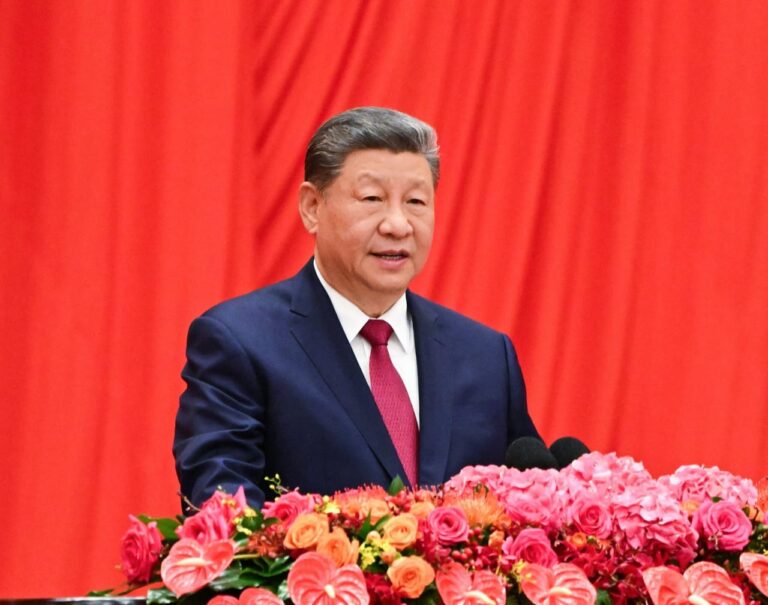
On September 1, 2025, at the Shanghai Cooperation Organization Plus Meeting in Tianjin, Chinese President Xi Jinping placed a new proposition before a world struggling with war, inequality, geopolitical rivalry, economic fragmentation and a rapidly changing technological landscape. He called it the Global Governance Initiative (GGI).
At first glance, the GGI appeared to be another diplomatic doctrine in an increasingly crowded field of international initiatives. But one year later, the evidence suggests that something more consequential has been happening. The initiative has begun to move from the realm of principles and speeches into the realm of institutions, platforms, rules and practical cooperation. That transition deserves attention.
The GGI was conceived around five core concepts: sovereign equality, international rule of law, multilateralism, a people-centred approach and real results. Its stated objective is not to demolish the existing international system and replace it with a Chinese-designed alternative. Rather, China argues that the international system, particularly the United Nations-centred system, should be reformed so that it becomes more representative, effective, responsive and equitable.
The question, therefore, as the GGI approaches its first anniversary, is not simply whether China has produced another foreign-policy slogan. The more important question is whether the initiative is beginning to provide practical answers to one of the defining problems of the 21st century: how can humanity govern an increasingly interconnected world when the institutions created in the aftermath of the Second World War are struggling to respond adequately to today’s realities?
From an idea to an international constituency
The first achievement of the GGI is its rapid acquisition of international support. According to China’s Foreign Ministry, nearly 160 countries and international organizations have expressed support or positive responses to the initiative, while more than 60 countries have joined the Group of Friends of Global Governance. The group has held discussions at the United Nations in New York, Geneva and Vienna, focusing on issues including democratization of international relations, the UN Charter, the central role of the United Nations, narrowing the North-South gap and addressing practical global problems.
That does not mean that all these countries subscribe to every aspect of China’s worldview. International diplomacy rarely works that way. Rather, it demonstrates that the central concerns identified by the GGI resonate beyond China: developing countries want greater representation; smaller states want their sovereignty respected; societies want international law to mean something in practice; and the Global South wants a greater role in decisions that affect its economic and political destiny.
The GGI has therefore benefited from a powerful historical circumstance: the world is experiencing a governance deficit at precisely the moment when the demand for effective global governance is increasing. Climate change does not respect borders. Neither do pandemics, cybercrime, artificial intelligence, financial instability, terrorism, food insecurity or transnational environmental degradation. The world consequently needs more cooperation, not less.
The first distinctive feature of China’s approach is its insistence on sovereign equality. For developing countries, this is not merely diplomatic vocabulary. It touches the heart of international relations.
African countries, for example, have often found themselves participating in global institutions whose rules were established when most of today’s developing countries had little influence over their design. The question of representation on the UN Security Council, voting structures in international financial institutions and the distribution of decision-making power in global economic institutions all reflect this historical imbalance.
The second principle is international rule of law. The GGI argues that international relationsshould be governed by universally recognized rules rather than by the preferences of the strongest states. This is particularly significant in an era when unilateral sanctions, trade restrictions, geopolitical coercion and competing interpretations of international law have become increasingly prominent.
The third is multilateralism. China’s proposition is that global problems require collective solutions. The United Nations therefore remains central to the Chinese conception of global governance. The June 2026 white paper explicitly states that reforming global governance does not mean abandoning the UN-centred international system, but making existing institutions more capable of responding to contemporary challenges.
The fourth is the people-centred approach. This shifts the discussion away from institutions alone. The ultimate measure of global governance, under this conception, is whether international cooperation improves people’s lives.
Finally comes perhaps the most demanding principle: real results. This is where the GGI is beginning to distinguish itself from many declarations that have populated the international system for decades. A global initiative ultimately has to produce institutions, agreements, financing, technology, capacity-building, dispute resolution and measurable improvements in people’s lives.
The real test: building institutions
The most interesting development during the GGI’s first year is therefore institutional. Consider the International Organization for Mediation (IOMed). The Convention establishing the organization was concluded in Hong Kong in May 2025 and entered into force on August 29, 2025. The United Nations has welcomed the organization as a potential additional platform for peaceful dispute settlement, including cross-border commercial and investment disputes.
This is important because the contemporary international system has a chronic problem: countries often have mechanisms for adjudication after disputes have hardened, but mediation can provide a less adversarial avenue for preventing disputes from becoming destructive conflicts. The GGI’s emphasis on dialogue and peaceful settlement therefore finds a practical expression in IOMed.
Then came the World Data Organization (WDO), formally established in Beijing in March 2026.Its stated mission includes bridging the data divide, promoting regulatory cooperation, facilitating secure and trustworthy data flows, and helping countries develop the digital economy.This is significant because data is rapidly becoming one of the most important strategic resources in the global economy.
For Africa, the question is enormous. If African countries become merely suppliers of raw data while foreign companies capture the highest-value applications of artificial intelligence and digital technologies, the continent could reproduce an old colonial economic pattern in digital form.
A global framework that helps developing countries acquire digital capabilities, protect their data, participate in international data markets and share in the value created by artificial intelligence could therefore have enormous developmental significance.
The third major institutional development is the World Artificial Intelligence Cooperation Organization (WAICO). In July 2026, representatives of 29 countries signed the agreement establishing the organization, with Shanghai designated as its headquarters. The organization is intended to promote international cooperation and global AI governance and to ensure that AI develops in a beneficial, safe and equitable direction.
Particularly noteworthy is the stated intention to help Global South countries strengthen their capacity in AI innovation, application and governance. This could become one of the most consequential components of the emerging GGI architecture.
Artificial intelligence may become to the 21st century what electricity and industrial machinery were to earlier eras. If access to AI capability is concentrated overwhelmingly in a small number of countries and corporations, the global development gap could widen dramatically.
If, however, developing countries can participate in AI governance, acquire computing and technical capacity, develop local applications and build their own human capital, AI could become a powerful instrument of inclusive development.
Xiong’an and the institutionalization of dialogue
The forthcoming Xiong’an Global Governance Forum represents another step in this process. China announced that the inaugural forum will be held in Xiong’an in autumn 2026 and will bring together different stakeholders to discuss reform and improvement of global governance.
The importance of such a forum should not be underestimated. Institutions do not emerge from treaties alone. They are built through dialogue, experimentation, networks, expert communities and political consensus. Xiong’an could therefore become a laboratory for converting the broad principles of the GGI into practical proposals.
The challenge will be to ensure that the forum becomes genuinely international in participation and intellectual diversity, rather than simply another platform for reiterating established positions.
And this is why we have to ask the critical question, what does the GGI mean for the Global South?
Perhaps nowhere is the GGI potentially more consequential than in the Global South. For decades, developing countries have complained that the international system suffers from an imbalance between responsibility and representation. Developing countries are frequently expected to implement global decisions, comply with international standards and absorb the consequences of global crises, while possessing comparatively limited influence over the institutions that make the rules.
The central promise of the GGI is ultimately simple: that global governance should work for all, not merely for the most powerful. The Global South needs productive power. It needs technology. It needs finance. It needs skills. It needs infrastructure. It needs access to markets. It needs the capacity to produce rather than merely consume global solutions. This is where the GGI could become genuinely transformative if it connects governance reform with development.
The real test now is whether that promise can be translated into institutions that are representative, rules that are fair, cooperation that is practical and outcomes that ordinary people can feel. If the first year was about proving that the idea could travel, the second year must prove that the idea can deliver. That is where the real history of the Global Governance Initiative will begin.
_________________________________________________
Anthony, an international affairs analyst, writes from Lagos