Follow Us on Google
In the first part of this series, I recounted how a chance conversation with the Israeli Ambassador to Nigeria led to an invitation to study desertification at Ben Gurion University in Israel. That opportunity opened a new chapter in my understanding of the environmental challenges confronting the Sahara and the communities living along its edges.
In this second part, I take readers through my experiences in Israel, from visits to some of the world’s most revered religious and historical sites to my studies in the Negev Desert, where I witnessed firsthand the results of decades of determined efforts to reclaim arid land. More importantly, I share how those experiences shaped my thinking and inspired the establishment of FADE Africa, the vehicle through which I hoped to translate ideas into action back home in Nigeria.
I vowed not to fritter away this opportunity, and so when I was not studying or working on a project, I toured every historic or holy site. The rich culture and holy places of the Jews and the Arabs meant that one needed to be well guided and tutored, and Ambassador Obiozor had the perfect answer to my educational needs.
He duly arranged for an Arabic tour guide for all my Friday and Saturday tours and a Jewish guide for my Sunday tours. So by implication, I had the best of both worlds. I was able to visit the East and West Jerusalem, the Temple Mount, Sea of Galilee, St. Peter’s home where I understood Jesus spent most of his time in. I also visited the tomb where Jesus was buried.
Israel, being the repository of some of the holiest places in Islam, Christianity, and Judaism, has gone to great lengths in preserving these sites, churches, mosques, and temples. So also have the Palestinians. It is probable that the state and ‘nation state’ reap the benefits of tourism-driven economics from visiting pilgrims.
What intrigued and left me wondering was how they have both managed to preserve these holy sites given the level of belligerence they have each exhibited. Being there for a few months, I realised that perhaps also, these sites are needed to be kept safe, holy, and accessible for the security of the peoples of the world at large. I am awed
and have tremendous respect for what the Israelis and Palestinians have achieved and the restraints that continue to be shown by both sides.
The study arrangement with the University was suitably planned but hectic. It included visitations to so many locations from where the touring of the Negev Desert started. My stay with the university community was an experience that will live with me for the rest of my life. My final project involved the design of a greening system appropriate for the taming of the Sahara. This work received favourable reviews from my supervisor and the academic staff of the faculty.
The direct consequence of this was the signing of a memorandum of understanding on collaborative studies and projects between the University and I. The University offered to assist with “wall of tree” programmes I planned to build at locations in Nigeria. This was a most happy development and on my return to Nigeria, I shared the good news with the government. I was excited by the fact that my pilot projects would have the input of world renowned experts in the recovery of arid lands.
Unfortunately, my joy and expectations were short lived, as two weeks after my return, the second Intifada in the West Bank and the settlements started, following the visit of General Ariel Sharon to the Temple Mount in September 2000. Since all of my projects were designed for the northern part of Nigeria where desertification is ravaging farm lands and villages at an alarming rate, and whose population is predominantly Muslim, the Israelis, out of concern for their safety, declined to continue with their collaboration as enshrined in the MoU, which I signed with the university.
That notwithstanding, I was determined to implement the first of the pilot projects without further ado. The training I received in the Negev Desert was burning in me and needed to be put to use. I also believed that as soon as the security situation allowed it, the Israelis would join me. For me, waiting and doing nothing was not an option.
Other News
Prior to the start of the pilot project, I incorporated a much needed vehicle for my work and advocacy in environment. This vehicle is an NGO, limited by guarantee, and called Fight Against Desert Encroachment (FADE), Africa. We defined, at inception, the goals and objectives of FADE, clearly outlining our commitments and aspirations.
FADE is committed to the prevention and control of environmental degradation with more emphasis on desert encroachment. Its primary mission is to create awareness on a global scale of the immediate, medium, and long-term implications of desert encroachment and desertification. Understanding the constraints of policies, because of frequent changes in African governments and diminishing donor support, FADE has chosen a medium term strategy that combines an awareness program with direct action.
In developing countries in general, and particularly in Africa, a vicious cycle exists where land degradation is accelerating, productivity is decreasing, and poverty is increasing. To directly address the causes of desertification in the Sahel region, FADE has done and will continue to do the following:
Investigate different soil strata that exist along the edges. This phase will be very important, because not all strata in the Sahara will accept vegetation, so it is important to identify workable areas. This will help in identifying areas that will be treated. This process is already taking place.
Investigate underground water resources. I began this process during the Sahara crossing by identifying oases with a view to cultivating sufficient irrigation networks that will sustain vegetation. Vegetation will have to be suited to the particular soil state identified. These kinds of experiments have already begun in the Niger Republic and have been quite successful, but limited in their reach because of insufficient resources.
Conventional investment circles lack the flexibility necessary to involve potential recipients. FADE adopts an investment process that will be transparent to donors and more accessible to the recipients.
FADE has built and will continue to build strong partnerships with the most critically affected groups, and continue to ensure that this remains a grassroots organization in touch with and catering for their needs.
FADE will also be a partner to donors by serving as an adviser on desertification issues. Already active are consultative workshops that will convene in affected countries in the Western African region along with the donor community. These workshops serve as a review process where strategies and impacts can be assessed and funds can be pledged.
FADE continues to work with the inhabitants of affected countries to plant 4 trees for every one felled, and with individuals in the global community to plant one tree each for the future of Sub-Saharan Africa.
Prior to establishing FADE Africa, I had a long standing relationship with the Emir of Kano, Late Alhaji Ado Bayero, with whom I had, over the years, shared many thoughts and stories about the desert.
On two separate occasions, in the course of our discussions, the Emir had volunteered to come to the desert with me on any of my subsequent trips. But I could never take him up on it because I could not conceive how in the world I could manage such a logistical challenge of taking him through the desert.
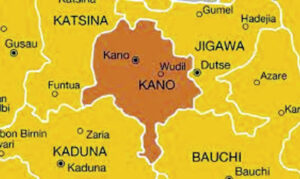
It therefore came almost without prompting to me, that in choosing the location for my first pilot project, I decided to approach the Kano State Government, who welcomed my plans with so much enthusiasm. Therefore, with the assistance of the Emir, the founding members of FADE, the Project Consultant, Winnie Aduayi, we raised funds and seedlings for the project, from the Kano State Government, the British High Commission in Abuja, International Energy Insurance Plc, the Emirate Council, and Exxon Mobil.
With the funds secured and the support of key partners in place, what had begun as an idea inspired by lessons from the Negev Desert was now on the verge of becoming a reality in northern Nigeria.
The challenge before us was enormous, but so too was our determination. We had a vision, we had a community willing to embrace it, and we had a growing belief that the advance of the desert could be challenged through practical action rather than endless discussion.