Follow Us on Google
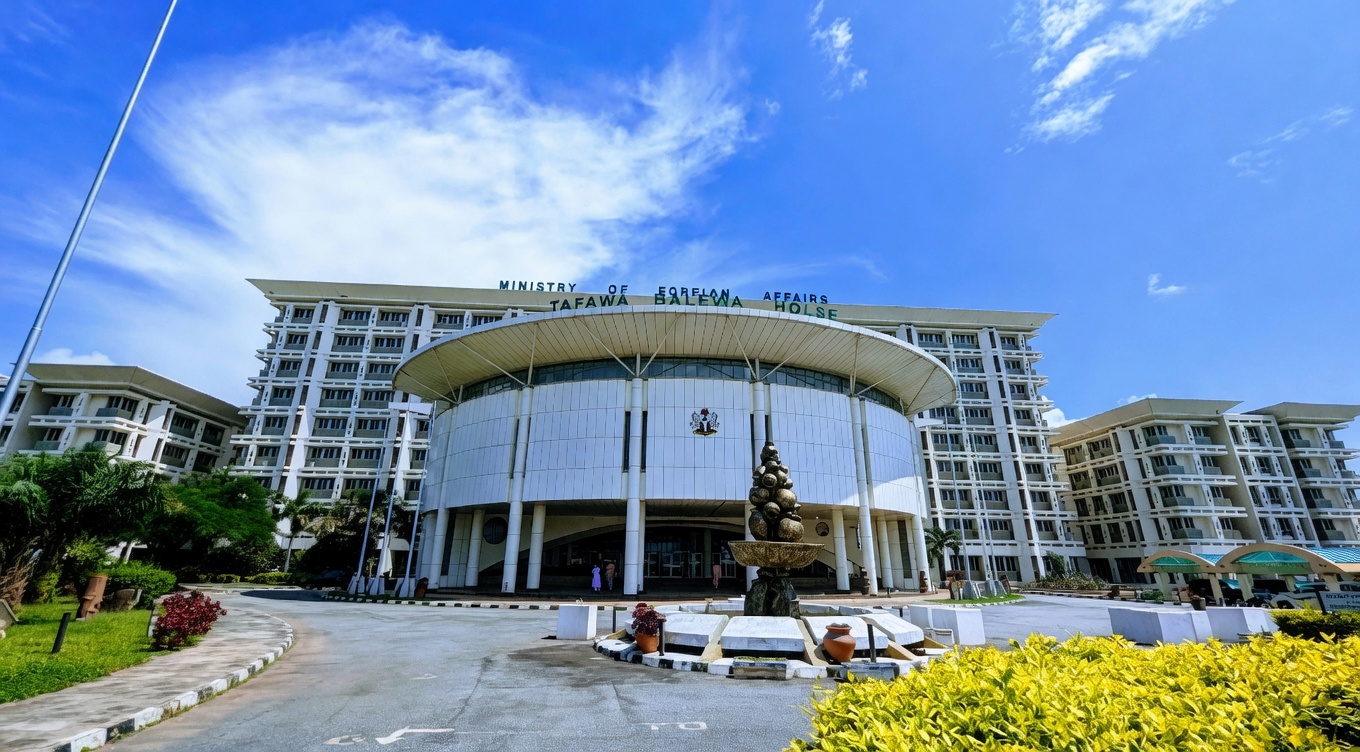
From Adesuwa Tsan, Abuja
Former ministers of foreign affairs, Major General Ike Nwachukwu (retd) and former governor Sule Lamido, have called for sweeping reforms in Nigeria’s diplomatic architecture, citing chronic underfunding of foreign missions and a politicised ambassadorial appointment process.
They spoke in Abuja on Tuesday at the public presentation of Ambassador Nwobu’s memoir, Fragment of Time: My Foreign Service Years, where they highlighted structural weaknesses undermining Nigeria’s global diplomatic effectiveness.
In his address, Nwachukwu, chairman of the occasion, warned that persistent funding gaps are weakening the country’s foreign missions and limiting their ability to function effectively.
“Several of our missions are struggling to meet basic obligations. When you underfund diplomacy, you undercut your voice abroad,” he said.
“Diplomacy is not ornamental. It is a core instrument of national power. If you starve it of resources, you diminish the country’s standing,” he added.
He stressed that inadequate funding has left many missions operating below capacity, undermining their ability to engage strategically and deliver essential consular services.
“Our missions must be properly funded. Diplomacy requires resources, and without adequate funding, our ability to represent Nigeria effectively on the global stage will be severely constrained,” he stated.
On ambassadorial appointments, Nwachukwu criticised the increasing preference for political appointees over career diplomats, saying merit and experience were often being sidelined.
“We have a situation where political considerations override competence. That is not sustainable for a serious country,” he stated, warning that the trend is hurting morale within the foreign service and limiting opportunities for career advancement.
“It is disheartening that dedicated officers who have spent years in service find it difficult to attain the highest levels of their profession because of the growing number of non-career ambassadorial appointments.
“Career officers spend decades building expertise, only to be overlooked. We must not sacrifice professionalism on the altar of patronage,” he added.
To address the imbalance, Nwachukwu called for a return to the traditional ratio of ambassadorial appointments.
“We must return to the 80–20 ratio. That way, we can motivate our young men and women in the service and ensure that merit and experience are rewarded,” he said.
Speaking further, he advocated the establishment of a Foreign Service Commission to strengthen professionalism and institutional stability, saying:
“We must establish a Foreign Service Commission that will institutionalise best practices, protect the integrity of the service, and ensure that career diplomats are given a fair opportunity to grow.”
According to him, stronger institutional structures would enhance continuity in foreign policy execution and improve Nigeria’s global standing.
“There has to be a deliberate effort to restore balance — retain institutional memory, reward professionalism, and ensure continuity in policy execution,” he continued. “Our officers represent Nigeria in difficult environments. They deserve adequate support, not constraints that limit their effectiveness.”
In his goodwill message, former Jigawa State governor and former Foreign Affairs Minister Sule Lamido emphasised the importance of national pride, inclusiveness and cultural identity in shaping Nigeria’s international engagement.
Recounting his time in office, he said he assumed duty without a prior technocratic background, which initially created a disconnect between him and career civil servants.
“When I became minister, I had no prior experience or exposure. Many of the senior officials were technocrats, and there was a clear gap in orientation and understanding.
Other News
“They saw me as different — someone coming from outside their system. I had to find a way to bridge that gap and make them understand my vision,” he recounted.
Lamido said he addressed the disconnect by exposing officials to grassroots realities.
“I took them to my village so they could see where I come from and understand the real Nigeria — the original Nigeria beyond offices and protocols,” he said.
“Nigeria is a mix of the rich and the poor, the urban and the rural. That is the true Nigerian identity I wanted them to see and appreciate,” he added.
He stressed that Nigeria must engage the global community with dignity and confidence because “we may not be the richest country, but we must carry ourselves with honour, integrity, and character.
“Nigeria must engage the world on the basis of equality,” he stated. “I do not believe in being patronised or looked down upon. Nigeria is a sovereign nation with history and pride, and we must assert that in all our engagements.”
While acknowledging the role of technocrats, Lamido maintained that leadership requires decisive action.
“Experts provide guidance, but leadership must make decisions. At times, I had to assert my position to achieve what I believed was right,” he noted.
Also speaking, Chairman of the Organising Committee, Ambassador Godknows Igali, underscored the importance of documentation in preserving Nigeria’s diplomatic history and institutional memory.
“This is a coming together of a family, the family of Nigeria’s foreign service, people deeply committed to projecting Nigeria’s image globally,” he said.
He described the book as a significant contribution to Nigeria’s diplomatic record, while commending Ambassador Nwobu, whom he described as a “diplomat’s diplomat”, for his extensive service.
“This is not just a memoir; it is a chronicle of Nigeria’s diplomacy. It provides insight into how policies were formulated and how our engagements on the global stage have evolved,” Igali stated.
“He represents the finest traditions of our diplomatic service — a diplomat’s diplomat who has contributed immensely to shaping Nigeria’s foreign policy,” he said.
Igali noted that diplomacy is often conducted discreetly, making such documentation essential.
“Much of diplomacy happens behind closed doors — through quiet negotiations and confidential communications. As a result, many important experiences are never documented,” he said.
He described the memoir as a landmark work.
“For anyone seeking to understand Nigeria’s diplomatic journey over the past fifty years, this book is an invaluable resource,” he added.
The event drew diplomats, policymakers and stakeholders amid renewed calls for reforms to strengthen Nigeria’s foreign policy framework and enhance its global relevance.
Reviewing the book, former Minister of Aviation and Corps Marshal/Chief Executive of the Federal Road Safety Corps, Osita Chidoka, and former Vice-Chancellor of Kwararafa University, Professor Yakubu Ochefu, said it reflects the author’s journey from childhood through his years as a career diplomat and offers valuable insight into how to reform Nigeria’s “dysfunctional” public sector.
“I recommend this book for people who want to know how this country was when it was functional,” Chidoka said.