Follow Us on Google
From Okwe Obi, Abuja
For farmers across Nigeria, the challenge is no longer simply about putting seeds in the ground and waiting for harvest. In many parts of the country, insecurity and the growing menace of adulterated farm inputs are making agriculture increasingly difficult and less profitable.
Insecurity remains one of the biggest concerns confronting farmers, particularly in agrarian states such as Plateau, Benue and Taraba, as well as across the North-East. The spread of banditry and other forms of violence has disrupted farming activities, with many farmers unable to access their farmlands safely or cultivate them at the scale required.
The consequences go beyond the farms. Traders, transporters and other participants in the agricultural value chain are also affected as insecurity disrupts the movement of food from production areas to markets. The result is a weakened rural economy, reduced farm output and growing pressure on food supplies.
For farmers who manage to overcome the security challenge, another threat awaits: poor-quality and adulterated fertiliser.
The continued circulation of adulterated fertiliser has become a major source of concern for the government and farmers alike. Despite repeated warnings, enforcement efforts and sanctions, the problem has persisted, leaving farmers vulnerable to financial losses at a time when the cost of agricultural inputs is already putting pressure on their margins.
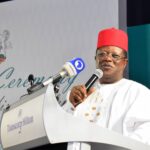
To this end, NADF Executive Secretary, Mohammad Ibrahim, disclosed that about 25,200 farmers from Kaduna, Kano, Katsina, Kebbi and Jigawa states secured the Federal Government’s 100,800 bags of fertiliser through the Renewed Hope Farm Input Support Programme (FISP), with a bold inscription ‘Not for Sale’.
Ibrahim said the initiative was designed to reduce production costs, improve access to quality farm inputs and boost food production.
He explained that each beneficiary will receive four bags of fully subsidised fertiliser, while each participating state will receive 20,160 bags for distribution to 5,040 farmers identified through state governments and the All Farmers Association of Nigeria (AFAN).
According to him, the North-West intervention forms part of a nationwide scheme that will see 515,720 bags of fertiliser distributed to 128,930 smallholder farmers across the country.
He noted that the fertilisers are locally produced, traceable and clearly marked “Not for Sale” to prevent diversion.
He added that NADF had also concluded plans to deploy over 1,800 extension advisory workers nationwide to support farmers with technical guidance and best practices.
The NADF boss highlighted the agency’s ongoing interventions in the region, including support for over 5,000 ginger farmers affected by blight in Kaduna State and assistance to flood-affected onion farmers in Kebbi and Sokoto states.
On his part, Katsina State Governor, Dikko Umaru Radda, lauded President Bola Tinubu for prioritising agriculture, describing the fertiliser support scheme as a strategic intervention aimed at increasing productivity and strengthening food security.
Also, Minister of Agriculture and Food Security, Abubakar Kyari, said the initiative was a demonstration of the Federal Government’s resolve to support smallholder farmers while boosting local fertiliser production.
Kyari noted that the intervention aligns with the State of Emergency on Food Security declared by President Tinubu which is expected to contribute to increased agricultural output, job creation and improved food security nationwide.
Before then, Vice President Kashim Shettima flagged off nationwide distribution of 515,720 bags of urea and NPK fertilisers to 128,930 smallholder farmers across 25 states and the Federal Capital Territory (FCT) under the National Agricultural Development Fund’s (NADF) Renewed Hope Farm Input Support Programme(FISP).
Shettima, represented by the Minister of State for Agriculture and Food Security, Abdullahi, described the intervention as a major step towards boosting agricultural productivity, strengthening food security and improving farmers’ livelihoods in line with President Bola Ahmed Tinubu’s Renewed Hope Agenda.
He said 11,210 bags of fertiliser would be distributed to 2,930 registered farmers in the FCT, stressing that the programme targets smallholder farmers, cultivating less than 0.5 hectares of land, who form the backbone of Nigeria’s food production system.
Other News
“The provision of 515,720 bags of urea and NPK fertilisers to 128,930 smallholder farmers underscores this administration’s resolve to uplift our farmers and enhance agricultural productivity,” he said.
The Vice President called for transparent distribution of the fertilisers and urged stakeholders to ensure the inputs reach intended beneficiaries, particularly women, youths and vulnerable farmers.
NADF’s Mohammed Ibrahim, said the intervention is implemented at a critical stage of the farming season to reduce production costs, increase yields and strengthen national food supply.
“Food security is not a side issue. It is a national priority. It is central to economic stability, rural prosperity, job creation and the well-being of the Nigerian household,” Ibrahim said.
He noted that the Farm Input Support Programme(FISP) is a targeted intervention designed to deliver the right inputs to the right farmers at the right time, adding that all fertilisers distributed under the scheme are locally produced, traceable and clearly marked “Not for Sale” to ensure accountability.
Chairman, House of Representatives Committee on Agriculture Production and Services, Bello Kaoje, described the initiative as a direct anti-hunger measure that would boost food production, stabilise food prices and support inclusive economic growth.
Kaoje said the programme would be closely monitored to ensure transparency, accountability and measurable impact on farm productivity, food supply and rural livelihoods, as efforts to achieve national food security gather momentum.
Ibrahim, also announced that the Fund had commenced a capacity building initiative for extension personnel and food specialists from the North Central states and the Federal Capital Territory (FCT).
According to him, the Fund rolled out Grassroots Digital Extension Corps (GDEC) initiative across the country, stressing that the Lafia training was the first in a nationwide series that will be replicated in the country’s five other geopolitical zones.
In addition, he explained that participants are to undergo intensive sessions on digital extension services, climate-smart agriculture, data collection, farmer advisory services and modern communication techniques before receiving professional certification at the end of the programme.
Also, NADF Head of Policy and Advocacy, Yejide Olarinde, said strengthening the capacity of extension workers remains central to improving agricultural productivity.
“Agricultural extension remains the critical link between research institutions, government interventions and farming communities.
“Strengthening the capacity of extension personnel is essential to improving technology adoption, increasing productivity and achieving sustainable food security,” she said.
According to Olarinde, the nationwide exercise will train 1,110 extension agents and 774 food security specialists, creating a pool of professionals equipped to support farmers and improve food security planning.
She said each participant who completes the scheme would receive a digital tablet loaded with the approved training curriculum and extension materials.
“These digital tools will ensure that extension personnel have easy access to training materials and can effectively deliver knowledge and advisory services to farmers wherever they are deployed,” she added.
Also speaking, a representative of the Federal Department of Agricultural Extension (FDAE), Amao Oluwakemi, described the programme as a timely intervention, noting that a stronger extension system is critical to getting improved technologies into the hands of farmers.
“This training comes at a critical time when strengthening extension services is essential for increasing agricultural productivity and ensuring that innovations developed through research effectively reach farmers at the grassroots.
“The Lafia exercise is expected to end on Thursday, after which the training will move to other centres across the country as NADF continues the nationwide rollout of the Grassroots Digital Extension Corps programme,” she said.