Follow Us on Google
By Gabriel Dike
The Universal Basic Education Commission (UBEC) is currently working with the Federal Ministry of Education (FME), United Nations Children’s Fund (UNICEF) and other stakeholders to produce new National Learning Assessment (NLA) for basic and secondary school students nationwide.
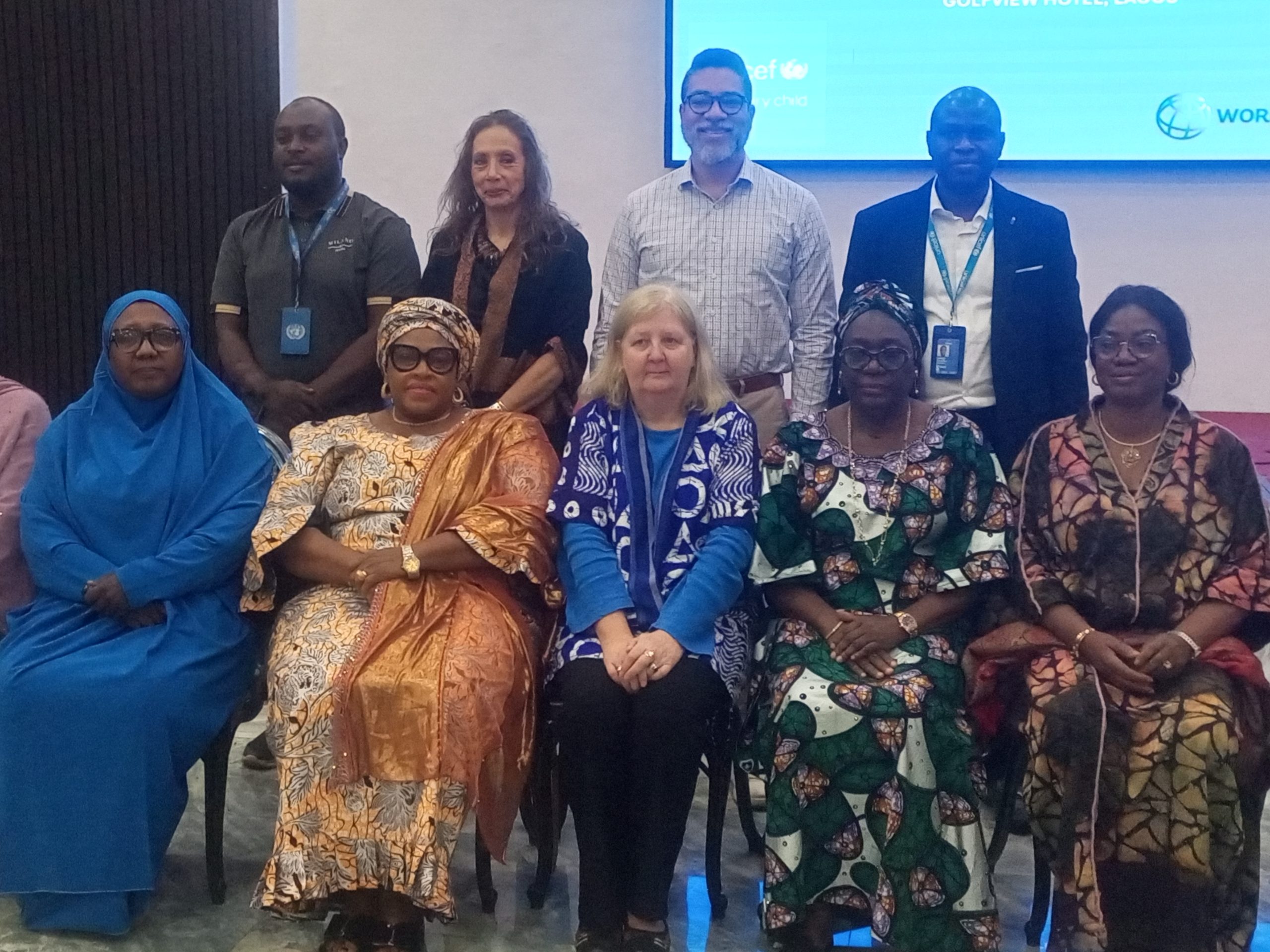
Ahead of the introduction of the new NLA policy, a 10-day workshop was held in Lagos, which attracted the officials from the ministry, UBEC, UNICEF, teachers and stakeholders to develop items for the test.
The ministry and UBEC confirmed that the pilot implementation would begin in March while the test would be conducted in June 2026 during the 3rd term of basic and secondary school students.
The participants include 18 assessment experts from higher institutions, 35 subject/curriculum experts from FME, UBEC, NERDC and other educational agencies, 37 classroom teachers in English Studies, Mathematics, Basic Science & Technology and Citizenship and Heritage Studies from the 37 states and FCT as well as directors from the ministry and UBEC.
Addressing participants, UBEC Executive Secretary, Dr. Aisha Garba, said the workshop represents an important milestone in Nigeria’s collective effort to strengthen the credibility, relevance, and usefulness of learning assessment data in our basic and secondary education system.
According to her, the NLA is not merely a technical exercise; it is a strategic national undertaking, designed to generate reliable evidence on what the children know, understand, and can do at different stages of their schooling.
Garba, who was represented by the Director of Monitoring and Evaluation, Mrs. Ada Ogwuche, noted that such evidence is indispensable for informed policymaking, system improvement, accountability, and ultimately, better learning outcomes for Nigerian children.
She disclosed that the 2026 NLA formally took off following the approval granted by the Minister of Education, Dr. Tunji Alausa, after the presentation of the concept note and work plan in October 2025, with a clear directive for immediate implementation.
The UBEC boss expressed grateful for the minister’s leadership quality, vision, and unwavering commitment to strengthening assessment and learning outcomes across the education sector.
Garba explained that high-quality assessment items can only emerge when technical rigour is combined with deep curriculum knowledge and real classroom experience.
Other News
“At the heart of this workshop is the understanding that good tests begin with good items, and good items must be firmly grounded in a well-defined assessment framework,” she added.
She reminded the participants that the responsibility before them is significant, stating, the quality of the items they develop will directly influence the validity of the 2026 NLA and the credibility of the evidence it generates.
Chairperson of 2026 NLA Mrs. Obianuju Anigbogusaid participants at the workshop are expected to develop the test items for NLA in basic and secondary education.
She acknowledged that for a long time, Nigeria had different NLA and the education minister demanded a uniform policy to determine the level of learning assessment of pupils in basic and secondary schools.
Anigbogu, who is the Director, Educational Planning, Research and Development in the ministry, disclosed that the pilot phase will be in March and the take off in June 2026 when the students would in their 3rd term.
The Chief of Education, UNICEF Nigeria, Vanessa Lee, confirmed that the agency is partnering the FME and UBEC to come up with a new NLA.
Lee said the participants are developing something for the future of Nigerian children, which will test the learning abilities of pupils in basic and secondary schools.
She revealed that UNICEF is providing the technical experts and fund to develop the new NLA, which will help know if the children are learning or not.
One of the participants from the Department Educational Foundation, University of Lagos, Prof. Oni Soji, said the workshop is rich in content and acquisition of new knowledge in NLA.
Soji, who participated in similar exercise in 2022, said, “it will help teachers to improve teaching in the classroom. I recommend this workshop to be extended to others.”