Follow Us on Google
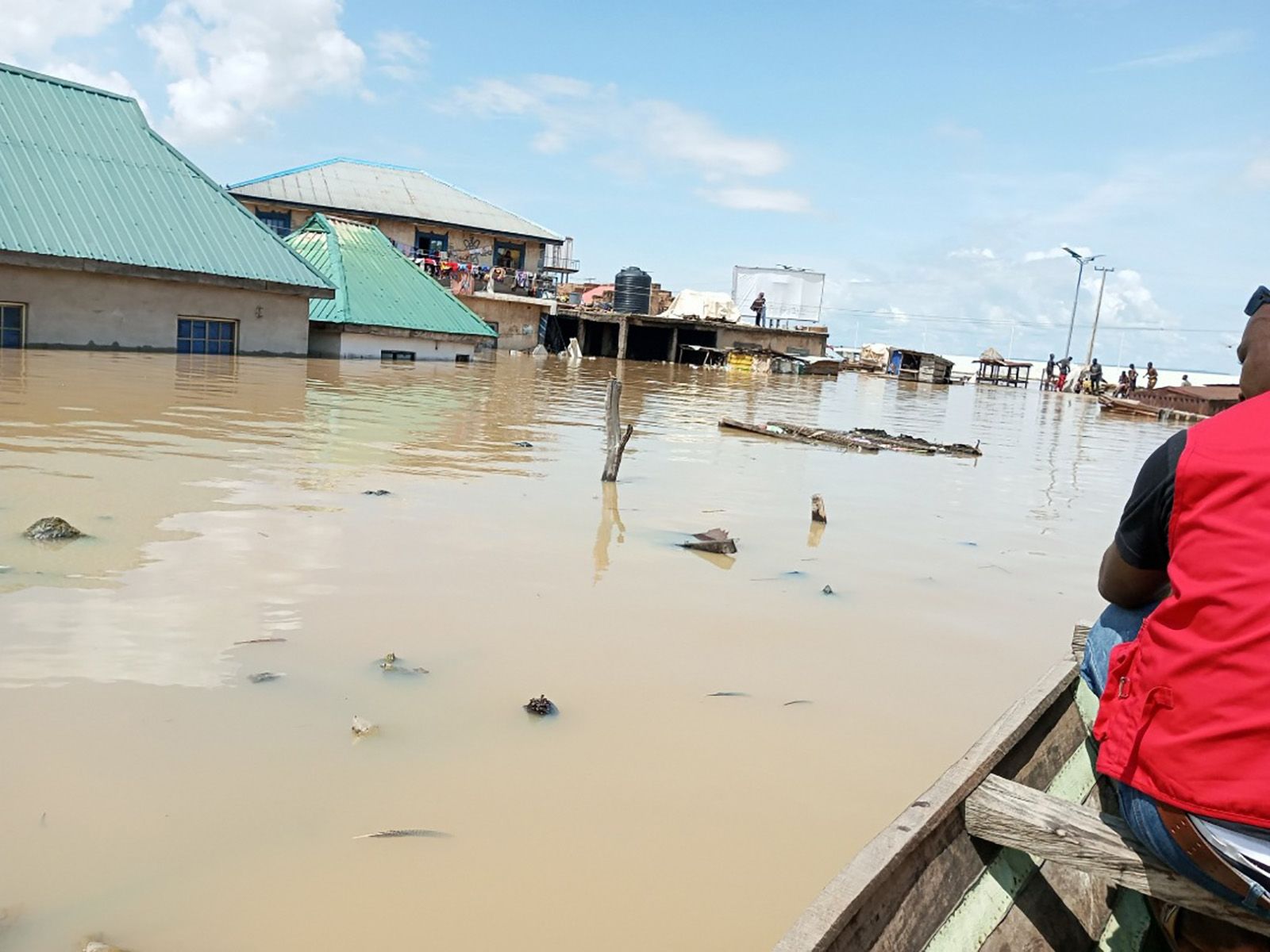
•Devastating societies, inflicting hardship on people
By Maduka Nweke [email protected]
Flood appears to be Nigeria’s current pandemic, a nightmare affecting virtually all states of the federation.
Many believe the menace of flooding has reached its crescendo in recent times with the hardships it inflicts on the citizens. Aside normal distractions and the coolness it attracts, damages of great magnitude and loss of lives associated with it, is such that needs to give governments sleepless nights. In many states citizens are hardly comfortable whenever rains start because of the devastations that are likely to accompany it.
But despite all these anxieties, very little efforts is coming from from the government to ameliorate the sufferings of the people.
Nigeria has witnessed the most devastating episode of seasonal floods since decades now, causing over 600 deaths and about 1.3 million displacements from homes. Heavy rains combined with poor urban planning have made parts of the country more susceptible to flooding. Each year, more deaths occur because of flooding than any other hazard related to extreme precipitation events. Flood deaths occur most often when a vehicle is driven into hazardous floodwater. Fortunately, during and after a flood, you can take steps to protect yourself, your family, and your home but the routine is that while it rains, a one thousand and one solutions on how to mitigate the menace of flooding will come to mind. However, as soon as the rains are over, the whole ideas vanish.
Unexpected and sudden storms have been causing serious flood damage to properties and possessions. Property owners who take steps to retrofit their home or business in anticipation of uncertain weather, come out always ahead. Nigeria government has shown gross incapacitation to finding lasting solution to flooding in the country. Ordinarily, the country’s topography is such that if reasonable efforts are geared towards mitigating the menace of flooding, the efforts would have a seemingly lasting solution. But, because, corruption takes center stage in everything we do in this country, the overall interests of the people are not on the front burner. People in authority usually consider their personal interests, what they will gain and how the project will favour their political supporters than what will favour the generality of the people.
According to Engr. Charles Oputepu, an environmental expert, “Nigeria has continued to suffer worst flooding close to a decade now with vast areas of farmland, infrastructure and and 200,000 homes partly or wholly destroyed every year. He noted that there are the lives that have been lost in each flood. At least 603 people have died while more than 2,400 other people injured and over 1.4 million displaced just last year. For some states, more than a month of floods is likely still to come. For instance, IGBAKWU Town in Ayamelum Local Government of Anambra State and other neighboring towns are suffering the impact of flood. Anambra State is one of the states suffering the impact of floods. Since the effect of flood is not what state government can handle alone, the indigenes are suffering it because federal government is dragging legs to give the disaster a permanent attention,”he noted. He explained that aside erosion that affects residential homes, farmlands are washed away inflicting severe famine to the people. Although, the famine has been reoccurring on a yearly basis, no concrete solution is in sight.
In his contribution, he advocated various measures that could help in ameliorating the menace of floods adding that even as flood is a natural disaster, there are some measures that could be taken to lesson the impact when it eventually comes. According to him, people should maintain proper water and drainage channels around their homes. “There should be routine check to clean and maintain gutters, downspouts, and splashpads so that rainwater from your roof flows easily away from your home. Also, make sure that any nearby drainage ditches or storm drains are clear of debris and functioning properly. Improve lot grading for efficiency. Determine how water flows or accumulates around your home to identify potential trouble spots (often easy to see during an average rainstorm). Stormwater should always drain away from the building and if necessary, change your landscaping to improve runoff. This may include building up any sunken areas around the foundation, digging small depressions to properly channel water, and otherwise improving the yard so that it slopes away from your home.
“Reduce impervious surfaces around your home. Water runs off concrete and asphalt almost immediately and can exceed the capacity of storm sewers quickly during heavy rains. Retaining and creating natural green space around your home can help reduce sewer over flows by reducing storm water runoff. Consider options such as rain gardens, vegetated swales, or pavements where all more water that fall, could be absorbed into the ground,” he stated.
Also in his assessment of government’s policy on flood disasters, Alhaji Kabir Daba, a humanitarian and environmental expert noted that the problems of flooding is also becoming the same as the problem of fuel scarcity that has become perennial. He noted that the hardship flood inflicts on citizens these recent years has become so unbearable that those who fall victims display their agonies openly for government officials to see and take actions. According to him, all the displays are seen by government officials as Nollywood drama meant to attract attention because the victims continue to carry the cross alone. “There is no headway because the residents of all flood affected states carry their belongings up to the tops of their houses and get around by canoe on roads now deluged with water due to government lackluster on the issue. Trucks full of food and fuel become stuck for days. In some areas, water levels are almost up to the eaves of the West African country’s distinctive pitched, painted metal roofs, making them appear to float. What they do is after the flood has drained, they start moving around with their so called disaster palliatives.
“In other places, the tops of cars are just visible but the water around them ripples with raindrops, closing in fast. The rain is not the only factor because every year, neighbouring Cameroon which runs along the length of Nigeria’s eastern border releases water from a dam in northern Cameroon, causing flooding downstream in Nigeria.
At the time of the dam’s construction in the 1980s, the two countries agreed that a twin dam would be built on the Nigerian side to contain the overflow. But the second one was never realized. Nigeria’s former Minister of humanitarian Affairs, Sadiya Umar Farouq, blamed the scale of the disaster on the failure by branches of government other than her own to take action. There was enough warning and information about the 2022 flood, but states, local governments and communities appear not to take heed,” the Minister wrote on Twitter,” he observed.
Although, all the mistakes and negligence could be pardoned since there is still life, there are many ways to reduce your home’s risk of flooding and not all of them are difficult or expensive. There are so many efforts one can make on his own without needing the help of his neighbours. You must use good resistant building materials to replace the wooden door boards and carpets with ceramic titles or other resistant materials. During flood water, gather emergency supplies, including non-perishable food and water. Store at least 1 gallon of water per day for each person and each pet. Store at least a 3-day supply. Regularly listen to your local radio or television station for updates from either the federal government, state government or your local government. Because flood water carry a lot of diseases, bring in outdoor items (lawn furniture, grills, trash cans) or tie them down securely. If it looks like you will need to evacuate, turn off all utilities at the main power switch and close the main gas valve. Leave areas subject to flooding such as low spots, canyons, washes, etc.
Matthias Schmale, the United Nations’ humanitarian coordinator for the country, said in a briefing recently, that the above largely explains the extreme flooding. “Climate change is real, as we are yet again discovering in Nigeria,” he said.
The phenomenon is causing ruins across Africa, and as the continent is heavily dependent on agriculture, the effects are particularly devastating economically. Nigeria, which is by far Africa’s most populous country with more than 200 million people, lists in a national climate policy document droughts, poor air quality, imperiled human health and habitat loss alongside floods as the effects of climate change. A recent discourse on climate justice by the nonprofit Africa Center together with the Energy for Growth Hub, a Washington research institute, says almost all African countries have contributed “essentially nothing” to climate change. On the other hand, it says, the United States, the European Union, China, India and Russia are the big emitters of carbon, known to contribute to climate change. But despite pledges to help fund climate adaptation in Africa, rich nations have, so far, produced very few funds, high level African officials say.
There are many flood mitigation options as a homeowner. As you begin to think about which might be the best for you and your home, consider the following three key steps; Know Your Risk and believe that anywhere it can rain, it can flood. That we all live in a flood zone and live with the risk of flood damage to our property. Moving your home or structure out of the floodplain to higher ground where it will not be exposed to flooding is an option. Tearing down your damaged structure or rebuilding the same property outside the floodplain or buying a building or home/business elsewhere should be done with carefulness. Sealing your structure to prevent floodwaters from entering it is also a good strategy. Some examples of dry floodproofing include the installation of watertight shields for windows and doors; use of sealants and membranes to reduce seepage of floodwaters through walls; reinforcement of walls to withstand the pressures from floodwaters. Note that the Nigeria Emergency Management Agency (NEMA) does not allow dry floodproofing for new or substantially improved or damaged residential structures.
Making uninhabited portions of your structure resistant to flood damage by allowing water to enter during flooding could help to burrow your foundation gradually. Effective wet floodproofing entails that the floodwater enters and exits the home; damage to areas of the home that are located below the flood level are reduced from contact with the floodwaters; service equipment is protected from the floodwaters both inside and outside the residence. The use of flood vents, flood damage resistant building materials, and protecting service equipment by locating them above the anticipated flood elevation are all methods of wet floodproofing.
Building a wall around your structure to hold back elevation of the structure is permitted and required when an existing structure in the floodplain is substantially damaged or substantially improved. Elevation is raising your home/structure so that the lowest floor is 2 feet above the flood level. In addition, the footprint of the elevated structure cannot be increased. Mechanical equipment will also have to be elevated. Keep in mind that only elevation, relocation, and demolition can be used to meet the minimum requirements of NEMA (i.e. will result in the building being removed from the floodplain). The other methods may be used to minimize damages but are not recognized as meeting the minimum requirements of NEMA. Remember that it is important to purchase flood insurance for your home, even if you mitigate your home using one of these methods.