Follow Us on Google
By Chinyere Anyanwu
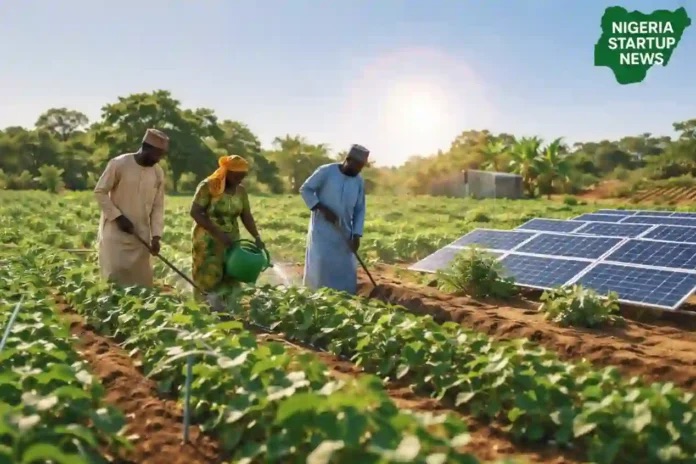
To increase access of rural agricultural communities to clean energy as well as address climate change challenges impeding their production activities, the Federation of Agricultural Commodity Associations of Nigeria (FACAN) and FuelTree Limited have concluded plans to enrol 100,000 farming households into FuelTree’s Virtual Cylinder Recirculation Model (vCRM).
The partnership, which was formalised through a Memorandum of Understanding (MoU), combines FuelTree’s clean energy delivery systems and digital infrastructure with FACAN’s extensive nationwide network of agricultural cooperatives, commodity associations, and producers.
FACAN is the apex coordinating body for agricultural commodity associations in Nigeria and operates under the Federal Ministry of Industry, Trade and Investment.
Other News
The collaboration aligns with Nigeria’s national clean energy and climate commitments, including the Climate Change Act, the Decade of Gas initiative, the Energy Transition Plan, the National Clean Cooking Policy, and Nigeria’s Nationally Determined Contributions (NDC) under international climate frameworks in addition to strengthening rural economic development.
Under the programme, participating households will gain access to Liquefied Petroleum Gas (LPG) solutions through an affordable, technology-enabled model designed to improve last-mile accessibility, traceability, and sustained usage. The vCRM framework integrates smart tracking tools, digital payment platforms, and embedded financing options, including Buy-Now-Pay-Later (BNPL) and microcredit facilities tailored to the operational realities of farming communities.
Speaking on the initiative, Dr. Bekeme Olowola, FuelTree director, emphasised the wider socio-economic and health implications of clean energy access.
Olowola said, “access to clean energy within agricultural communities has a direct impact on productivity, health outcomes, environmental protection, and household resilience, especially considering that over 120,000 deaths annually are linked to household air pollution. By embedding clean cooking solutions within existing cooperative and payroll structures, this programme is designed to move beyond one-off distribution towards durable and scalable adoption.”