Follow Us on Google
By Amechi Ogbonna
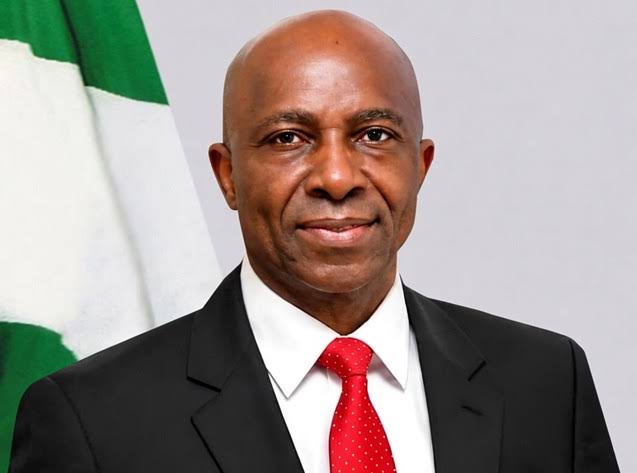
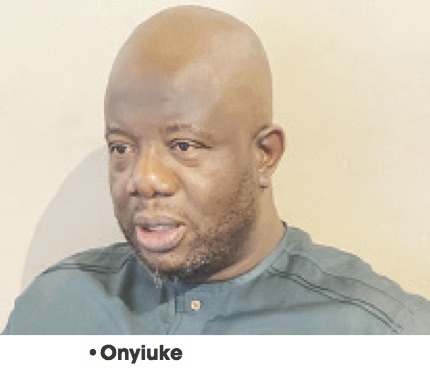
Mr. Joe Onyiuke, President of Oil Palm Growers Association of Nigeria (OPGAN) is a lawyer and entrepreneur whose business empire traverses agriculture, hospitality, law and an advocate of national self sufficency in food and agricultural sector.
Worried by the humongous amount the nation spends annually on importation of food and other agricultural products, Onyiuke believes it is high time the Federal Government activated the sector’s latent capacity to achieve self sufficient in food and agriculture.
In an interview with Daily Sun at the weekend, he argued that Nigerian farmers should have no business with poverty if the enormous potential of the palm oil value chain are adequately exploited, stressing there is so much idle capacity in the sector that needed to be explored.
He therefore called on the Federal Government to urgently come to the rescue of smallholder farmers whom he said have the key to unlock the potential of palm oil subsector.
He however listed the urgent needs of oil palm growers to include provision of modern technology, improved seedlings, funding, processing facilities and training to help the country conserve an estimated $500million spent annually on importation of finished palm oil products.
He also advised the Bola Tinubu led-Federal Government to use its crude oil earnings to develop the food crop sector to ensure more sustainable economic develoment
Excerpts.
What OPGAN wants from government As we all know, governments in the past were enemies of developing small business holders while they developed other sectors that they feel were more organised in the sense that they had collaterals to pick up single digit and long- term loans and all that.
But the critical mass that will create employment and generate revenue for government in terms of taxation and GDP growth were neglected in a way that they began to have numerous problems.
First, they were majorly handicapped in the previous administration and system of the country.
Secondly, access to quality seed materials have been very low and even almost impossible.
Thirdly, access to funding to acquire modern processing mills to be able to process high quality products was not available and so they suffered so much post-harvest losses.
Most times, what they produced was below standard because they are using their bare hands and post-harvest losses are so huge. Provision of these facilities could create very big incentives to any farmer because they are major issues.
Also, the inability of our state governors to issue certificates of occupancy to people’s farms remains a huge setback for agricultural development.
When you issue C of O to them, you unlock their potential to have access to funding. This is because there is no financial institution in the country that would not ask for the basis when you request a loan. The socio-economic impact of oil palm is so large that today, our body cream, the margarine, the butter, the mayonnaise, even the vegetable oil, are all bleached palm oil. The pasta, noodles, biscuits, all these are from palm oil.
Infact the demand of palm oil on food and industries is so huge that it has been found in other things including cosmetics, paints, polish and even pharmaceutical industries. And these are things that will unlock the potential of this country. So the government should refocus on 3 crops.
In the 1960s, we were known for cocoa, oil palm and rubber. The Chinese and foreign investors were able to come in because of the raw materials that were available in large quantity.
Countries like Thailand, Indonesia and Malaysia used their crude oil resources to develop their own palm oil sector to create widespread employment opportunities and all that. They have policies in place to safeguard local production. You must check your borders to ensure they are not porous.
Look at how much the country has lost in terms of importation.
Today, people are importing polished palm oil and vegetable oil in the name of crude palm oil into the country.
Do they pay duties for all these bad items?
I hope this new administration will focus properly on cleaning up our system because we cannot allow people to sabotage this economy. We have industries that produce a lot of things from crude palm oil and once you bring the bad oil, you are destroying their businesses.
For instance, our members are not encouraged because nobody is selling. And by the way, Nigerians spend about $500 million every year to import these things because the local demand is so big.
Yes, what is government doing?
In the past, attention was given to the big players who controlled only 20 percent.
But how can you neglect the critical mass? Look at the level of youth unemployment. And this is one sector that has women inclusion majorly in the entire value chain. If the government is able to channel their resources in research.
NIFOR was set up in 1938 by the British known as West African Institute for Oil Palm Research. Today it is called Nigerian Institute for Oil Palm Research. We thank God for the executive director that has now renewed that decaying institution to a level where we can say we are proud of.
Before now, it was in a sorry situation but thank God for the new management, that has done a lot of work and our farmers have benefited so much.
We as an association want to show leadership in transparency and accountability.
In December 2020, we were given a total of 169,000 sprouted nuts as gifts from the Ministry of Agriculture which we shared to our members. We looked at how the whole system was in disarray. And we needed to organise our members. We then found out that we had only 24 states in Nigeria recognised by the Ministry of Agriculture as oil producing states. But we had more than that up to Taraba and Adamawa state. So, we went to the minister, and we increased the number to 27 because we went there to make sure we can have oil palm production in other parts of the country so that the country can benefit. We have given back the sprouted nuts to NIFOR to help us raise them to seedling level because that’s the most critical part in oil palm development. These sprouted nuts are like children in the womb. They have to be nursed properly otherwise they won’t grow up properly and at the end of the day, they will not give you the optimum yield because of the stress they went through.
So, we told NIFOR to help us groom them at a very discounted rate. We are certain that before the end of this month we would organise a town hall meeting to start distribution state by state.
Those seedlings are very expensive, but they have been highly subsidised. Now we are going to be a major distribution going with NIFOR to teach our members how to take care of the seedless.
This is happening for the first time, and we invited the press to help us sensitise our people to make them come back to agriculture, because that is the future we have in this country, to move these people out of poverty completely.
Today, one tonne of palm oil is about N1 million and so if a man is doing an average of eight to 10 tons on one Plantation, he is already a millionaire. And if you sell the fruits to big mills that have the capacity to mill, and they pay you good money, they will have enough money to take care of themsleves, their families and even the farm.
Again, we got nut crackers from the Ministry of Agriculture, 20 in number. That has already been distributed to 20 states.
In this country, we have some states that are known for oil palm, the South East, the South South, the South West and North Central. So those key states have taken ownership of those nut crackers.
We are also talking to governors because they hold the key to helping these farmers access funding. We must commend the new governor of Cross Rivers State, he has shown deep understanding, passion and commitment to change the story in the state. But other state governments must take a cue from that. It is not about playing to the gallery, but it is about doing the critical work.
Nurseries are very key because without them you cannot have those certified seedlings. The problem we have today is that our trees were planted in the 60s apart from the wide grooves. There must be a very systemic plan to replant the whole entire plantations of these wide grooves and semi-wide grooves.
And those plantations that are already very old have to be replanted. You can imagine that if the $500 million gap that we have is taken out, we would have enough money to meet our needs in the country.
Crude palm oil in revenue generation of Nigeria
Why would a noodles manufacturer in Nigeria rely on imported crude oil palm when he can source it locally.
There are two reasons. One is that the supply in the country is lower than demand, so there is a big shortfall; a shortfall of over 500,000 metric tons. So, they have to look outside to remain productive.
In essence, we are shipping our employment and our benefits of the economy outside. Take a look at all these germicidal soaps we see around; many international companies have made a lot of money from Nigeria. This is an industry that would normally have been sourcing locally and producing locally in Nigeria but you can imagine how much money over time that have gone out of this country.
The impact can never be over-emphasized because its a product that can feed many industries including food industry, cosmetic industry, pharmaceutical industry and even biodiesel, ethanol. Today, Japan has amassed so much palm kernel shell to build a power plant across Japan. They discovered that Palm kernel shell has the same thermal value as coal without any impact on the environment.
If you go to Port Harcourt, our palm kernel shells that were discarded are being shipped out by foreigners. Thank God that our local industries like Dangote group have started to use palm kernel shells to power a lot of their industries.
The oil palm economy can unlock so much potential in this country, more than any other crop. You find palm oil in ice cream and the chocolate, many people do not know this. Even in local medicines that you see in the villages, people use the oil to treat people that have seizures.
Nigeria can generate $20bn form oil processing. What can be done now to achieve this
The onl this can be achieved is for the government to fund the small holder farmers who are already organised and control 80per cent of the industry. Give them access to cheap funding, access to improved seedlings, fertilisers and processing equipment.
The government should create access for small holder farmers to have processing plants so that they can process.
A World Bank report states that the reason why African farmers remain poor is their inability to add value to what they produce.
It can also benefit the creative industry and our local tourism industry. There is nothing that is a waste in oil palm, from the leaves to the root. Even when a palm tree is old, it begins to generate drink, which is called palm wine.
Today we are drinking champagne from Europe. If palm oil were to be in Europe we would be buying palm wine in bottles, these added values are lost including Ethanol that people come from other places to get.
There’s so much local capacity that we need to build. And governments must fund NIFOR adequately for research purposes. They must certify a company to produce seedlings and set up an oil council that would be able to regulate the industry.
We need a long-term loan of between 5 to 10 years with single digits to Help people build this capacity. Once you give them C of O, it helps them access funds.
Because as a lender, once you know that a particular plantation can be valued, you would be willing to give loan to the farmer.
Crude oil palm is a long-term investment with very little work. Just need to adopt those best management practices like pruning, clearing and applying organic manure. It would help create a lot of employment.
The government should pay attention to the three crops, cashew nuts, cocoa, palm oil, rubber. This is our future.
With presence in 27 states, why don’t you concentrate efforts in areas with higher comparative advantage?
It is not just about my ideas; it is also about people living in those areas who are making a living out of the products. We are already an umbrella for all of them. In the SS, SE and SW, they are already producing it naturally.
In the North Central; Kaduna, Benue, Kogi, these are natural habitats for palm oil. Niger state is a borderline with Kogi, very rich in palm oil, even Taraba.
We have to encourage our citizens in this country because there is so much unemployment. A lot of youths sell their lands to go to Europe and when you see their condition over there, you’ll pity them. The money they spent buying tickets, if properly utilised would have helped to start up a palm oil plantation. We also have engineers without work. If you go to some states, you see the oil palm mills are massive like refineries. If you see what our youths can do with their bare hands, you will marvel. All they need is small help. We can produce all the equipment we need in this country.We have the hands saddled to build these industries.
We have the people that can maintain them and distribute their spare parts. From that oil palm, you go to refineries. When you are refined oil palm, you are producing a lot of glycerin ethanol, palmolein and so many byproducts that can feed other industries.
Again, oil palm is a product that has the capacity to generate its own power so the oil mills can generate their own power and even to the villages around it. This is the only crop in the world that has two oils; the red oil and the palm kernel oil.
That is why, as a country, we need to begin to think properly, to put our energy where our mouth is, put our resources and develop local capacity.
Advocacy for govt’s support to agriculture cuts across all value chain, what impact has such assistance yielded over the years?
The biggest problem with government policies in the past was insincerity. The real farmers do not get disincentives because of the roadblocks on the way but thank God we have a new government. A government that understands how business is done.
The biggest problem before was ghost farmers, but oil palm is an industry where you cannot have ghost farmers. Other crops take an average between two months to six months to harvest, but oil palm takes harvest up to 30 – 35 years. So, your bio data is attached to the geography of where your farm is. That cures that risk of ghost farming.
Again, we are on the ground, when we came into office, we realized that you cannot be doing Association of Oil Palm without a physical office structure. So, the first thing we did was to establish offices across the states. Each state has its own executives, has regular meetings, a database of its members, some of them have even developed corporatives doing business in one way or the other.
We have our national office in Abuja because that is the center and refund is the secretariat with furniture, some of them with computers. All this comes from our pockets, not government funding. The only government agency that has helped us is the Ministry of Agriculture. And you know that the Nigeria Institute of Oil Palm Research is part of the Ministry.
What facilities does the industry for optimum performance
The economics of production is not off-head, but the point is that we do not have the foundation and we want to lay that foundation.
The foundation of a sustainable oil palm production are the nurseries. The government needs to help us to establish nurseries to be able to feed the plantation. The nurseries take a minimum of one year. So, if you don’t do that work, we are merely speaking grammar.
Those nurseries will feed the old plantation that we have that must be replanted. This is because the yields from the older plantations are lower.
Because the youths are lower. And the supply is also low. This has generated or created room for adulteration in the industry. People are bringing in chemicals and people are dying from all sorts of diseases. So, the government really has to come to the aid of oil palm industry in this country. The government have to empower our members to produce procedure did not produce, we cannot have surplus.
The foundation i’m talking about is nurseries establishment and production. We have to go back to planting as our members are majorly farmers and the government have neglected for so long, that is why we are suffering.
They have neglected 80 percent, that is the core citizens of the people that will be able to put food on their table. Give you security, give you taxation and a lot of value chain stability as a country. If the government has utilized its human resources that we have, especially now that farming is digitalized, it would go a long way. Technology has made things so easy, and our youths are high-tech inclined.
Farmers are regarded as poor people because the government has not paid attention. The system is so broken down that people are just recycling poverty everywhere. Some people now wait for the end product, they buy the ones from the farmers at the bottom prices, and then go and add chemicals to increase the quantity. They’re the ones killing people and making all the money because they have no regulation.
Governments must regulate. People that are producing seedlings have to be licensed and regulated to ensure that they have the knowledge and capacity.
The government must improve funding in NIFOR for research because without it as a country, you are going nowhere. How much is the research component that goes to agriculture? It is a no-brainer that this is the only way forward for the company. The government should just fund these things adequately, fund the farmers directly and make it easier for them, remove all the multiple taxations. All these would encourage people to go back. Another thing is to close our borders from palm products coming into the country. Some people abuse this by bringing in Palmolein in the name of crude palm oil.
Minimum requirements for new members
When I came in, I told my excos that registration must be free. I funded it. And in the aspect of farmer education, I have funded a lot of our members to go for NIFOR training. They prepared everything and from my packet; their feeding, hotel and transportation to ensure that when they learn, they go back to teach those people in the state. Some sort of train the trainer program.
Also, I thought to myself, I said that we needed to do an online radio and TV. I started making research, I registered and got a license. I have registered Oil Palm TV Limited and Oil Palm Radio Limited. We are the only association that has a secretariat in NIFOR today.
NIFOR have been our lifeblood, our heart and our soul. Without NIFOR, we are nowhere. They have been supporting our farmers even by bare resources. The DG, Celestine Ikoenobe, had done so much. When I met him as DG, he was using his personal car because there was no working vehicle in NIFOR, all their facilities were dilapidated, but today, it is a different story. He has sacrificed so much; he went to different agencies to solicit funds to upgrade NIFOR.
We wanted our scientists to key into the knowledge industry, so at Oil Palm radio and TV, we have done the test-run in our office in Nigeria, so we are now building a studio and in a couple of weeks, it would be ready for its official launch. It would be live and you can key in from anywhere in the world. This would benefit our members, because everything o it would be about education. The value chain is so large and it cannot be exhausted. We would develop different programs where we would have directors in various aspects including Directors of nursery, extension services, production ete that would be invited live to train our people. And if our members have any questions, they will be asked immediately, and they will answer you.
What our scientists have done to improve seeds/plants
The gestation period of oil palm is now 3 years, it used to be about 7 years. This means that if you buy a seedling that is 2years old, you begin to harvest in one year time. If you buy a 1year old seedling, you begin to harvest in a maximum of two years.
However, the third year of the life of that sprouted nut when you begin to harvest is like when a child is maturing, so it has a very low yield. The fourth year is the main year. So, technically speaking as a farmer, the distance between you and harvesting is 3years or 2years.
NIFOR seedlings guarantee you 8 tons per hectare when it begins full yield. Then it can go up to 25 tons. If you are able to adopt the best management practice, you can do up to 30-35 tons per hectare. So, if a farmer has 100 hectares, you are a multi–billionaire.
Our farmers have no business with poverty if only we can key into the system and do this business very well.
OPGAN relationship with Edo State government and lesson from other states
Edo state governor must be commended, and other state governors must learn from him. But there is still so much to be done to attract investors.
There is still a lot of issues relating to insecurity, bandits are killing their staffs and all that. They have communities who come and hijack people’s plantations. This is unbelievable. I have gone to meet the government agency in charge of this to make an official complaint. The governor, however, is doing his best.
Even the big players like Okomu oil and Presco still experience these kinds of issues and the issues of multiple taxation. So, the government needs to do more.
The most important thing is that the government MUST pay attention to small holder farmers who have the key to unlock the potential because we cannot do it without them. They are well organized, they have structure. Imagine what they can produce, Nigeria would be able to overtake Malaysia and Indonesia again because of the number and land size we have.
Advice to incoming minister of agriculture
He needs to organise the small holder farmers, unbundle and mitigate a lot of risk. “We as a country cannot blindly be selling our country to foreigners in the name of investments because some of these investors hurt the local economy and people. Any foreign investor that comes into Nigeria to invest in the any part of our agricultural chain that is hurting the local producers is not an investor.”
The Minister should go to the field and see for himself what the people are going through. He is the minister of Agriculture, not the minister of boardrooms.