Follow Us on Google

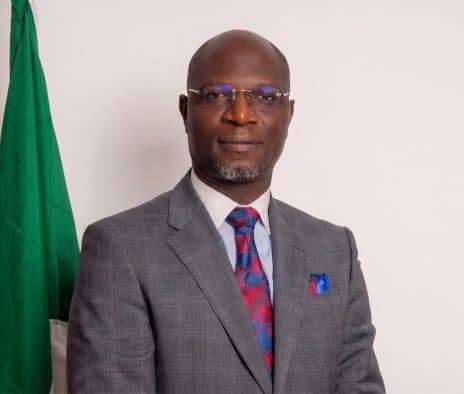
The Federal Government has unveiled a 10-year capital market master plan targeting growth in Nigeria’s capital market from about N250 trillion to N750 trillion by 2036, as it seeks to mobilise long-term financing for infrastructure and economic development.
Vice President Kashim Shettima, who unveiled the plan at the National Capital Market Conference 2026 in Abuja on Monday, said the capital market had become a critical instrument of national economic policy and should play a greater role in financing Nigeria’s development.
The plan, developed by the Securities and Exchange Commission (SEC), seeks to deepen investor participation, expand investment products and strengthen market infrastructure to enable businesses and governments raise funds locally.
Shettima attributed the growth of the market since President Bola Tinubu assumed office in May 2023 to economic reforms, “including the removal of petrol subsidy, foreign exchange market unification, tax reforms, bank recapitalisation and the enactment of the Investments and Securities Act (ISA) 2025.” He said the Nigerian Exchange All-Share Index had risen from about 55,000 points in May 2023 to more than 260,000 points, while the value of listed equities increased from approximately N30 trillion to nearly N160 trillion in January 2026. The combined value of the equities and bond markets, he added, had exceeded N217 trillion.
He said the master plan would strengthen the bond market for state and subnational governments, expand retail participation through technology and investor education, and enable businesses in agriculture, solid minerals and other sectors to raise capital locally.
He also pledged to work with state governors to encourage the use of properly structured bonds to finance credible projects, saying capital market financing could promote fiscal discipline and improve accountability in public spending.
Shettima warned that policy reversals could undermine investor confidence, stressing that consistent policies, effective regulation and investor protection would be necessary to achieve the 2036 target.
The Minister of Finance and Coordinating Minister for the Economy, Taiwo Oyedele, on his part, said Nigeria should aim for a $1tn capital market within the next decade, arguing that the SEC’s N750tn target should not limit the country’s ambition to build a $1tn economy by 2030.
Oyedele proposed increasing equity market capitalisation from 33 per cent of gross domestic product to at least 60 per cent, raising the number of listed companies from 146 to 250 and expanding retail investors from six million to 20 million. He also called for more than tripling corporate bond issuance as a share of GDP, increasing sukuk market penetration from 0.3 per cent to at least five per cent of GDP, and raising pension assets from six per cent to 16 per cent of GDP.
To deepen the market, the minister urged the government to encourage more private companies to list on the Nigerian Exchange, saying incentives rather than compulsion would be used to attract them. “We cannot force them. We would encourage Nigerian private businesses to list. We will use incentives to attract them,” he said.
Other News
Oyedele specifically identified the Nigerian National Petroleum Company Limited (NNPC) and Nigeria LNG Limited (NLNG) as state-owned enterprises whose listing could expand the market, improve transparency and allow Nigerians to participate in the wealth generated by national assets.
The Chairman of the Senate Committee on Capital Market, Osita Izunaso, urged the government to encourage NNPC and major telecommunications companies to list on the exchange.
Izunaso said Nigeria had more than five million registered companies but only about 151 listed companies, highlighting the limited participation of businesses in the capital market. He also urged the SEC to accelerate the development of regulations for digital assets and tokenisation.
Meanwhile, Oyedele formally launched the National Savings Scheme, which is intended to provide Nigerians with regulated channels to save and invest in areas such as education, housing, business development and retirement. He expressed concern that many young Nigerians were putting their money into betting platforms, unregulated cryptocurrency schemes and Ponzi schemes, instead of regulated investment products.
According to him, Nigeria has only about six million retail investors despite a population exceeding 200 million, making wider participation necessary to mobilise domestic savings for productive investment.
Earlier, SEC Director-General, Dr Emomotimi Agama, said the scheme was designed to encourage savings among traders, farmers, young graduates and other segments of the population, with funds managed by professional fund managers registered with the Commission.
Agama said the initiative had legal backing under the Investments and Securities Act 2025, while a memorandum of understanding involving the SEC, the Nigeria Revenue Service and FSD Africa would support the scheme through tax incentives.
He said the success of the master plan would depend on implementation and measurable results, adding that the Project Steering Committee and Capital Market Master Plan Implementation Committee would be inaugurated to oversee its execution.
“Every commitment in NCMMP 2.0 will have an owner, a timeline and a scorecard, and we will report progress openly to this nation,” he said.
Agama said the market’s growth in value had not been matched by sufficient participation among Nigerians, noting that too few citizens owned shares, bonds or units in collective investment schemes. “The strength of any capital market rests on the savings of its people. Ours must rest on the savings of all of us,” he said.