Follow Us on Google
From Juliana Taiwo-Obalonye, Abuja
Federal Government has begun moves to overhaul Nigeria’s emergency response system by operationalising 112 as a single national emergency number, a development expected to make it easier for Nigerians to summon help during life-threatening situations.
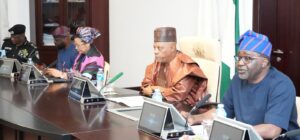
Vice President Kashim Shettima, who directed the immediate development of an operational roadmap for the nationwide rollout of the number, said the initiative must move beyond policy approval to a functional system capable of delivering rapid assistance to citizens.
The directive was issued on Tuesday in Abuja at a stakeholders’ meeting on the National Emergency Number 112 Project, following the recent approval by the National Economic Council (NEC) for 112 to become Nigeria’s universal toll-free emergency number.
The move is designed to address the fragmentation that currently characterises emergency response, where citizens often have to determine whether to call the police, fire service, ambulance services, road safety authorities or other agencies before assistance can be mobilised.
Under the proposed system, a caller would only need to dial 112, with the emergency routed to the appropriate response agency.
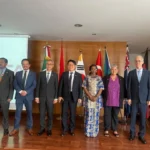
Shettima consequently directed a committee comprising the Nigeria Police Force (NPF), Nigerian Communications Commission (NCC), National Emergency Management Agency (NEMA), Federal Road Safety Corps (FRSC) and other relevant agencies to finalise the roadmap and standard operating procedures for presentation to NEC for formal endorsement.
He charged the committee to draw from global best practices and produce a clear implementation framework, stressing that the government was prepared to provide the resources required to translate the initiative into reality.
“Let’s make progress so that whatever time we have spent here is worth spending. And most importantly, the engine is finance. It is resources to drive the process. And I want to assure you that we will get the resources,” the Vice President said.
He noted that the could significantly change how Nigerians respond to emergencies such as armed attacks, road crashes, fires, medical crises and kidnappings, particularly in situations where victims or witnesses may not know which agency to contact.
Inspector-General of Police, Olatunji Disu, described the adoption of 112 as a major step towards providing Nigerians with a simple and reliable channel for accessing emergency assistance.
He said the current challenge was that a person confronted with an emergency was often first required to identify the appropriate agency before seeking help.
“For a citizen facing an armed attack, accident, fire outbreak, medical emergency, kidnapping, or any other life-threatening situation,” he said, “while the first challenge is to determine which agency to call, one number should provide access to the appropriate response.”
The Personal Assistant to the President on e-Governance in the Office of the Vice President, Lydia Aina, said the success of the initiative would depend not merely on the availability of the number but on the system established behind it.
She noted that Nigeria’s emergency response currently cuts across multiple agencies, systems and jurisdictions, resulting in fragmentation in the way emergencies are received, coordinated and handled.
According to her, the government is seeking to transition from fragmented state-level arrangements to a coordinated and ultimately integrated national emergency response framework.
“Our job now is to turn it into an actual working programme with milestones,” Aina said, identifying governance as one of six immediate priorities.
“We need a clear structure of who’s responsible for what,” she added.
Other priorities are expected to focus on establishing the standards, systems, coordination mechanisms and operational capacity required to ensure that a call to 112 triggers an effective response rather than simply connecting a caller to another layer of bureaucracy.
The Director-General of NEMA, Zubaida Umar; Corps Marshal of FRSC, Shehu Mohammed; and Director-General of the National Orientation Agency (NOA), Lanre Issa-Onilu, were among stakeholders who pledged the support of their respective agencies to the initiative.