Follow Us on Google

From Okwe Obi, Abuja
The federal and state governments have agreed to strengthen coordination in agricultural production and marketing to curb sharp food price fluctuations, protect farmers’ earnings and ease the burden of food costs on Nigerian households.
The agreement follows growing concerns over the wide swings in commodity prices in recent years, which have left consumers paying more for food at certain periods while farmers struggle to recover their production costs when market prices fall.
Minister of Agriculture and Food Security, Abubakar Kyari, said the solution lies in ensuring that agricultural production reflects market demand, with stronger links between farmers, processors, investors and consumers.
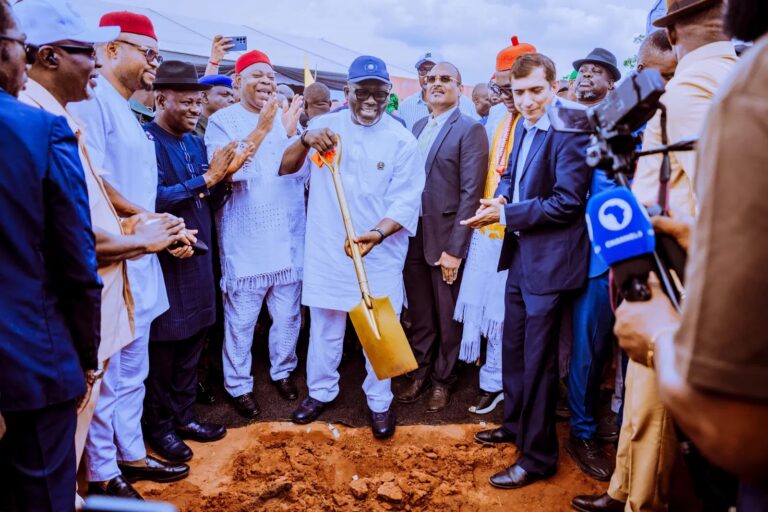
Speaking at the 48th meeting of the National Council on Agriculture and Food Security (NCAFS) in Enugu State recently, he urged state governments to improve production planning and coordinate supply across producing and consuming areas.
He said the past three years had exposed serious weaknesses in agricultural markets, where rising food prices hurt household purchasing power, while subsequent price declines often left farmers counting losses.
Kyari recalled that food inflation rose to 40.87 per cent in June 2024 before declining to 8.89 per cent in January 2026, its first single-digit level in more than a decade. It, however, climbed again to 19.59 per cent in September 2026. He blamed the renewed cost pressures partly on the Middle East conflict, which disrupted energy, shipping and fertiliser markets, pushing the price of urea above $850 per tonne in April 2026.
According to him, the disruptions increased the cost of farm inputs, transportation and energy, putting additional pressure on farmers and food prices.
The minister said President Bola Tinubu had responded by strengthening agricultural financing and introducing measures to support farmers and improve food supply.
He listed the operational strengthening of the National Agricultural Development Fund (NADF), the recapitalisation of the Bank of Agriculture and the N200 billion Guaranteed Minimum Price Programme among the interventions.
Kyari said the NADF’s Farm Input Support Programme had reached more than 115,000 beneficiaries in 25 states and the Federal Capital Territory, while N16.27 billion had been disbursed through agribusiness financing.
He added that the Bank of Agriculture had provided financing to more than 500,000 smallholder farmers and was anchoring the Guaranteed Minimum Price Programme to prevent eligible farmers from selling their produce at distress prices.
On mechanisation, he said the second phase of the Renewed Hope National Agricultural Mechanisation Programme, involving 1,500 tractors and more than 8,000 supporting implements, was underway.
The phase follows the deployment of 2,000 tractors and over 9,000 implements under the first phase.
He explained that expanding access to farm machinery would reduce production costs, improve efficiency and increase output.
Kyari also emphasised the need to ensure that farmers produce crops in quantities and at prices that meet the needs of industries.
He cited maize as an example, noting that its price affects feed manufacturers, poultry producers and food processors, with the consequences eventually reflected in the prices paid by consumers.
He said processors needed reliable supplies of raw materials that met their quality requirements and were commercially affordable.
To address this challenge, the minister said the Federal Government was expanding the Special Agro-Industrial Processing Zones initiative to encourage local processing, while the Rural Access and Agricultural Marketing Project was improving connections between farming communities and markets.
He added that the World Bank-supported AGROW Project, which was being prepared for implementation, would strengthen commercial partnerships between smallholder farmers and agribusinesses.
The minister said the African Continental Free Trade Area also offered opportunities for Nigerian agricultural products, provided exporters met international standards for quality, safety and reliable supply.
Ahead of the 2027 farming season, Kyari called on state commissioners to strengthen production forecasts, align farm output with industrial demand and improve coordination between producing and consuming states.
Other News
He said better planning would help prevent farmers from recording losses, guarantee raw materials for factories, reduce food waste and make prices more stable for consumers.
Citing National Bureau of Statistics figures, he said the economy grew by 4.43 per cent in the second quarter of 2026, with agriculture expanding by 4.39 per cent and accounting for 26.15 per cent of real Gross Domestic Product.
He added that the sector’s value added reached N101.46 trillion at current prices in 2025.
Kyari commended Enugu State Governor, Peter Mbah, for presenting his administration’s achievements against its manifesto commitments, describing the approach as a demonstration of accountability.
After inspecting agricultural projects in the state, the minister said, “Tomorrow is truly Here,” adding that he was impressed by the governor’s humility and proactive approach to governance.
Declaring the meeting open, Mbah said Nigeria’s agricultural challenge was not a lack of policies or natural resources but the failure to translate its enormous potential into an industry that creates prosperity for farmers and businesses.
“A farmer can produce a good harvest and still struggle to earn a decent living,” he said.
The governor disclosed that Enugu was targeting an increase in the state’s economy from about $4.4 billion to $30 billion, with agriculture serving as one of its major growth drivers.
He said agriculture already contributed about 40 per cent of the state’s GDP when his administration took office.
Mbah said his government had moved away from focusing solely on farm output to building an agro-industrial economy where agricultural produce would be processed, stored and converted into higher-value products.
He listed support for more than 60,000 farmers, the assembly of 107 tractors in Enugu, registration of over 84,000 farmers in a digital database and the 260 Farm Estates Programme among the state’s achievements.
Other initiatives include a 187,000-hectare land bank, expansion of palm and Songhai projects, revival of Sunrise Flour Mills, establishment of a livestock centre at Ubahu and a cargo terminal to connect local produce with international markets.
He said the state was open to investors and would continue to create an enabling environment for agribusinesses, stressing that agriculture must contribute significantly to President Tinubu’s ambition of building a $1 trillion economy by 2030.
Also speaking, Enugu State Commissioner for Agriculture and Agro-Industrialisation, Patrick Ubru, said the state was transforming its agricultural sector from subsistence farming into a commercially driven and industrialised economy.
He said delegates had inspected the Enugu Tribu Songhai Farm, Enugu Ranch, an IFAD-supported rice mill and a cashew processing plant to assess the projects.
Ubru said the investments were designed to benefit farmers, who account for about 75 per cent of the state’s population, and support its target of growing the economy to $30 billion by 2031.
He projected that agriculture would contribute $12 billion, or 40 per cent, of the targeted economic output.
He invited investors to Enugu and the South-East, assuring them of government support through warehouses for federal agricultural inputs and facilities for agricultural programmes.
He stressed, however, that increasing farm production must go hand in hand with processing, storage, transportation and access to reliable markets.
In his remarks, Minister of State for Agriculture and Food Security, Abubakar Abdullahi, said the meeting had reinforced the need to strengthen agricultural value chains, promote agro-industrialisation, improve market access and enhance food security.
He said the Federal Government would continue to promote mechanisation and digital agriculture, support farmers, attract private investment and create jobs.
Abdullahi urged state governments and other stakeholders to implement the resolutions reached at the meeting, noting that effective collaboration was essential to building a productive, resilient and competitive agricultural sector.