Follow Us on Google

From Noah Ebije, Kaduna
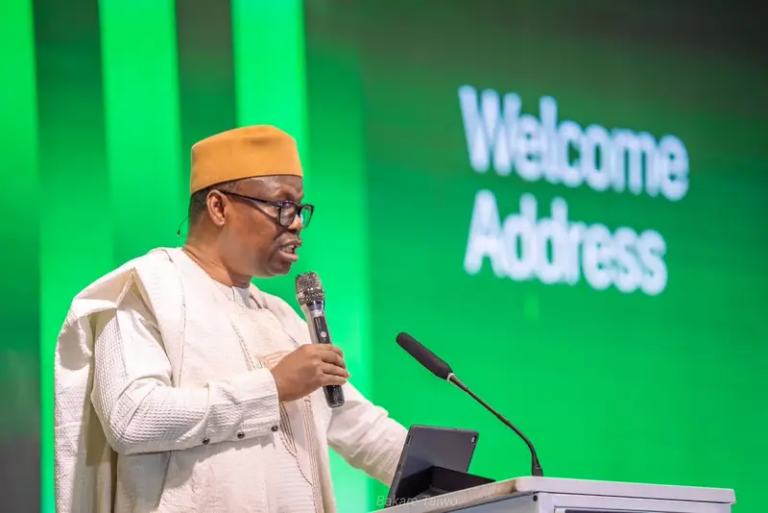
Senator Sunday Marshall Katung (Kaduna South) on Friday unveiled “Project 365,” an ambitious constituency-wide public health campaign aimed at eliminating viral hepatitis across Southern Kaduna, declaring that “no community should be left behind in the fight against a disease that thrives in silence.”
The initiative, launched in Kafanchan in partnership with the Federal Ministry of Health and Social Welfare, targets more than 620,000 residents with free screening, vaccination, diagnosis, treatment support, and sustained awareness campaigns.
Flagging off the programme on behalf of Kaduna State Governor Uba Sani, Deputy Governor Hadiza Sabuwa Balarabe described the intervention as “a compassionate, people-driven response to a silent public health emergency that has gone on for far too long.”
“I am honoured to represent His Excellency at this important occasion,” she said. “This initiative speaks directly to the heart of governance, improving lives. By taking healthcare to the grassroots, Senator Katung has shown that leadership is not just about policies, but about presence, empathy, and action.”
In a strongly worded appeal, Balarabe warned that viral hepatitis continues to devastate lives quietly across Nigeria.
“This disease does not announce itself loudly,” she said. “It creeps in unnoticed, often only revealing its full danger when the damage is already severe. That is why initiatives like Project 365 are not just important, they are lifesaving.”
Drawing from her medical background, she stressed prevention as the most powerful weapon.
“Hepatitis B and C are preventable, yet they continue to spread through unsafe practices, contaminated blood, unsterile injections, and lack of awareness,” she said. “Prevention begins with knowledge, with testing, with vaccination. It begins with each of us taking responsibility.”
She urged residents to participate fully, adding that, “There is dignity in seeking care. There is strength in knowing your status. Early detection is not a death sentence, it is a second chance at life.”
Earlier in his address, Katung painted a stark picture of the burden of the disease, calling hepatitis “a silent killer claiming lives in the shadows.”
“Millions are walking around with this virus unknowingly,” he said. “Behind what looks like normal life, there is a ticking health crisis. Without early detection, hepatitis can progress into cirrhosis, liver failure, or cancer, outcomes that are largely preventable.”
He explained that Project 365 was deliberately designed to break barriers to access by bringing healthcare directly to the people.
Other News
“We are not waiting for the people to come to hospitals, we are taking healthcare to their doorsteps,” Katung declared. “From rural settlements to markets, from schools to places of worship, we will meet our people where they are.”
Outlining the scope, he added that, “This programme will deliver free screening, vaccination, treatment support, and continuous education across all eight local government areas; Zangon Kataf, Kaura, Jema’a, Sanga, Kagarko, Jaba, Kachia, and Kauru.
“This is not a one-day intervention; it is a sustained campaign for healthier communities.” He also addressed the stigma surrounding the disease in emphatic terms.
“Stigma must end, and it must end now,” Katung said. “Hepatitis is a medical condition, not a moral failing. No one should suffer in silence because of fear, shame, or misinformation.”
A representative of the Coordinating Minister of State for Health, Dr. Michael Kinsley, aligned the initiative with the health reforms of President Bola Ahmed Tinubu, noting that the programme reflects a broader national push to strengthen primary healthcare systems.
“Hepatitis remains one of the most under-recognised health crises in Nigeria,” he said. “With an estimated 25 million Nigerians affected, the scale of the challenge is enormous, but so is the opportunity to change the narrative.”
He added with optimism, saying that, “This is more than a local intervention; it is a model. The vision is clear, to replicate Project 365 across all 360 federal constituencies and 774 local government areas. What is starting here in Southern Kaduna can become a national turning point.”
Stakeholders at the event, including health professionals, traditional rulers, and religious leaders, pledged support for the initiative, emphasizing the need for sustained community engagement.
National President of the Nigeria Union of Teachers, Audu Titus Amba, praised the programme as transformative.
“This is how real change happens,” he said. “Not through one-off gestures, but through systems that empower people, educate communities, and build lasting structures for health and well-being.”
Chairman of Jema’a Local Government Area, Peter Tanko, echoed the call for awareness. “There is no shame in knowing your status,” he said. “The real danger, the real tragedy lies in not knowing.”
Residents who participated in the outreach expressed hope and relief. One participant said she had never been tested before but described the experience as “eye-opening and empowering.”
The intervention is scheduled to run from April 13 to May 29, 2026, across primary healthcare centres in all eight local government areas of Southern Kaduna, with organisers promising sustained follow-up and expanded reach.