Follow Us on Google

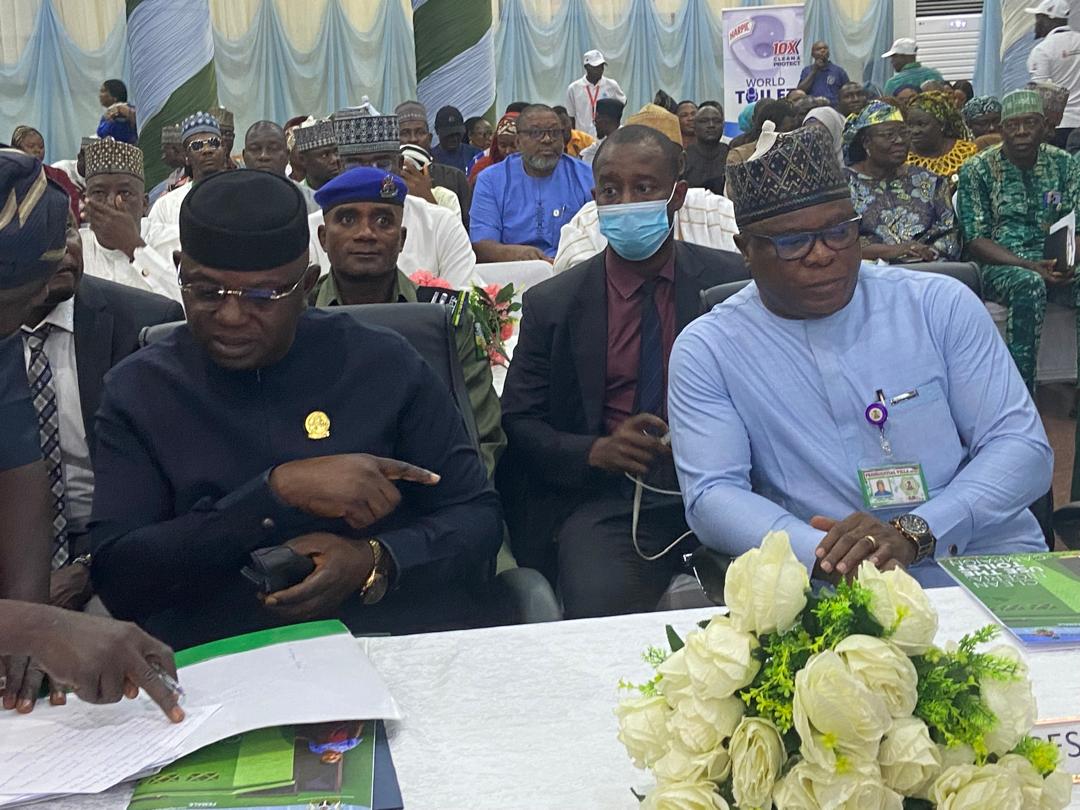
The Federal Government has urged Nigerians to intensify sanitation efforts as 589 Local Government Areas (LGAs) are yet to attain Open Defecation-Free (ODF) status, despite progress recorded in 185 LGAs.
Vice President Kashim Shettima, who disclosed this on Thursday ,in Abuja, during the commemoration of the 2026 World Toilet Day and the seventh anniversary of the Clean Nigeria: Use the Toilet Campaign.
He said the country was targeting total elimination of open defecation by 2030, with Jigawa and Katsina emerging as the first states to achieve statewide ODF certification.
Represented by the Senior Special Assistant to the President on Delivery and Coordination in the Office of the Vice President, Mr Akubo Adegbe, insisted that Nigeria still had significant ground to cover, considering its 774 LGAs.
“Despite the progress recorded since the campaign was launched in 2019, we still have significant work to do, considering that Nigeria has 774 Local Government Areas,” he said.
The Vice President called for increased investment, stronger institutional coordination, reliable data and sustained behavioural change to accelerate sanitation programmes nationwide.
He stressed that sanitation went beyond providing toilet facilities, describing it as a matter of public health, human dignity, safety and equal opportunity.
According to him, women and girls bear a disproportionate burden of poor sanitation, exposing them to health risks and threatening their privacy, safety, education and economic participation.
He said sanitation interventions must address the specific needs of women, girls, persons with disabilities and other vulnerable groups.
Shettima said the Clean Nigeria Campaign aligned with President Bola Tinubu’s Renewed Hope Agenda, particularly its commitment to improving public welfare, strengthening human capital and building a healthier nation.
He also described the Executive Order on Open Defecation-Free Nigeria by 2030 and Other Related Matters, 2025, signed by Tinubu, as a renewed commitment to strengthening national coordination and accelerating the campaign.
He urged state governments and local councils to take ownership of the initiative by providing adequate resources and strengthening institutions responsible for sanitation delivery.
Shettima also warned communities that had attained ODF status against relaxing their efforts, stressing the need to sustain proper sanitation and hygiene practices.
“Ending open defecation requires collective responsibility. Government alone cannot achieve this without the active support of traditional rulers, community leaders, development partners, the private sector and the media,” he said.
Former Head of the Civil Service of the Federation, Didi Esther Walson-Jack,on her part ,described sanitation as more than sewage management, urging greater attention to the toilet and sanitation sector.
She said access to decent toilets provided safety, privacy and opportunities, particularly for women and children, while creating a conducive environment for education and healthcare.
Walson-Jack described sanitation as a serious business requiring increased investment from government and private sector players.
In his welcome address, Minister of Water Resources and Sanitation, Prof. Joseph Utsev, warned that attaining ODF status was not enough without measures to prevent communities from reverting to open defecation.
He identified inadequate financing, weak community ownership and poor coordination as major challenges threatening sustainable sanitation delivery.
The minister called for a multi-sectoral approach involving health, education, environment, youth development and other relevant sectors.
He expressed confidence that sustained support from government, development partners and other stakeholders would enable Nigeria to achieve universal access to safe sanitation by 2030.
In her goodwill message, UNICEF Chief of Water, Sanitation and Hygiene (WASH), Emily Rand, called on state and local governments to increase budgetary allocations for sanitation and strengthen partnerships to guarantee sustainable access to safe toilet facilities.
Rand said attaining ODF status would not be sustainable without adequate funding, effective planning and regular coordination among government institutions, the private sector and development partners.
She challenged state and local government representatives to demonstrate commitment through dedicated sanitation budgets and regular coordination mechanisms with relevant stakeholders.