Follow Us on Google

From Isaac Anumihe, Abuja
The Federal Government has pointed to a combination of structural and systemic challenges as driving Nigeria’s persistent housing deficit, highlighting limited land access, high construction costs, weak land documentation, inadequate mortgage financing, and skills gaps as major barriers.
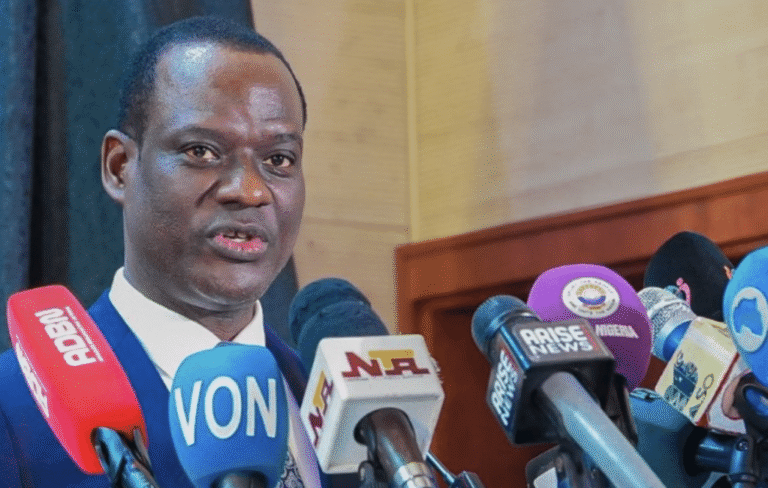
Speaking at the ongoing National Council on Lands, Housing and Urban Development (NCLHUD) in Ilorin, Kwara State, Dr. Shuaib Belgore, Permanent Secretary of the Federal Ministry of Housing and Urban Development, described the ministry’s demerger from the Ministry of Works as a strategic move to reposition housing delivery for greater national impact.
“The establishment of local building materials hubs is a deliberate intervention to reduce construction costs, stimulate job creation, and foster self-reliance in the sector,” Belgore said. He called on stakeholders to engage constructively with memoranda before the council to ensure outcomes translate into coordinated, actionable results nationwide.
According to Belgore, addressing the housing deficit requires strong coordination across federal, state, and local governments, underpinned by active private sector participation. “Achieving sustainable housing delivery and functional cities begins with sound policy formulation, rigorous sectoral reviews, and implementation of actionable strategies,” he added.
The Permanent Secretary also stressed the growing importance of Public–Private Partnerships (PPPs) amid mounting pressure on public resources. “Harmonised land administration, planning standards, financing frameworks, and delivery models are essential to creating a predictable, investor-friendly environment that accelerates housing supply,” he explained.
Commending the sectoral reforms under Minister Ahmed Musa Dangiwa, Belgore highlighted four key pillars for sustainable housing delivery: digitisation of land governance, urban renewal initiatives, promotion of local building materials, and deepened private sector participation.
Kwara State’s Commissioner of Housing and Urban Development, Dr. Segun Ogunsola, assured that the state is aligning with global best practices in housing and urban planning. He noted that the council comes at a critical time as population growth intensifies pressure on urban infrastructure and drives urban sprawl.
Ogunsola affirmed that Kwara State will collaborate closely with the Federal Ministry of Housing to bridge the housing gap and implement coordinated strategies for urban management. “Our focus is ensuring that housing delivery keeps pace with urbanisation while maintaining sustainable, functional cities,” he said.
As the 14th National Housing Council continues, the Federal Government’s renewed emphasis on PPPs, local production of building materials, and harmonised policy frameworks signals a shift toward practical, scalable solutions to Nigeria’s long-standing housing deficit.