Follow Us on Google
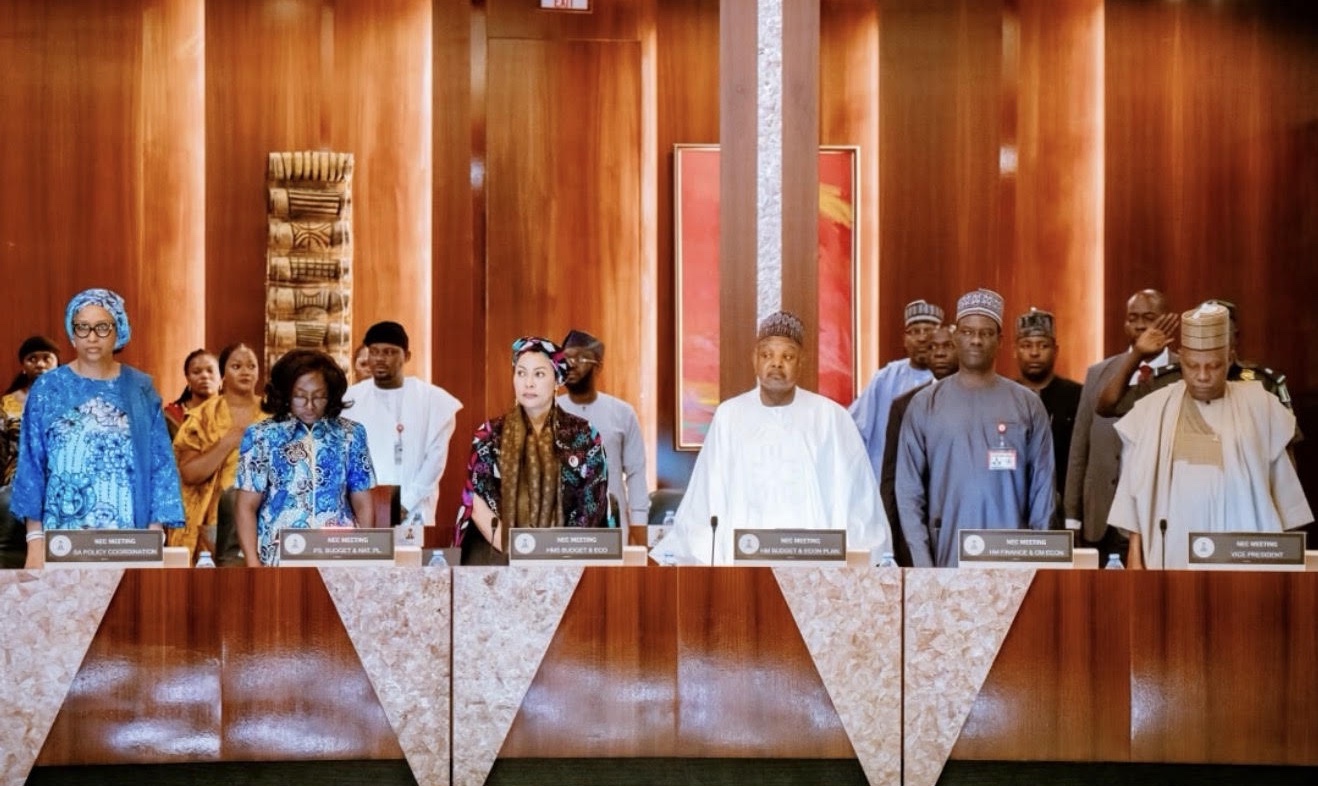
NEC okays new social protection policy, asks states to align
The Federal Government has launched a major upgrade of Nigeria’s police training infrastructure, awarding contracts for the rehabilitation of 13 police training institutions across the country as part of efforts to strengthen the pipeline for new police recruits.
The rehabilitation works, expected to be completed within three weeks, are designed to put the institutions in proper shape ahead of the commencement of training programmes by the Nigeria Police Force.
The development was disclosed on Thursday in Abuja during the 160th meeting of the National Economic Council (NEC), chaired by Vice President Kashim Shettima.
The intervention comes as the Federal Government continues efforts to strengthen policing capacity, with the condition of training facilities regarded as a critical component of producing better-prepared personnel for the force.
However, the NEC meeting also focused heavily on the need to ensure that the government’s economic reforms produce tangible benefits for Nigerians.
Shettima charged the Council to sustain ongoing reforms until improvements in key economic indicators translate into jobs, increased purchasing power, stronger business confidence and improved living standards.
He warned against a situation where government policies are announced without sustained implementation, stressing that measurable outcomes and continuity were essential to maintaining public confidence.
“There is no doubt that a serious government is measured by the matters it refuses to abandon. While attention may reveal a problem, continuity determines whether the problem yields to policy,” the Vice President said.
According to him, improvements in revenue, debt management, production and investment would have limited meaning if they failed to positively affect households.
“Macroeconomic progress must therefore continue its passage into jobs, purchasing power, business confidence and stronger subnational economies, because numbers become politically meaningful when citizens recognise themselves in their improvement,” he said.
Other News
Shettima further urged members of the Council to ensure that ongoing programmes and commitments were not abandoned in pursuit of new priorities.
“Continuity is a form of accountability: yesterday’s promise still deserves a place on today’s table, and no new priority absolves us of an old responsibility,” he said.
The Vice President said President Bola Tinubu had entrusted NEC with the responsibility of making cooperation among the federal and state governments more productive and ensuring that policies translated into outcomes Nigerians could see and feel.
“A government that remembers earns the confidence of its people because its promises do not expire when the microphones are switched off,” Shettima added.
At the meeting, NEC also endorsed the Revised National Social Protection Policy (NSPP) 2026–2030 and urged state governments to align their social protection policies, legislation, budgets and implementation plans with the revised national framework.
The policy, presented by the Minister of Budget and Economic Planning, Atiku Bagudu, provides a national framework for improving coordination, financing, implementation, monitoring and accountability in social protection programmes across the federation.
A key proposal under the revised policy is the establishment of a National Social Protection Council to provide overarching oversight for coordination and implementation.
The council will be chaired by the Vice President, with the Ministers of Budget and Economic Planning, Labour and Employment, and Humanitarian Affairs and Poverty Reduction serving as vice chairmen.
The Federal Ministry of Budget and Economic Planning will serve as the council’s secretariat, while six governors, representing the six geopolitical zones, will serve as members.