Follow Us on Google
By Doris Obinna
The Federal Government has begun onboarding State Oversight Committees across the country to enhance transparency and efficiency in the implementation of the Basic Healthcare Provision Fund (BHCPF) 2.0.
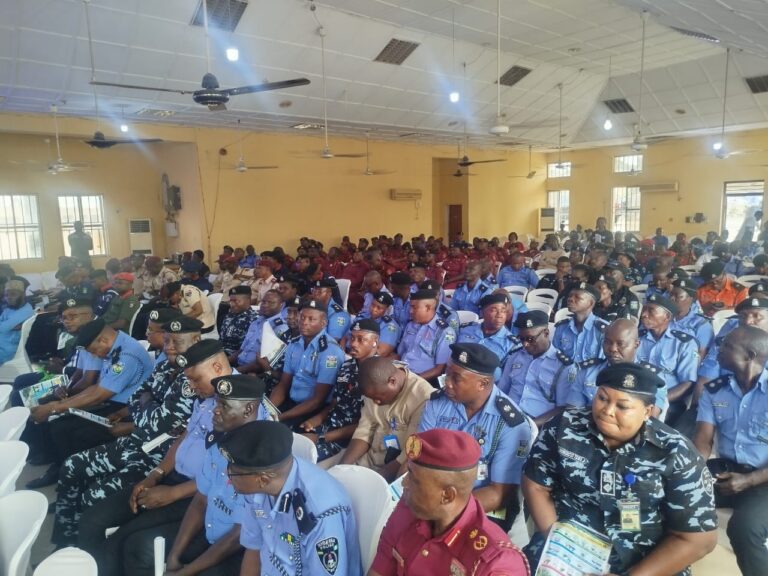
Stakeholders at the launch of the BHCPF Guideline 2.0 during the South-West zonal meeting in Lagos on Wednesday unanimously agreed that the success of BHCPF 2.0 depends on sustained political will, transparency at all levels, and active community engagement.
Speaking, Dr Oritseweyimi Ogbe, Secretary of the Ministry of Oversight Committee at the Federal Ministry of Health, said the exercise aims to deepen stakeholders’ understanding of the revised BHCPF guidelines and ensure that funds are used effectively.
Ogbe explained that the BHCPF, designed to improve Nigerians’ access to quality healthcare, is implemented through four gateways: the National Primary Health Care Development Agency (45 per cent), State Health Insurance Agencies (48.25 per cent), Emergency Medical Treatment, and the Nigeria Centre for Disease Control (1.25 per cent). Funds are used to support primary healthcare operations, provide insurance for vulnerable groups, strengthen emergency care, and enhance outbreak response.
He noted that BHCPF 2.0 introduces tighter monitoring mechanisms, including financial management officers in every local government, civil society tracking, and digital monitoring of facility-level expenditures. The Ministry has also partnered with the Independent Corrupt Practices and Other Related Offences Commission (ICPC) to enforce accountability.
“The Coordinating Minister of Health, Prof Ali Pate, has emphasised that every naira must translate into measurable health outcomes,” Ogbe said, adding that over 8,309 primary healthcare centres currently benefit from the fund, with plans to scale up to 17,600 by 2027.
Other News
Lagos State Commissioner for Health, Prof Akin Abayomi, described the new BHCPF 2.0 as a “transformative framework” that streamlines governance, reduces bureaucratic delays, and ensures faster approvals. He noted that Lagos has 245 accredited PHCs under the scheme and is working to upgrade more facilities.
Abayomi also highlighted the fund’s role in bolstering emergency preparedness and expanding insurance coverage for vulnerable Nigerians, in line with the National Health Insurance Authority (NHIA) Act of 2022.
In a goodwill message, Dr Muntaqa Umar-Sadiq, National Coordinator of the Sector-Wide Approach (SWAp) Coordination Office, reaffirmed the government’s commitment to transparency and described BHCPF 2.0 as a renewed social contract with Nigerians.
He urged state committees to enforce compliance and address accountability gaps identified in the 2023 BHCPF Audit Report, echoing Prof Pate’s warning that “corruption in the health sector kills.”
Umar-Sadiq called for realistic, evidence-based operational plans for 2026, stressing that “every Nigerian who walks into a primary healthcare centre deserves care, dignity, and healing.”
He further noted that the Federal Ministry of Health is investing in digital infrastructure to enable real-time tracking of disbursements, enhance citizen participation, and strengthen data-driven decision-making in the health system. The online BHCPF dashboard, he added, will allow the public to view allocations to PHCs and assess progress toward universal health coverage.