Follow Us on Google
From Juliana Taiwo-Obalonye, Abuja
Federal Government has launched a $1 billion social protection programme and unveiled a unified system to identify vulnerable households, eliminate duplication in government interventions and track beneficiaries until they move out of poverty.
The Household Prosperity and Empowerment Social Protection Project (HOPE-SP) represents a shift from temporary palliatives to a system under which vulnerable households would be identified, supported according to their specific needs and monitored along a defined pathway towards economic self-reliance.
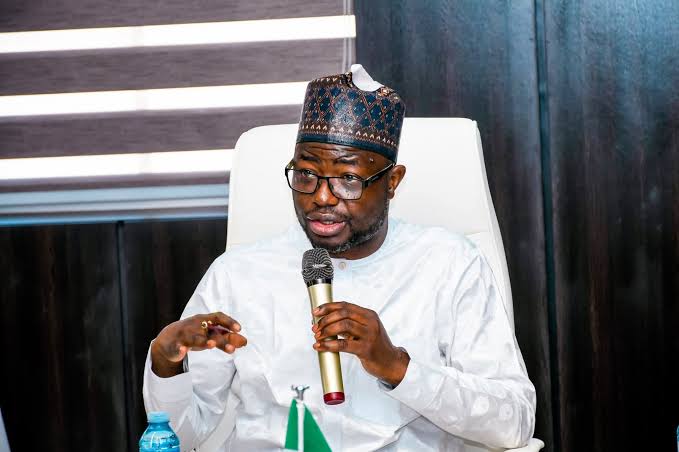
Minister of Humanitarian Affairs and Poverty Reduction, Bernard Doro, unveiled the framework at the State House Banquet Hall, Abuja, alongside four other initiatives aimed at strengthening the country’s humanitarian and poverty reduction response.
They include the One-Humanitarian-One Poverty Response System (OHOPRS), Emergency Cash Transfer Programme, Federal Ministry of Humanitarian Affairs and Poverty Reduction Ministerial Blueprint and Humanity First Magazine.
Speaking at the event themed, “From Palliatives to Pathways,” First Lady Oluremi Tinubu said the new interventions were designed to ensure that vulnerable Nigerians did not remain permanently dependent on government assistance.
She said HOPE-SP would combine immediate assistance with interventions capable of moving vulnerable households towards recovery, empowerment and self-reliance.
“The first initiative, the Household Prosperity and Empowerment Social Protection Project, is an important step toward strengthening how to identify and respond to vulnerable households facing various challenges by listening to their specific needs before taking action.
“It is designed to provide immediate stabilisation assistance while placing the households on a pathway to recovery, empowerment and self-reliance,” she said.
The First Lady said the initiative had become necessary as the economic reforms of President Bola Tinubu’s administration continued to reshape the economy, with many families still requiring support despite efforts to lay the foundation for sustainable growth and shared prosperity.
“As these reforms continue to take effect, we must recognise that, given the size of our population and available resources, many families still face challenges and require our collective support,” she said.
She explained that OHOPRS would provide a coordinated national platform for humanitarian emergencies, social protection and poverty reduction, while eliminating duplication among government interventions.
According to her, unified national registries would enable government to identify poor and vulnerable households, provide appropriate assistance and track their progress towards prosperity.
The Emergency Cash Transfer Programme, she added, would provide rapid financial support to households affected by economic shocks, while the Ministerial Blueprint would translate the administration’s humanitarian and poverty reduction priorities into measurable actions.
Explaining the rationale for the new architecture, Doro said government was moving away from a fragmented system in which ministries, departments and agencies operated separate social intervention programmes and databases with insufficient coordination.
He said the arrangement had created situations where some beneficiaries accessed multiple interventions while other vulnerable households remained unidentified or received no support.
Under the new system, the minister said, the household rather than individual government programmes would become the centre of social protection policy.
“The objective is to move from programmes to households, and from counting beneficiaries to measuring impact,” Doro said.
He explained that vulnerable households would first be identified and their needs assessed before appropriate interventions were deployed and their progress monitored through a “poverty graduation pathway.”
Beneficiaries, he said, would no longer simply receive assistance and disappear from government records.
Instead, their progress would be tracked from identification and intervention through economic inclusion and eventual exit from poverty into what the government describes as a growth register.
Other News
Doro said the architecture would be supported by unified data, digital delivery infrastructure, new financing arrangements and real-time poverty intelligence.
He said OHOPRS would provide a single window for coordinating humanitarian and poverty reduction interventions, ending the practice of different government agencies maintaining separate registers and data centres.
Existing databases, according to him, would be integrated into a unified platform anchored on the National Social Register, which currently contains about 20 million households.
The minister said the system would enable government to determine not only who was receiving assistance but whether the intervention was producing measurable improvements in the economic circumstances of beneficiaries.
To strengthen evidence-based decision-making, Doro announced plans to establish a National Poverty Intelligence Lab to provide data and analysis for government interventions.
He said the success of social protection programmes would no longer be judged by the quantity of food, cash or other materials distributed, but by the number of households protected against economic shocks, economically included and ultimately lifted out of poverty.
According to him, the objective was to move Nigeria from “reactive relief to anticipatory social protection” and from merely managing poverty to actively reducing it.
Minister of Budget and Economic Planning, Atiku Bagudu, said the success of the programme would require a whole-of-government approach involving the federal, state and local governments, development partners and other stakeholders.
He said the Tinubu administration’s ambition to build a $1 trillion economy by 2030 must be accompanied by deliberate efforts to ensure that economic opportunities reach Nigerians at the grassroots.
Bagudu cited the administration’s ward development initiative covering the country’s 8,809 wards, saying it was intended to identify factors driving poverty and exclusion at community level and transform the wards into centres of prosperity and inclusion.
He said government was also increasing budgetary attention to peace, security and social protection to prevent Nigerians from being pushed into poverty by domestic and international economic shocks.
The minister noted that developments such as the Russia-Ukraine war and instability in the Middle East could have consequences for household incomes and economic stability in Nigeria.
Bagudu disclosed that Nigeria already had substantial resources committed to social protection and poverty reduction, including a World Bank portfolio of about $6 billion, but said better coordination was necessary to maximise their impact.
According to him, the challenge was not necessarily the absence of resources but ensuring that programmes and funds available at federal, state and local levels were properly aligned and efficiently deployed.
Borno State Governor, Babagana Zulum, commended the initiative, saying Nigeria needed to address the underlying causes of vulnerability.
Drawing from Borno’s prolonged experience with insurgency and humanitarian crises, Zulum said sustainable peace and security could not be achieved through emergency interventions alone.
He stressed the need to tackle poverty, inequality and other socioeconomic conditions capable of exposing individuals and communities to insecurity and instability.
The governor also called for continued research into issues surrounding identity and national security.
Oluremi Tinubu commended Doro and his team for developing the initiatives, expressing optimism that they would transform the country’s humanitarian response from temporary assistance to sustainable economic empowerment.
“I commend the Honourable Minister of Humanitarian Affairs and Poverty Reduction, Dr. Bernard M. Doro and his team for these initiatives that will transform our humanitarian endeavours from temporary assistance to lasting pathways that promote resilience, self-reliance, prosperity and a dignified life for every Nigerian,” she said.
The government said the new architecture would strengthen accountability, reduce duplication and provide a clearer measure of whether billions of dollars committed to social protection were actually improving the economic circumstances of vulnerable Nigerians.