Follow Us on Google
- Targets December 31st as deadline to have all civil servants online
From Juliana Taiwo-Obalonye, Abuja
The Nigerian public service is poised to benefit significantly from the newly launched 1 Government Cloud Enterprise Content Management System (ECMS), which promises to unlock cost efficiency, transparent pricing, unified capacity building, and the consolidated support advantages of economies of scale. This strategic move is expected to modernize governance and improve service delivery nationwide.
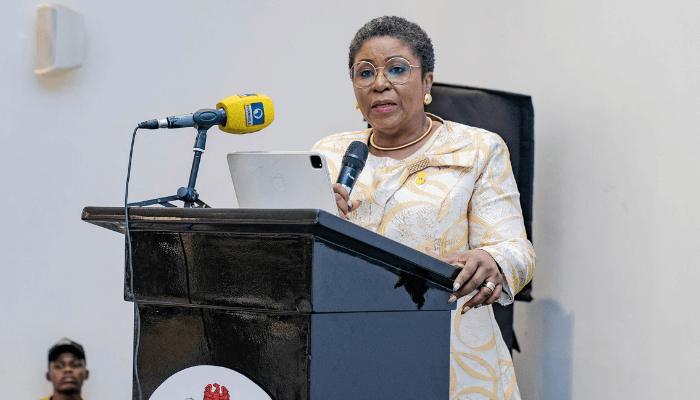
The Head of the Civil Service of the Federation, Didi Walson-Jack, stated that this transformative migration to the indigenous, government-owned platform marks a substantial shift from foreign proprietary systems to a sovereign digital infrastructure.
She emphasised, “So we expect that this will unlock cost efficiency, transparent pricing, unified capacity building and the consolidated support advantage of economies of scale.” This platform consolidates all ministries, departments, and agencies (MDAs) onto one interoperable government-wide digital backbone, eliminating fragmentation and enhancing collaboration across government sectors.
This transition aligns with the federal government’s Nigeria First policy, which prioritizes platforms developed, hosted, and governed by Nigerians, thus safeguarding national data sovereignty.
She highlighted that the new platform, delivered through Galaxy Backbone Limited, a government enterprise tasked with providing ICT for public administration, replaces the Laserfish system previously used in ministries. “Moving to one government cloud therefore aligns with the national shift to sovereign digitalization and directly protects Nigeria’s data platforms and digital future,” she said.
The 1 Government Cloud’s unified platform has several operational advantages. It offers a single workflow language, record system, and digital tools such as GovMail for official communication, GovDrive for secure file collaboration, and GovConference for virtual meetings. These features promote seamless inter-agency workflows and simplify service delivery across government entities. Notably, the system supports mobile accessibility, e-signatures, and scan-as-you-go functionality, allowing ministries to begin digital operations without waiting for full legacy file digitization. This capability is critical to achieving the government’s target of paperless operations by December 31, 2025.
An important benefit of consolidating MDAs on one platform is the scale advantage: the government can negotiate as a single buyer, reducing costs and improving transparency in licensing and service agreements. Mrs. Walson-Jack announced plans to constitute a committee of permanent secretaries to finalize license pricing negotiations within two weeks, ensuring all government bodies can adopt the ECMS seamlessly by November 25.
The deployment of the platform signals a new era of digital governance for Nigeria, demonstrating how technology can unify and elevate the public service to meet global standards and citizen expectations. As Mrs. Walson-Jack reinforced, “The future is now. Nigeria has indeed entered a digital era”.
Galaxy Backbone representative, Ayodeji Bakari, detailed the transformative impact of the newly launched 1Gov Cloud Enterprise Content Management System for Nigerian workers. He emphasised that the system is a crucial tool to ensure inclusivity and transparency across the civil service.
He stated, “The 1Gov Cloud ECM is designed to ensure that no staff is left behind in this digital transformation. By allowing better tracking of requests and approvals, it promotes transparency and accountability throughout the system.”
Other News
He further confirmed the timeline, noting, “We are committed to having all personnel fully online by the 31st of December. This marks a significant milestone in the journey toward a fully digital civil service.”
Recognising the challenges inherent in such a large-scale change, Bakari acknowledged, “We understand the resistance and difficulties that come with transitioning to a new system, but the collective dedication of all stakeholders will drive this initiative forward.”
On the technical features of the system, he elaborated, “The platform is built to enhance service delivery and improve engagement with citizens. It provides a robust framework that supports real-time tracking, efficient approvals, and a transparent workflow.”
He concluded with a call to unity and commitment, saying, “All participants in this digital transformation are united in the commitment to adopt and integrate 1GoV Cloud ECM within the Nigerian Civil Service, ensuring enhanced productivity and accountability.”
From the workforce perspective, President of the Joint Union Negotiations Council, Ameh Abah, praised the system’s inclusivity and transparency. He said, “This platform protects officers by making processes transparent and traceable. It rewards hard work and timely delivery because performance is now recorded inside the system. The days of invisible effort are ending. The days of recognized contribution are here.” The ECMS facilitates accountability and meritocracy within the public service by making every task auditable, every approval traceable, and every output measurable.
The Director overseeing the Special Duties Office, Joy Baderin, described the platform as a “historic occasion” and a major step toward an efficient, transparent, and responsive civil service. She credited the initiative’s success to the leadership of President Bola Ahmed Tinubu and to the dedicated teams at the Office of the Head of the Civil Service, Galaxy Backbone Limited, and other stakeholders.
Already piloted in strategic ministries such as Communication, Innovation and Digital Economy, Solid Minerals, and Foreign Affairs, the 1 Government Cloud is expanding across the federal government. It aims to unify digital government infrastructure by providing a sovereign, secure, and efficient platform for all public sector agencies. This initiative not only modernizes government operations but also supports Nigeria’s commitment to data sovereignty, cost reduction, and enhanced service delivery, reaffirming Nigeria’s standing as a leader in African digital governance.