Follow Us on Google
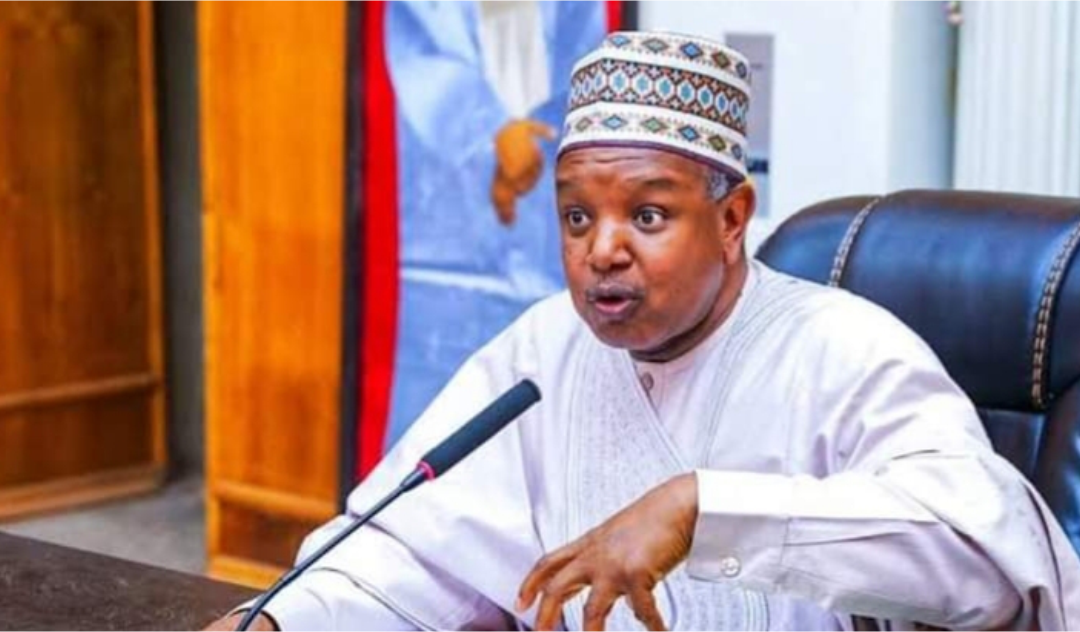
The Federal Government has called on Civil Society Organisations (CSOs) to play a more active role in shaping policies and programmes, stressing that their contributions are vital to improving service delivery at the grassroots.
Speaking at the Citizens and Stakeholders Engagement Forum in Abuja on Thursday, Minister of Budget and Economic Planning, Senator Abubakar Bagudu, urged CSOs to ground their advocacy in data provided by the National Bureau of Statistics (NBS).
“Civil society must engage with the data supplied by the National Bureau of Statistics when gathering information on government policies and programmes,” Bagudu said, noting that citizen participation should not be treated as a one-off gesture but as an ongoing partnership. He added, “Your support will help us deliver better services at the ward level.”
The Director-General of the Budget Office of the Federation, Dr. Taminu Yakubu, highlighted the constitutional role of citizens in the budgetary process. In his presentation on The Role of Citizens in the Budget Preparatory Process, he explained that public resources ultimately belong to the people.
“A budget with citizens is the nation’s future,” Yakubu declared. He encouraged Nigerians not to see themselves as spectators but as co-owners of the appropriation, with a responsibility to demand accountability.
Clarifying ongoing fiscal operations, Yakubu explained that both the 2024 and 2025 budgets are being run concurrently. According to him, the capital component of the 2024 appropriation law was extended, allowing for simultaneous implementation alongside the 2025 fiscal plan.
Other News
On his part, Statistician-General of the Federation and NBS CEO, Prince Adeyemi Adeniran, urged CSOs to make better use of official statistics. “The data is publicly available. It is there to guide informed decision-making,” he said.
Acting Permanent Secretary at the Ministry, Dr. Sampson Ebimaro, described the engagement forum as proof of government’s commitment to collaboration. He emphasised that civil society’s contributions could help refine decision-making and improve outcomes for citizens.
“The insights you share, the concerns you raise, and the solutions you proffer will no doubt shape our development trajectory,” Ebimaro said. “We are here to listen, learn and collaborate because we recognise that sustainable development can only be achieved when government policies are grounded in serving the interests of the people.”
He further stressed that transparent governance, participatory planning, and accountable resource management were not just good practices but fundamental rights of every Nigerian.
The meeting brought together leading voices from across civil society, including Mr. Oumar Ndiaye of the Ford Foundation, Mr. Kosisochukwu Umeh of the Policy and Legal Advocacy Centre (PLAC), Mr. Eze Onyekpere of the Centre for Social Justice (CSJ), Ms. Alice Adebayo of BudgIT, Dr. Tijani Abdulkareem of the Social Economic Research and Development Centre (SERDC), Mr. Tunde Salmon of the Good Governance Team, and Mr. Uyi Osagie of the Central Results Delivery Unit, Office of the Special Adviser on Policy Monitoring.
The session highlighted one central message: for governance to truly serve citizens, the government and civil society must work hand-in-hand.