Follow Us on Google

From Adanna Nnamani, Abuja
Research on the revenue remittance compliance index of Federal Government Ministries, Departments and Agencies (MDAs) has indicated that the federal government’s revenue crisis is being worsened by their refusal to remit all revenue generating surplus as stipulated by the Fiscal Responsibility Act (FRA) 2007.
The study was carried out by OrderPaper Advocacy Initiative, Centre for Transparency Advocacy, HipCity Innovation Centre, CLICE Foundation and the Nigerian Institute of Quantity Surveyors, with support from the United States Agency for International Development (USAID).
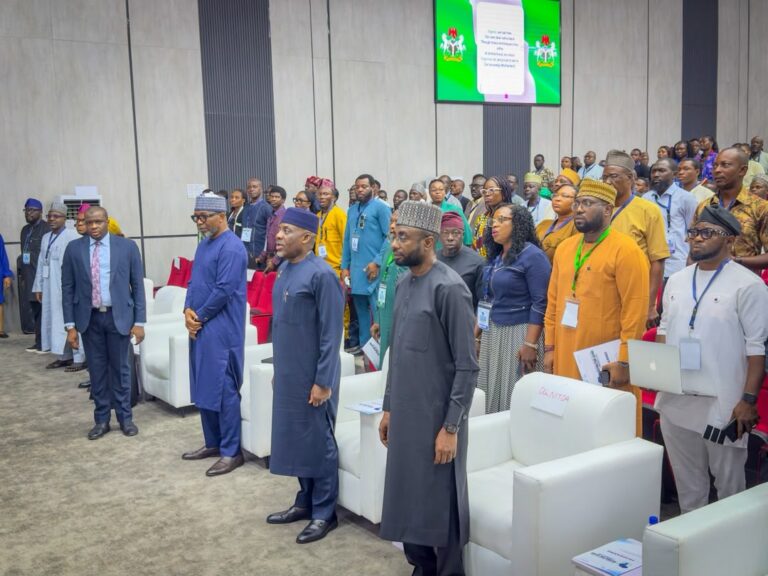
Speaking at the public presentation of the research report on the revenue remittance compliance index of MDAs, Oke Epia, Executive Director, OrderPaper, said 150 MDAs were captured in the data provided for the work by the Fiscal Responsibility Commission (FRC).
Read also: Fuelmetrics launches solution for fuel monitoring, control
“These include scheduled and non-scheduled corporations and agencies of the Federal Government. Of this number, 58 are categorized as above average compliance having submitted their Annual Financial Statement (AFS) up to 2020 leaving only at least 2021 as outstanding fiscal year to be submitted to the Commission. 73 agencies fall into the average compliance category. These have not submitted their AFS for a range of years.
“Nine agencies in the petroleum industry (and allied sector) which fall within the focus of the Global Initiatives for Fiscal Transparency (GIFT) Nigeria Project present a mixed bag of compliance. The Department of Petroleum Resources (Now Nigerian Upstream Petroleum Regulatory Commission, NUPRC); the Nigeria National Petroleum Corporation (now Nigerian National Petroleum Company Ltd); the Nigerian Maritime Administration and Safety Agency (NIMASA); the Petroleum Equalisation Fund (Management) Board (now Nigeria Midstream and Downstream Petroleum Regulatory Authority); the Petroleum Products Pricing Regulatory Agency, PPPRA (now Nigeria Midstream and Downstream Petroleum Regulatory Authority) and the Nigerian Ports Authority (NPA) posted Average performances. The National Oil Spill Detection & Response Agency (NOSDRA); and the Oil & Gas Free Zone Authority posted Above Average performances. However, the Nigerian Content Development & Monitoring Board (NCDMB) stands alone in the below-average category having not submitted AFS from 2017 till date. This is in spite of several reminders from the FRC to do so,” Epia explained.
He added that plans were afoot to interrogate the issues of transparency and accountability in the petroleum sector, especially as it relates to revenue mobilization and remittances into the federation account.
“It has been said times without number that the petroleum industry is the foster child of corruption in this country. But it has also been said that we are beginning to witness some openness, especially with the PIA. 2021. But as we know disclosure is not tantamount to transparency. But we should still acknowledge and recognize strides that are being made in the sector.
“Specifically, this project is focused on the passing of the Fiscal Responsibility Act Amendment Bill that is currently before the National Assembly. And also the need to stimulate engagements by citizens, to try to monitor the performance or the delivery of public institutions in their locality, in their neighbourhoods and in their communities,” he added.
Also commenting on the report, an economist, Mr Tope Fasua, said the reluctance of MDAs to remit operating surpluses will further hurt the economy.
“What we are likely to see based on the current evaluation of the current situation in the country is company closures, inflation rising from 18.6 to a three-digit situation. I am not trying to be alarming but they are things that have happened to other countries.
“So, these can lead to unemployment, economic depression, crises and so on. And that is why this report is very important. Like I mentioned earlier, we have a remission problem, a revenue problem. On the revenue end, some of us are projecting that there is space for Nigeria to get more revenue. For example, we have one of the lowest revenue to the GDP ratio in the world,” he said.