Follow Us on Google

• Okays N45.8bn surveillance system
• Defends N100,000 payment for contact tracing
___________________________________________________________
From Juliana Taiwo-Obalonye, Abuja
The Federal Executive Council (FEC) has approved a N45.8 billion biosecurity and disease surveillance system for five international airports to strengthen Nigeria’s capacity to detect Ebola and other dangerous pathogens at the nation’s borders.
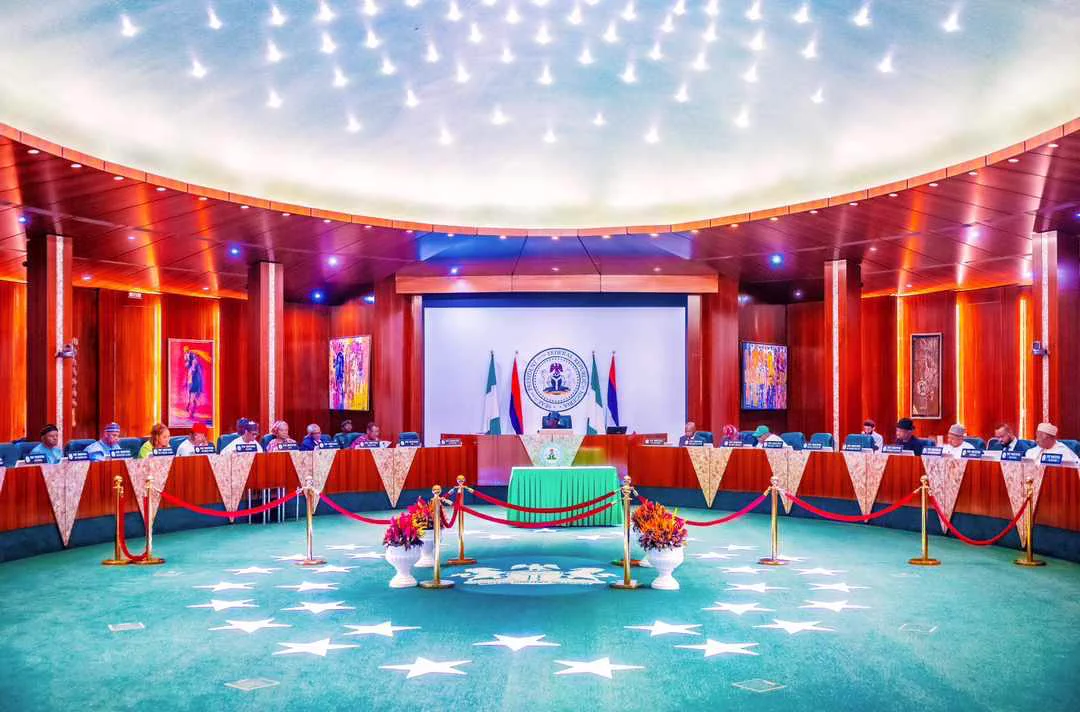
The Coordinating Minister of Health and Social Welfare, Ali Pate, disclosed this on Wednesday while briefing State House correspondents on the outcome of the Council meeting presided over by President Bola Tinubu at the Presidential Villa, Abuja.
The project will be implemented under a 20-year public-private partnership concession awarded to BioHealth Consortium, following the Council’s approval of the project’s full business case.
The minister described the initiative as a major investment in Nigeria’s health and economic security, noting that infectious disease outbreaks could disrupt economic activities and threaten public safety.
“Over the last two weeks, I think you realise the significance of enhancing biosecurity at our points of entry,” he said.
“Since COVID, we have known that there are significant vulnerabilities in terms of public health threats crossing borders and the need for coordinated, technology-driven systems for early warning, detection and response to emerging infectious disease threats.”
The surveillance system will be deployed at the Murtala Muhammed International Airport, Lagos; Nnamdi Azikiwe International Airport, Abuja; Mallam Aminu Kano International Airport, Kano; Port Harcourt International Airport; and Akanu Ibiam International Airport, Enugu.
According to the minister, more than 18 million passengers pass through Nigeria’s airports annually, making effective surveillance at points of entry critical to national health security.
Under the concession arrangement, the private-sector partner will design, finance, build, operate and maintain the facilities throughout the concession period, while the Federal Government will provide policy, institutional and regulatory oversight.
At the end of the concession, the assets will revert to the Federal Government in line with the agreement reviewed and endorsed by the Infrastructure Concession Regulatory Commission.
The project will include wastewater surveillance to detect pathogens associated with aircraft, air and surface sampling equipment, as well as technologies for monitoring cargo and baggage.
It will also establish a National Surveillance Operations Centre to coordinate real-time monitoring, integrate data, track incidents and support rapid responses to suspected outbreaks.
The facilities will include modern laboratories for rapid diagnostics at points of entry. Their operations will be integrated with those of the Nigeria Centre for Disease Control and Prevention, Port Health Services, the Nigeria Customs Service, the Nigeria Immigration Service and the National Agency for Food and Drug Administration and Control.
Other News
The minister said the project was partly informed by lessons from Nigeria’s recent response to the Ebola threat.
He disclosed that Nigeria had maintained surveillance and containment measures before confirming an imported Ebola case in October, adding that the patient had recovered after receiving treatment in Nigeria and was continuing to improve in her home country.
However, he warned that the threat remained, given the continued spread of Ebola in the Democratic Republic of Congo and the possibility of other infectious diseases entering Nigeria.
On the government’s support for people placed in isolation or quarantine after being identified as contacts of the Ebola patient, the minister said the intervention was intended to ensure compliance and prevent community transmission.
He explained that some contacts, including people who transported or interacted with the patient after she developed symptoms, depended on daily earnings to support their families.
“If you ask them to stay in quarantine, they have a livelihood and a family. They may find ways to evade it, and that will put everybody at risk,” he said.
The minister said the support was a targeted public-health intervention to encourage identified contacts to remain in quarantine and protect the wider population.
“It is a global public good, and it is circumscribed. By no means will it be applicable if we have the unfortunate situation of community transmission,” he said.
He added that the authorities were determined to prevent the outbreak from spreading beyond the identified contacts.
The minister said the contacts were required to undergo 21 days of quarantine, corresponding to Ebola’s incubation period of between two and 21 days.
“We are not taking any chances,” he said, adding that health authorities would continue monitoring the contacts and respond swiftly to any suspected infection.
He said the government was pursuing a two-pronged strategy: containing the existing Ebola threat while strengthening border surveillance to prevent new cases from entering the country.
The minister expressed confidence that the new system would improve Nigeria’s ability to detect emerging threats early, coordinate responses across agencies and protect the country against future public-health emergencies.