Follow Us on Google

• Defends N100,000 support for quarantined contacts
• Targets 19,000MW transmission capacity, okay 3 grid projects
From Juliana Taiwo-Obalonoye, Abuja
The Federal Executive Council (FEC), yesterday, approved a N45.8 billion biosecurity and disease surveillance system for five international airports to strengthen Nigeria’s defence against Ebola and other dangerous pathogens, as the Federal Government announced the payment of N1.2 trillion out of the N2.3 trillion owed to electricity sector operators.
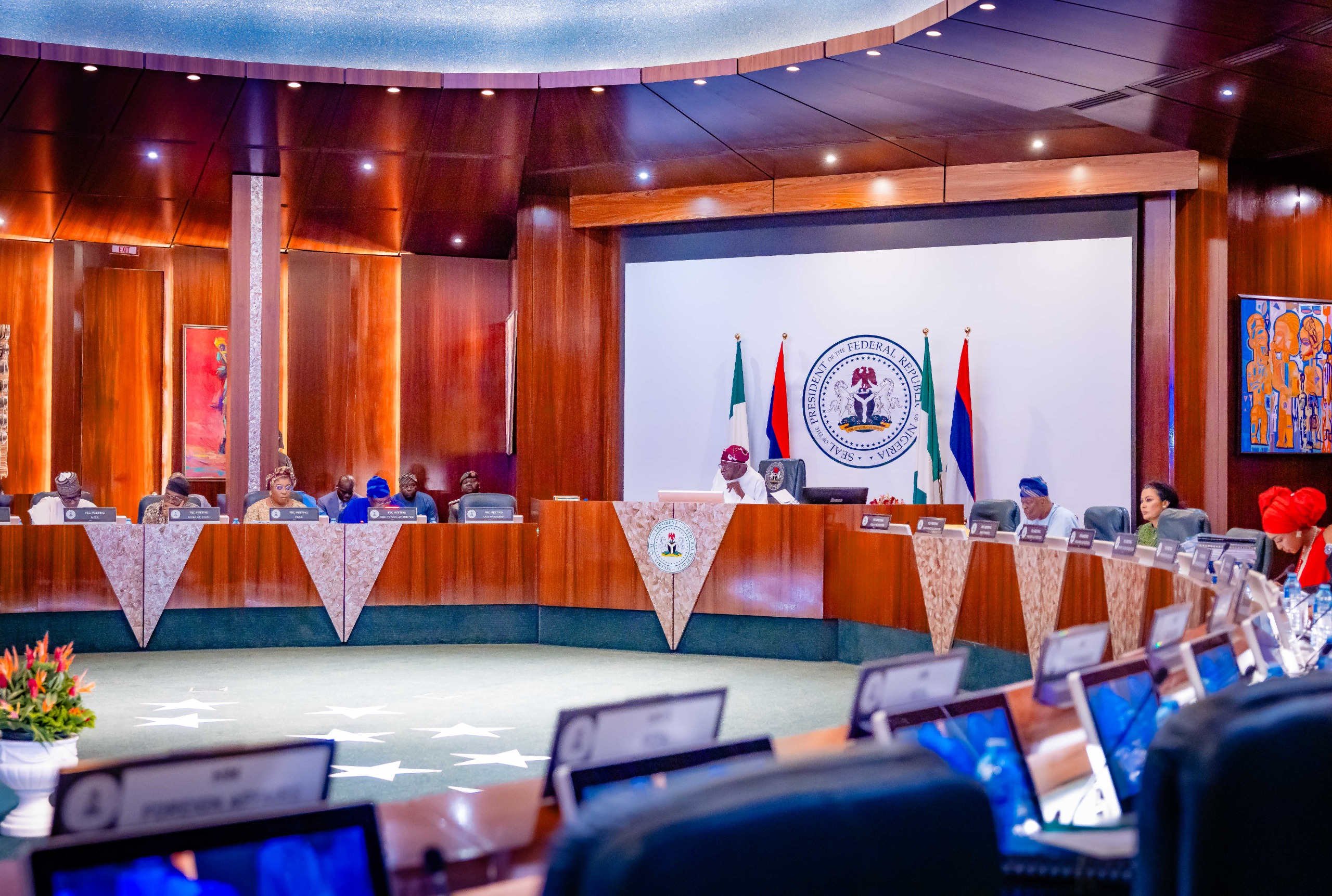
The council, at its meeting presided over by President Bola Tinubu at the Presidential Villa, Abuja, also approved three major electricity transmission projects aimed at improving grid stability and expanding transmission capacity from about 5,000 megawatts to more than 19,000 megawatts.
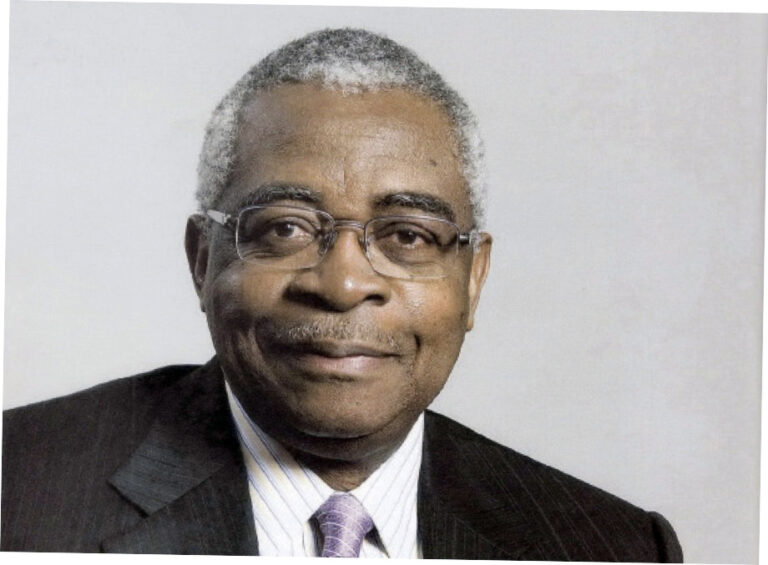
Briefing State House correspondents after the meeting, the Coordinating Minister of Health and Social Welfare, Prof. Ali Pate, and Minister of Power, Joseph Tegbe, outlined the decisions, which they said were intended to strengthen national health security, address liquidity challenges in the electricity industry and improve power supply.
Pate said the N45.8 billion biosecurity project would be implemented under a 20-year public-private partnership concession awarded to BioHealth Consortium, following FEC’s approval of its full business case.
He explained that the investment had become necessary because of the growing threat posed by infectious diseases crossing international borders, particularly following Nigeria’s recent experience with an imported Ebola case and the continuing outbreak in the Democratic Republic of the Congo (DRC).
“Over the last two weeks, I think you realise the significance of enhancing biosecurity at our points of entry,” he said.
“Since COVID, we have known that there are significant vulnerabilities in terms of public health threats crossing borders and the need for coordinated, technology-driven systems for early warning, detection and response to emerging infectious disease threats.”
The surveillance system will be deployed at the Murtala Muhammed International Airport, Lagos; Nnamdi Azikiwe International Airport, Abuja; Mallam Aminu Kano International Airport, Kano; Port Harcourt International Airport; and Akanu Ibiam International Airport, Enugu.
According to the minister, more than 18 million passengers pass through Nigeria’s airports annually, making effective surveillance at points of entry critical to national health and economic security.
Under the concession arrangement, the private-sector partner will design, finance, build, operate and maintain the facilities throughout the 20-year period, while the Federal Government will provide policy, institutional and regulatory oversight.
At the expiration of the concession, the assets will revert to the Federal Government under the agreement reviewed and endorsed by the Infrastructure Concession Regulatory Commission.
The project will include wastewater surveillance to detect pathogens associated with aircraft, air and surface sampling equipment, as well as technologies for monitoring cargo and baggage.
It will also establish a National Surveillance Operations Centre to coordinate real-time monitoring, integrate data, track incidents and support rapid responses to suspected outbreaks.
Modern laboratories will be provided for rapid diagnostics at points of entry, while operations will be integrated with those of the Nigeria Centre for Disease Control and Prevention (NCDC), Port Health Services, Nigeria Customs Service, Nigeria Immigration Service and National Agency for Food and Drug Administration and Control (NAFDAC).
Pate said Nigeria had maintained surveillance and containment measures before confirming an imported Ebola case in October, adding that the patient had recovered after receiving treatment in Nigeria and was continuing to improve in her home country.
He, however, warned that the threat remained, given the continued spread of Ebola in DRC and the possibility of other infectious diseases entering Nigeria.
On the Federal Government’s N100,000 support for people placed in quarantine after being identified as contacts of the Ebola patient, the minister defended the intervention as a necessary public-health measure to encourage compliance and prevent community transmission.
He explained that some of the contacts, including people who transported or interacted with the patient after she developed symptoms, depended on daily earnings to support their families and could face hardship if prevented from working during the monitoring period.
“If you ask them to stay in quarantine, they have a livelihood and a family. They may find ways to evade it, and that will put everybody at risk,” he said.
According to him, the support was targeted at ensuring that identified contacts complied with quarantine requirements, thereby protecting the wider population from possible infection.
Other News
“It is a global public good, and it is circumscribed. By no means will it be applicable if we have the unfortunate situation of community transmission,” he said.
The minister added that the authorities were determined to prevent the outbreak from spreading beyond the identified contacts, who were required to undergo 21 days of quarantine, corresponding to Ebola’s incubation period of between two and 21 days.
“We are not taking any chances,” he said, assuring that health authorities would continue monitoring contacts and responding promptly to any suspected infection.
Pate said the government was pursuing a two-pronged strategy of containing the existing Ebola threat while strengthening border surveillance to prevent new cases from entering the country.
He expressed confidence that the new system would improve Nigeria’s capacity to detect emerging threats, coordinate responses across agencies and protect the country against future public-health emergencies.
On developments in the electricity sector, Minister of Power, Joseph Tegbe, disclosed that the Federal Government had paid N1.2 trillion out of the N2.3 trillion owed to operators as part of efforts to ease liquidity constraints, improve gas supply to generating companies and stabilise electricity delivery nationwide.
Tegbe said the payment formed part of broader interventions to address the financial challenges confronting the electricity industry, particularly outstanding obligations affecting gas supply to power generation companies.
He disclosed that the government was targeting an increase in the country’s electricity transmission capacity from about 5,000 megawatts to more than 19,000 megawatts to accommodate available generation capacity, which he put at over 13,000 megawatts.
According to him, the Federal Ministry of Power had commenced a nationwide technical audit of electricity infrastructure to identify ageing facilities, assess their condition and determine those requiring urgent rehabilitation or replacement.
The minister explained that the country had been divided into three major energy zones to guide targeted interventions, noting that Lagos and its environs accounted for about 50 per cent of national electricity demand, while other areas requiring transmission and supply improvements included Abuja and Kano.
He announced that FEC had approved three major projects to strengthen the national transmission network, improve grid stability and reduce infrastructure constraints affecting electricity supply.
The projects include the upgrade of the Katampe transmission substation, a major facility serving the North-Central region; the design and manufacture of three 300-megavolt-ampere transformers for the Egbin transmission substation serving the Lagos axis; and the reconstruction of a 35.6-kilometre transmission line along the Shagamu axis from a single-circuit to a double-circuit line.
Tegbe said the projects were expected to improve the capacity, stability and resilience of the national grid while supporting efforts to deliver more reliable electricity to homes, businesses and public institutions.
On alternative energy sources, the minister disclosed that 14 federal universities had been equipped with solar mini-grids with capacities ranging from one to five megawatts, while another 11 institutions had received funding through the Tertiary Education Trust Fund (TETFund).
He said the initiative covered nearly 30 institutions, adding that the University of Abuja’s solar mini-grid was commissioned about three weeks ago, with similar projects planned for other universities.
The government, he added, had completed and energised solar mini-grid projects in five teaching hospitals in collaboration with the Federal Ministry of Health.
According to Tegbe, the interventions were designed to improve electricity supply to critical public institutions, reduce their dependence on the national grid and ensure greater continuity in essential services.
The minister also disclosed that the government had commenced efforts to clear more than 300 containers of electricity equipment stranded at the nation’s ports.
He said President Tinubu had directed the ministry to collaborate with the Nigerian Ports Authority and the Nigeria Customs Service to facilitate the clearance and deployment of the equipment for electricity infrastructure projects.
Tegbe further announced that construction had commenced on a new National Control Centre in Osogbo, Osun State, to replace the existing facility, which he said was built 64 years ago.
The new centre, he explained, would incorporate modern technology to strengthen grid monitoring, system management and coordination of electricity transmission nationwide.
He assured that the Federal Government would sustain efforts to settle outstanding debts, upgrade transmission infrastructure, expand alternative energy projects and improve electricity supply across the country.