Follow Us on Google
No matter how we pretend about Nigeria’s wobbly democracy, the National Assembly and last Saturday’s Federal Capital Territory (FCT) elections have given us insights into what to expect in the 2027 general election. From the look of things, the shenanigans of the 2023 polls may be child’s play compared to what is coming.

Contrary to the yearnings of the majority of Nigerians, the National Assembly passed the contentious version of the 2026 Electoral Act (Amendment) Bill last Tuesday. The passed Bill provides for both electronic and manual transmission of election results.
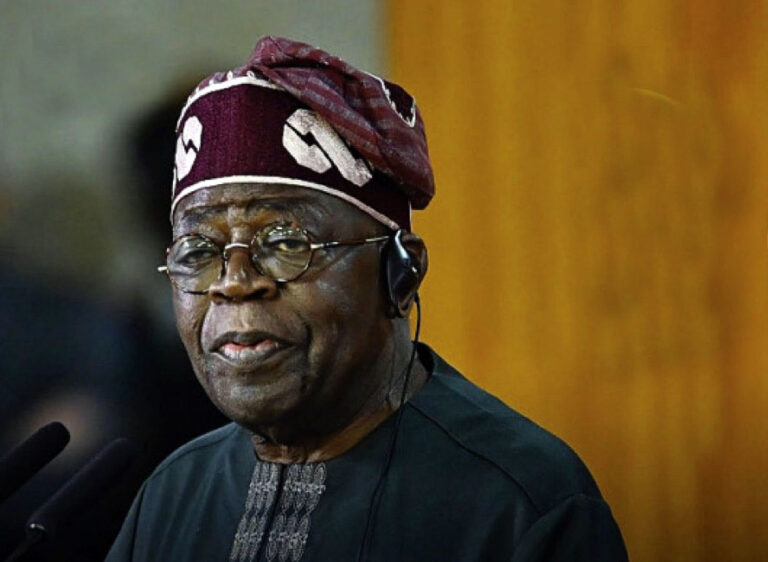
Curiously, President Bola Tinubu didn’t waste time to sign the Bill into law. Hence, what Nigerians rejected has become the law. And that is what will guide the Independent National Electoral Commission (INEC) in the discharge of its duties in the 2027 election.
The Senate had earlier retained Clause 60(3) of the 2022 Electoral Act, which provided for electronic transmission of election results, but at the discretion of INEC. It rejected the proposal for mandatory electronic transmission of election results to INEC’s Result Viewing (IReV) portal in real time after signing and stamping Form EC8A. Nigerians cried foul, knowing that the loophole in that law resulted in the manipulation of the 2023 presidential election results.
INEC had claimed it was not mandatory for it to transmit real-time the results of the election to its Result Viewing (IReV) portal. It resorted to manual transfer, with the outcome that put a lot of question marks on the integrity and credibility of the poll. When the matter was brought to the Supreme Court, it agreed with INEC in its judgement.
To ensure that this kind of thing doesn’t happen again, many Nigerians demanded only real-time electronic transmission of election results. A number of protesters besieged the National Assembly to press home this demand. The police sprayed tear gas on them. The Senate prevaricated. It reconvened to amend its version to provide for electronic transmission of results but with a proviso that there shall be manual transfer of results in areas that have network problems.
The House of Representatives had passed the version that Nigerians clamoured for in December 2025. Its version provides for only real-time electronic transmission of results without any resort to manual transfer. Nigerians had hoped that the bipartisan Conference Committee of the two chambers would adopt the House version at the final harmonization level.
Alas, that did not happen. The lawmakers went ahead to quickly pass the Senate version, which actually reinstated the e-transmission of results but with a caveat that the signed Form EC8A shall be the primary source for collation and declaration of results where communication failure affects e-transmission.
Senate President, Godswill Akpabio, expressed satisfaction that the lawmakers met the yearnings of Nigerians. “We did a very thorough job, very painstaking. We took cognizance of the peculiarities of the country and we are very patriotic in our submissions…Every vote will now count,” he told State House correspondents after the signing of the bill. Really!
Tinubu commended the leadership of the National Assembly for managing the process very well, “to the extent there has been no confusion, no disenfranchisement of Nigerians, and that we are all going to see democracy flourish.” According to the President, computers can’t do everything as many aspects of the voting process are still largely manual. Humans, he notes, still have a significant role to play in finalizing results. Hypocrisy!
Simply put, Nigerian democracy has been nailed on the cross of Calvary. Incidentally, this happened at the start of the Lenten season! The constitution gives the President 30 days within which to seek legal opinions before signing any law. The swift signing of the bill last Wednesday indicated that the President might not have sought legal opinions on the new legislation.
Their plan is obvious. People will queue up under harsh weather to cast their votes. Some may receive threats not to come out, else they will be thrown into the lagoon. Some will stay behind at polling stations until late in the night in a bid to protect their votes. At the end of the day, INEC will retire to collate results. At the collation centre, the result may wear the cloak of a chameleon that changes colour anyhow.
Other News
INEC may emerge later to announce that manual transfer will be used in places like Obio/Akpor and Degema Local Government Areas of Rivers State; or in Abuja Municipal Area Council because of network glitches. It’s possible that even in a cosmopolitan place like Lagos, some places may experience contrived network failures that could warrant using manual transfer of results.
The problem is, how do we define what constitutes network failure during elections? Who declares that failure when it happens? Who certifies independently that, indeed, there is network failure?
They know what they are doing. They know that technology is not the real issue. After all, the Nigerian Communications Commission (NCC) had stated that the country had over 93 per cent of network coverage. What is at stake is transparency in the transmission and collation of results.
The question is: what is the All Progressives Congress (APC) afraid of? Why does it appear that it is only the ruling party and its stalwarts that are clapping for the legislature? Since 29 out of the 36 state governors now belong to the ruling party, and since the majority of the lawmakers belong to the APC, why are they still afraid to go for compulsory electronic transmission of election results?
It’s because they know that the masses are not with them. How can anybody who has experienced the high cost of living crisis in Nigeria today vote for the APC? How can millions of traumatized Nigerians whose loved ones have either been killed or kidnapped be in love with the ruling party? How can someone who cannot afford the basic things of life support a party that put us in this mess?
Ironically, the ruling party, in January 2013, canvassed for electronic voting in the 2015 elections. The National Publicity Secretary of the defunct Action Congress of Nigeria (ACN), Alhaji Lai Mohammed, had assured INEC in January 2013 of its “full support towards using electronic voting in 2015. We also appeal to all other political parties, civil society organizations and indeed all Nigerians to join us in pushing for a system that will eliminate the role of thugs and sideline vote thieves during our elections, in addition to making our elections free, fair and credible.” The party even praised Ghana for embracing electronic voting instead of the manual one during its general election in December 2012. Tinubu was the leader of the ACN which later transformed into the APC with a few other parties.
The day of reckoning will soon come because nothing lasts forever. When Sani Abacha was terrorizing Nigerians as Head of State, he thought he was invincible. President Tinubu was among those who fought him then. Today, Abacha is past tense.
I sympathize with the immediate past Kaduna State governor, Nasir el-Rufai. He was a thorn in the flesh of many citizens of his state. Today, he has moved from the custody of the Economic and Financial Crimes Commission (EFCC) to that of the Independent Corrupt Practices and other related Offences Commission (ICPC) and then to the Department of State Services (DSS). He already has a date with the Federal High Court, Abuja, from February 25 over alleged cybercrime and breach of national security.
Nigerians should be eternally vigilant. The upcoming election will be rough and tough. Thugs will likely display their trademark. Vote buyers will try to do their own. But it is only if we allow them. The problem with us is that nobody wants to stick out their neck. A few people who may come out to protest will run away when police fire small tear gas.
Will INEC under Professor Joash Amupitan, SAN, be independent and fearless? The answer is blowing in the wind. The man assured Nigerians, when he assumed duty in October 2025, of his commitment to electoral integrity and transparency. Electoral umpires always make such promises. But there is a wide difference between promises and actuality.
The immediate past chairman of INEC, Professor Mahmood Yakubu, promised electronic transmission of the 2023 election results real-time to IReV portal. He didn’t fulfill this promise as he claimed technical glitches in the collation of the presidential election results. Amupitan should be guided by the seamless and credible electoral processes in a number of African countries. Nigeria can do better.
This is the time Nigerians need civil society groups, human rights activists and lawyers, opposition party figures and people of conscience to tell this government that power belongs to the people. But knowing that the power-grabbers can do anything to retain power, people must be on guard always. I fear voter apathy in 2027, considering what also happened in last Saturday’s FCT elections. Thugs had a field day snatching ballot boxes and upturning results in some places. Nevertheless, we cannot just fall from a hill because of the fear of a monkey. We must do our part as voters and leave the rest for posterity.