Follow Us on Google
By Juliana Taiwo-Obalonye and Molly Kilete
For a civil servant preparing to travel abroad on official assignment, the journey should have been an opportunity to represent her country and fulfil an important professional responsibility. Instead, it ended in trauma, confusion and a trip that never happened.
Seated in a vehicle, she had her bag beside her. Inside were her international passport, phones, estacode and other personal belongings needed for the assignment.
Then came the robbery.
Her bag was snatched, leaving her without the documents and communication devices required to proceed with the trip. In a moment, what should have been a routine journey became an ordeal with consequences far beyond the loss of personal property.
“I was traumatised for days and confused. I never made the trip,” she recalled.
The experience has since changed how she drives around Abuja. Today, she keeps her car windows wound up, even when her air conditioner is not working.
For her, enduring the heat inside a closed vehicle is preferable to the fear of exposing herself to another attack.
Her experience captures the anxiety among residents of the Federal Capital Territory (FCT), where reports of phone snatching, bag theft, car break-ins and other street crimes are forcing people to reconsider how they travel, work and go about their daily lives.
A phone call in traffic, a brief stop at a junction or a walk home after dark can suddenly become a frightening encounter.
Across social media, residents have been recounting experiences involving suspected criminals, describing stolen valuables, narrow escapes and moments when the instinct to survive took precedence over everything else.
Behind the stolen phones and missing bags are people whose routines have been disrupted, confidence shaken and sense of safety diminished.
For many, the most disturbing part is not just what was stolen, but how quickly it happened and how easily an ordinary journey could have ended in tragedy.
A traffic stop turns into a nightmare
For Lucy Nkechinyere Akpabio, an ordinary evening drive nearly ended in disaster.
At about 8pm, she was waiting at a traffic stop opposite Bolingo Hotel in Abuja when a man suddenly appeared and attempted to force open her car door.
Her central locking system prevented him from gaining access. When he realised the door was locked, he reportedly fled beneath a nearby bridge.
But Akpabio was already panicking. In her attempt to escape, she drove through a red traffic light, narrowly avoiding a potentially fatal accident.
“I still shiver when I remember,” she said.
The incident illustrates how an attempted robbery can endanger not only the intended victim but also other road users. A frightened motorist may suddenly accelerate, lose concentration or make a dangerous manoeuvre in an attempt to escape.
For Akpabio, the experience was a reminder that sitting inside a vehicle does not automatically guarantee safety, particularly when traffic slows and someone outside can reach through an open window or attempt to force a door.
Other motorists have responded to similar concerns by sharing precautions they believe could reduce their vulnerability.
Victor Uche advised drivers to engage their central locking systems and avoid leaving passenger windows open unnecessarily.
“Always central-lock. Always!!!” he wrote.
“Never ever leave the passenger glass down for any reason, even at the driving seat, wind up and manage AC, especially at night when in slow traffic.”
He also urged motorists to keep their phones out of sight and remain security-conscious when parking.
Duke Perr advised drivers without pedal locks to engage their vehicles’ steering locks after removing the keys.
Such measures may reduce opportunities for theft, but they also reveal how insecurity is changing ordinary behaviour. A driver who once lowered a window to enjoy the evening breeze must now consider whether doing so could expose them to danger.
Ten seconds to lose two phones
For Yinka İgè Aremu, the robbery happened so quickly that there was little opportunity to react.
She was driving along Suncity-Lokogoma Road at about 8pm in the rain when she approached a speed bump and slowed down.
Someone allegedly forced open her car door and took two phones she had placed on the passenger seat.
The operation was over almost as soon as it began.
“Took less than 10 seconds for the whole operation,” she recalled.
Her experience highlights the vulnerability motorists may face at speed bumps, junctions and other points where vehicles are forced to slow down.
A brief pause may be enough for a thief to seize a phone and disappear before the driver can respond.
The loss can be particularly disruptive because smartphones often contain banking applications, work contacts, photographs, email accounts and other personal information. Victims may have to block bank accounts, secure digital identities, replace SIM cards and recover access to essential services.
The psychological impact can be more difficult to measure. After an encounter, a driver may approach every traffic stop with suspicion, wondering whether someone standing beside the road is watching for an opportunity.
John Igwe advised motorists to keep passenger-side windows wound up when nobody was sitting there and lock their vehicles even when inside.
“Don’t always leave your passenger side window down when no one is sitting at that side, always wind up above half and lock your car at all times even when you are sitting inside,” he said.
For motorists who have experienced such incidents, the challenge is protecting themselves without allowing fear to dictate every movement.
Followed almost to her gate
For Doris Ekeokwueze, the fear began as she returned from her shop.
At about 9.50pm on Friday, October 9, she noticed a man following her. As she tried to move away, he appeared to remain close behind.
The closer she got to her house, the more apprehensive she became.
Rather than enter her compound immediately, Ekeokwueze walked past her gate and continued down the road until she found a corner where she could hide.
The man eventually emerged and turned back in the direction from which he had come. Only then did she hurry back, open her gate and get inside.
Her account did not establish that a robbery had occurred or that the man intended to attack her. But the experience captures the anxiety that arises when someone believes they are being followed, particularly at night.
For Ekeokwueze, even reaching her own gate required a decision about whether it was safer to enter her compound or keep moving.
The incident also highlights the vulnerability of people who close their shops late, work night shifts or depend on public transport after dark. Avoiding night travel may not be practical when livelihoods and responsibilities require movement at hours when streets are quieter and transport options are fewer.
A familiar route home can become a source of anxiety when residents feel compelled to look behind them repeatedly or consider alternative ways of reaching their doors.
The hand inside the bag
Public transport and crowded loading points present another set of challenges.
Felicia Godfrey said she was travelling in a vehicle loading passengers at Berger Junction when she realised that a man sitting beside her was attempting to steal money from her bag.
The man was bargaining with a hawker through the window, an interaction that appeared to divert attention from what his other hand was doing.
Godfrey suddenly noticed that his hand was inside her bag, struggling to remove her money.
She screamed.
The man withdrew his hand, called her a witch and jumped out of the vehicle. He was almost caught by people nearby but managed to escape, she said.
The encounter left Godfrey with a frightening reminder that being surrounded by people does not necessarily guarantee protection against theft.
Passengers in crowded vehicles often sit close together, making it difficult to monitor their belongings. A moment of distraction may provide an opportunity for someone to reach into a bag or pocket without attracting immediate attention.
For commuters, a stolen bag may contain more than cash. Identification documents, bank cards, work materials and medication can all be lost in a single incident.
Godfrey noticed what was happening and reacted before the man succeeded in taking her money. Others may not be as fortunate.
When a flat tyre becomes a trap
For Noel Douyibraladei Digifa, a warning about a flat tyre around Jabi allegedly became an opportunity for theft.
He said someone signalled that his vehicle had a flat tyre. After stopping, he confronted the person and demanded the return of his phone.
Fortunately, other commuters supported him after he explained what had happened. He recovered the phone after about 20 minutes.
“It was a terrible experience. Let’s stay vigilant,” he said.
The incident illustrates the dilemma motorists face when strangers alert them to possible problems with their vehicles. Ignoring a genuine warning about a flat tyre could damage a vehicle or create a road hazard, but stopping in an unsafe location may expose a motorist to theft or robbery.
Chuma Egonu recounted another experience in Wuse 2, where someone tapped the side of his car while another person was positioned on the opposite side. He believed the encounter was an attempt to distract him.
Constance Kareem described a similar incident opposite Wuse Market, where one person allegedly tried to distract her while another attempted to open her passenger-side door.
She escaped because she had locked the vehicle.
“I just drove off,” she said.
Although the accounts raise concerns about possible coordinated distractions, the circumstances of each incident would need to be established through proper investigation.
For motorists, however, the uncertainty itself is unsettling. A gesture from a stranger may require a split-second decision, with potentially serious consequences either way.
A nurse’s frightening night journey
Beyond phone snatching and theft from vehicles, residents have raised concerns about passengers being robbed after boarding vehicles allegedly used for criminal operations.
One account concerned a nurse travelling to a night shift at Maitama Hospital.
She reportedly boarded a vehicle opposite Sheriff Plaza in Wuse 2, only to discover that she was trapped with people who robbed her of her phone, money and other belongings.
According to the account, she was held for more than two hours before being dropped near Maitama Catholic Church.
The incident was described as a “one-chance” robbery, a term commonly used in Nigeria for criminal operations in which unsuspecting passengers are lured into vehicles and subsequently robbed.
The account highlights the vulnerability of workers whose duties require them to travel at night, including nurses and other healthcare professionals. For such workers, the choice is not always between travelling in daylight and travelling after dark. Their jobs may require them to report for duty when transport options are limited and fewer people are on the streets.
Once trapped in a vehicle with suspected armed criminals, victims face a terrifying dilemma: resist and risk violence, or comply and lose their belongings.
Aminu Aminat, recalling an experience from 2017 or 2018 when her phone was snatched while she was travelling in a cab, warned that perpetrators could be armed and might harm anyone who tried to stop them.
Her warning underscores the importance of prioritising personal safety over property. Victims and bystanders should avoid dangerous confrontations when they suspect criminals may be armed.
Masalachi Junction under scrutiny
The concerns span several locations, including Masalachi Junction, the National Mosque and Wuse Market axis, Berger Junction, Jabi, Wuse 2 and Suncity-Lokogoma Road.
Journalist Fred Ezeh recently recounted witnessing two separate phone-snatching incidents around Masalachi Junction.
At about 7.15pm to 7.30pm on a Friday, he had stopped to drop off a friend when they noticed a young woman crying. She told them that her phone and power bank had been stolen near an Ecobank branch beside the junction.
Ezeh said he noticed three young men watching them as the woman recounted her experience.
According to his account, one of the men later crossed the road towards a motorist travelling in the direction of Jennifer Plaza and Wuse Market. The driver was making a phone call with his window wound down as traffic slowed.
The young man allegedly snatched the phone and ran across the road before disappearing into a vegetation-covered ditch. The other two men appeared to be supporting him, Ezeh said.
The motorist was left shaken, while the woman who had earlier been crying witnessed the second incident.
For Ezeh, the speed of the operation and the difficulty of pursuing the alleged perpetrator safely were particularly troubling. He urged residents to remain vigilant around busy junctions, bridges and isolated pathways, and called on the authorities to investigate complaints about the area.
Other residents said the Masalachi Junction axis had attracted complaints over the years.
Ted Terwase Aya-mnger described the area as notorious for such incidents, saying radio stations and callers had repeatedly raised concerns about it.
Another resident, Malachy Uzendu, questioned why locations frequently identified as crime hotspots continued to generate complaints.
The reports extend beyond phones. Ugochukwu Jude said a colleague hospitalised in Wuse had his car window broken and laptop stolen, while Cdr Kingsley Chinyere reported that a friend’s car was stolen around the Old Parade Ground area of Area 8.
Residents demand action
Kingsley David, a content creator on Facebook, expressed concern that Abuja was becoming increasingly difficult to navigate without fear of theft or robbery.
“The most troubling part is the apparent lack of urgency surrounding the situation,” he wrote.
“How many more people need to lose their phones, valuables, or even their lives before this becomes a serious priority?”
David called for stronger security measures, improved surveillance, visible policing and a coordinated response from the relevant authorities.
“The security of residents cannot be treated as an afterthought. Abuja belongs to all of us, and we must demand a safer capital city,” he said.
Mustapha S. Shika, meanwhile, praised what he described as the proactive security approach adopted by former FCT Minister Nasir El-Rufai.
He recalled that security personnel would stop and question people found loitering suspiciously and, where necessary, search them.
“In many cases, such checks reportedly exposed individuals involved in criminal activities or scavengers looking for opportunities to steal,” Shika said.
He described the approach as proactive security rather than waiting for crimes to occur before taking action.
However, any security response must comply with the law and include safeguards against arbitrary searches, profiling and harassment of innocent residents.
For those who contributed to the discussion, the central concern is that recurring complaints about familiar locations should lead to effective investigations and sustained security measures.
Police: We are intensifying operations
The FCT Police Command says it is working to tackle criminal activity across the territory.
Commissioner of Police Ahmed Sanusi told Saturday Sun that the command had deployed security patrol teams across the city centre and satellite towns, while placing area commanders and divisional police officers on alert.
The command identified several locations where it conducts operations against suspected criminal hideouts, including Dei-Dei, Zuba, Dutse, Bwari, Idu, Jabi, Mpape, Berger Junction, Karmo, Ushafa, Area 1, Apo, Kugbo, Nyanya, Mararaba, Karshi, Kurudu and Koroduma.
Sanusi said criminals sometimes use uncompleted buildings, construction sites and abandoned projects as hideouts from which to plan and carry out offences.
He also said intelligence-led policing had helped the command identify reported methods of operation, including the use of tricycles to snatch bags, phones and other valuables at major bus stops, markets and other busy locations.
According to him, some suspects arrested during investigations said they travelled from neighbouring states to commit offences in the FCT before returning.
Sanusi further disclosed that the command had uncovered cases in which criminals allegedly used vehicles with tinted windows to lure female hawkers and sexually assault them.
On “one-chance” robbery, he said the police had arrested several alleged gang leaders and were pursuing people suspected of receiving stolen goods.
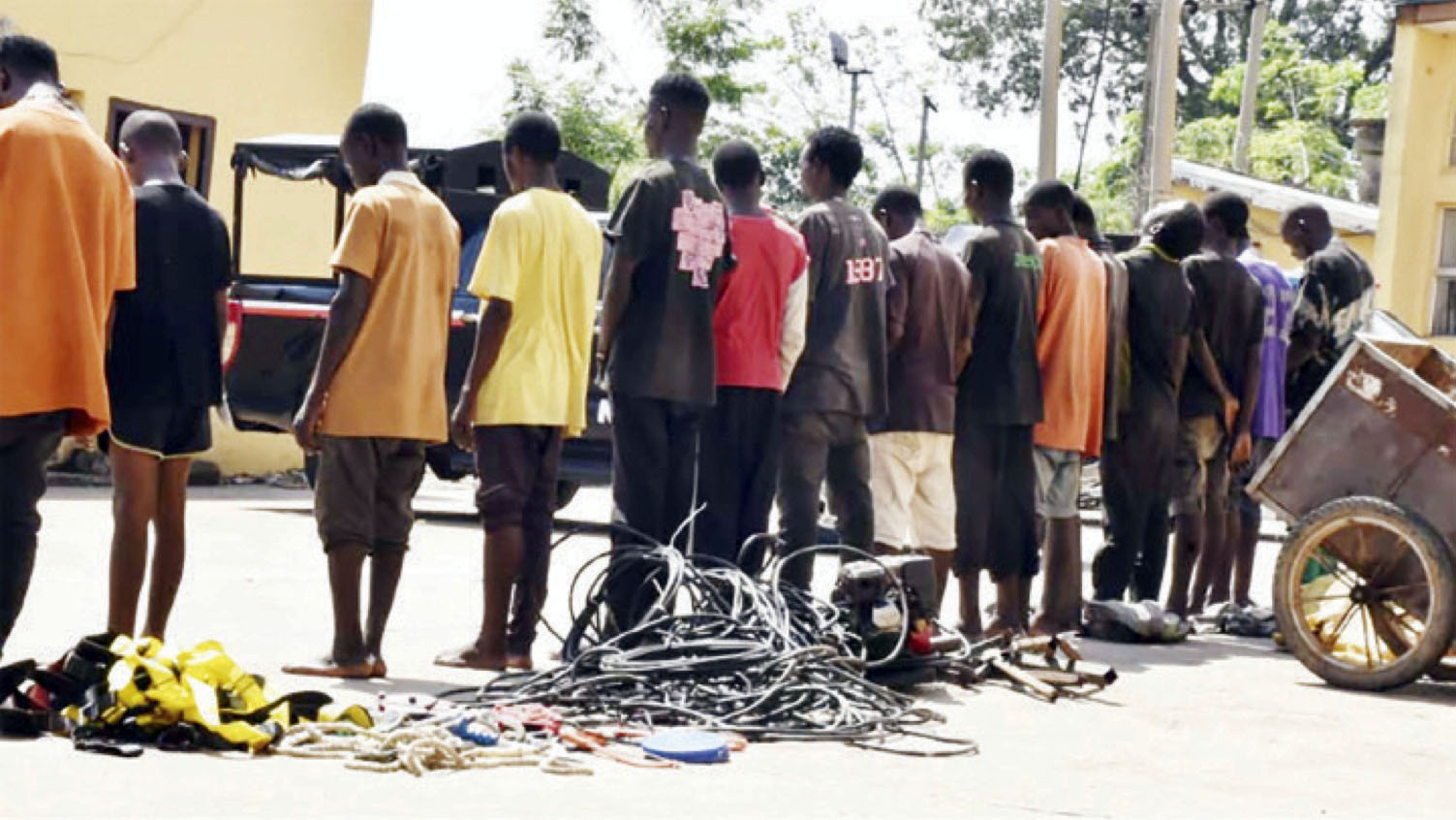
The commissioner said the command arrested more than 300 suspects during an operation on September 19, 2026, recovering weapons, ammunition, illicit drugs and other substances.
He maintained that crime was declining because of increased police presence and said suspects arrested had been prosecuted, with some serving prison terms.
“I can tell you that we have done a lot to curb the activities of criminals by launching several security outfits within the command which has yielded positive results,” Sanusi said.
He added that the command was doing everything within its powers to keep the FCT safe for law-abiding residents, while appealing to the public to provide information about suspected criminals.
In May, the FCT Administration also relaunched Operation Sweep Abuja, a joint security task force designed to combat kidnapping, hoodlum activities and other crimes. At the relaunch, Sanusi called for greater cooperation among the police, military, paramilitary organisations and other security agencies.
For residents, however, the critical question is whether these operations will translate into sustained security in locations where people report being targeted.
The assurances of patrols must be matched by effective investigations, visible enforcement and confidence that repeated complaints will lead to action.