Follow Us on Google
From Ndubuisi Orji, Abuja
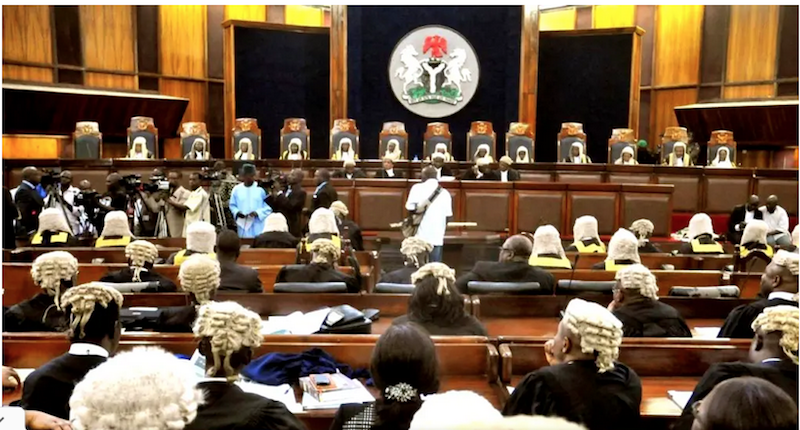
The House of Representatives has approved a bill seeking to increase the number of judges in the Federal Capital Territory (FCT) High Court from 70 to a minimum of 100 for second reading.
The proposed legislation, sponsored by the Deputy Speaker, Benjamin Kalu, and seven others, scaled second reading at yesterday’s plenary.
One of the sponsors, Jonathan Gbefwi, while leading the debate on the bill, said it is aimed at enhancing the timely delivery of justice in the FCT. Gbefwi explained that with the increase in the population of the capital city, it is imperative to raise the number of judges serving in the FCT High Court.
According to him, at the commencement of the 2022/2023 legal year, the FCT High Court carried forward 12,513 pending cases from the previous year. The lawmaker added that over the same period, the court assigned an additional 5,952 fresh cases.
Other News
Gbefwi noted that because of the limited number of judges in the FCT High Court, there is pressure on the available judicial resources.
“The Bill, which was read the first time on Tuesday, 23rd July, 2024, seeks to address a fundamental aspect of our judiciary’s ability to deliver timely justice by seeking to increase the number of judges in the High Court of the Federal Capital Territory, Abuja.
“As it currently stands, the High Court of the FCT is limited in the number of judges it can engage. This inadequacy significantly affects the rising volume and complexity of cases brought before it. The court’s current complement of judges, though dedicated, is insufficient to keep up with these caseloads.
“This Bill proposes an amendment to Section 1 of the extant Act to increase the number of judges in the FCT High Court from the current maximum of seventy judges (arising from the 2016 amendment of the Act) to a minimum of one hundred judges, thus allowing for greater judicial capacity to address the current and future needs of the court,” he stated.