Follow Us on Google
- APC expresses optimism
From Juliana Taiwo-Obalonye, Romanus Ugwu, Isaac Anumihe, Idu Jude, Adanna Nnamani, Sola Ojo, and Okwe Obi, Abuja
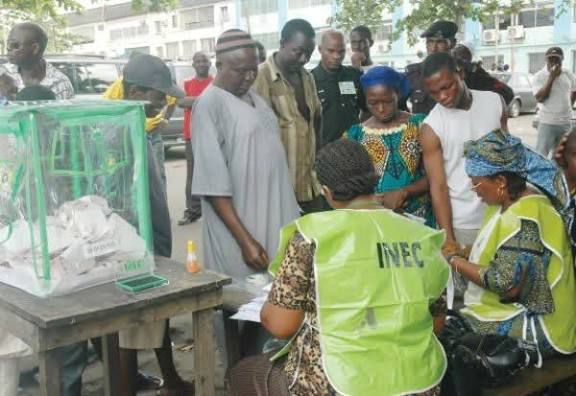
The Federal Capital Territory Area Council elections held on Saturday were overshadowed by pervasive voter apathy, logistical failures, technical malfunctions, disenfranchisement claims, sporadic violence, and missing party logos on ballots, as residents across multiple wards either shunned polling stations or faced disruptions despite INEC’s preparations and heavy security deployments.
The All Progressives Congress (APC) was upbeat about the outcome of the elections.
From Jikwoyi and Karu to Bwari, Gwagwalada, Nyanya, Mpape, Deidei, Kuje, Kwali, Lugbe, Durumi, and beyond, turnout remained abysmally low, with business closures in some areas contrasting open markets in others amid curfew enforcement confusion.
While security officials reported general peace, incidents like tear gas attacks, BVAS glitches, missing ballots, a near lynching, voter list omissions, and SDP logo absences fueled widespread frustration and accusations of bias, incompetence, and pre-determined outcomes.
Economic fallout from business restrictions
Residents heavily criticised the FCT administration for mandating business closures during the polls, which they said inflicted daily losses and deepened apathy, leading to sparse crowds at polling units in Jikwoyi Phases 1, 2, 3, and 4; Dagbadna units 115 and 017 in Karu; Tokka Village Karu Jikwoyi Phase II unit 103; AP Plaza Wuse II; Court Road Karu unit 031 (only 4 of 160 voters by 10:41 a.m.); City College Karu unit 033 (16 of 1,380); Area CII behind Plot 125 Nyanya; Dogon Gada Primary School (voting from 11:02 a.m.); Dr. Moses Paul’s unit 076 at Sani Abacha Estate Zone 4; and Lugbe Primary School unit 009, where accreditation was smooth but post-accreditation turnout lagged, with women outnumbering men and voters doubting their votes would count.
Sunday Udeh, an auto spare parts dealer, told our reporter: “I don’t really know why business would not go on a long voting process.
“I remember when I was little, my father went to the market with his voter’s card in his pocket. He voted and went back to his business. But nowadays, people are forced to stay at home, irrespective of what they lose at the end of the day.”
Felicia Kolawole added: “A visionary leadership first of all takes care of the per capita income of the country and gross domestic product (GDP), and through such a country’s economy is measured.”
In Deidei, the building materials market and tomato market were fully shut down, with shops locked to encourage voting. One trader said, “We have to close so that people can go and vote. It is important because these are the leaders who will govern at the grassroots.”
Mpape bucked the trend, with shops open, markets active, okada riders operating, and traffic flowing despite delayed setups at Mpape Primary School. A roving monitor noted: “The number of expected voters trickling is not up to expectation.”
A voter remarked, “When you are coming into Mpape, you expect to see that election vibe, but it’s not happening. The normal bubbling of business is still going on as if there’s no election. The Okada people are riding.”
At nearby Maitama Expressway, military checkpoints strictly enforced the restriction of movement, turning back motorists until reporters flashed election IDs.
Ejike Ofor at Saburi Village blamed past polls: “The last general elections discouraged a lot of people from coming out because after voting, the result was different from what we saw and expected.”
A Gbagyi indigene, Thomas Muayi, vowed to burn his voter’s card unless Peter Obi wins 2027, saying, “Do you know why I am not voting? Do you know why I regret voting at all?
“It is because I want change, and that was close in 2023, but these people refused to give it to the winner, and this is what all of us are witnessing.
“It is obvious that they have failed in all the promises, and how long will it continue? They promised subsidy removal, but recently they went back to buying oil from overseas.
“They promised school feeding, but the money ended up in someone’s pocket. He promised steady electricity, but we saw even tariff increases with no meters in place. So tell me what else Tinubu will tell us, apart from tax increase every day?”
Fuming over the state of the Labour Party, he said, “They knew what the party did in 2023. The party won the FCT, so they killed the party to ensure that they don’t repeat the feat again. What a shame.
“So why should I come out and vote? I am just waiting for the voting to be over to go back to my business, after all, people are waiting to buy yams for dinner.”
INEC’s Sunday Christian at Karu unit 103 blamed late materials and poor directions. Ad hoc staff at Karu units hoped for a later turnout.
Glitches, missing materials, omitted logo
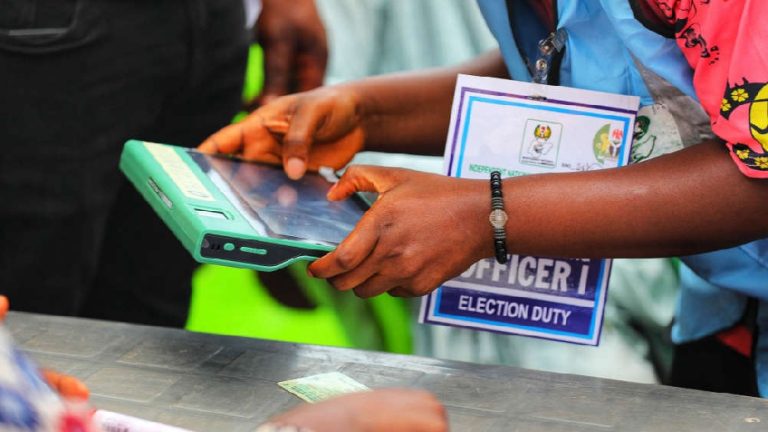
BVAS malfunction at Saburi Village Gwa Gwa Ward, AMAC delayed start of accreditation from 8:23 a.m. to 10:10 a.m., sparking near-commotion and ethnic bias allegations.
One voter shared, “If Igbo people want to vote, the BVAS will not work, but if other people want to vote, most especially the indigenes, it will work perfectly.”
The Assistant Presiding Officer III responded: “It is a general issue affecting everyone and not a particular tribe, and we have called for help so the issue will soon be addressed. We are working on it.” Voting resumed seamlessly afterwards.
In Kwali’s Dabi Primary School Pai Ward, the late arrival of INEC officials without full materials (from Bako Primary) caused outrage.
PDP’s Habibu Musa said, “Here at Dabi Primary School in Pai Ward, our people said if it’s not complete, they’re not coming. Anywhere those other ballot papers are, they need to provide them—that’s why INEC officials aren’t available.”
APC’s Abduljubril Abdulsallam said, “I’m not happy with what went on this morning. It was a misplacement by INEC officials.
“By God’s grace, the problem was rectified soon after. That’s why people were stranded at the polling units—we’re really not happy about it.”
PDP’s Mohammed Musa Yerima attributed it to sorting: “When they brought the electoral materials, we were supposed to meet at the RAC centre.
“It was very unfortunate that during distribution, some ballot papers got mixed up with those for other polling units. With the help of my colleagues from other political parties, we sorted it out.
“It stemmed from a mix-up by INEC ad hoc staff—which I don’t blame them for, as they’re all human—but thankfully, we resolved it. They were just trying to catch up with the time.”
Commenting on the 830 missing ballots, he said: “830 ballot papers—that’s huge; it’s the total voter registration for an entire unit. That was indeed what was missing, but like I said, with the help of my colleagues, we traced it diplomatically and recovered it.”
Logistical issues cropped up too: Officials were delayed in Nyanya, which kept voters waiting; Garki Lagos Street ad-hoc staff lacked drivers over unpaid fees.
Gwagwalada Gwadodo School had a low turnout by 10 a.m. despite the military. Durumi 1 unit 021 disenfranchised voters as ‘E’ and ‘C’ names vanished.
On this, Chidi Uchechi said: “The missing names are an indication that the election would not be free and fair. She opined that the election had been concluded, wondering why only Hausa and Yoruba names are not missing. Dem don conclude the election.
“Otherwise, how come only Hausa and Yoruba names are on the ballot papers?” Emmanuel Chidi: “They referred me to the complaints desk. But I will not go there.
“I have been here since morning, and now they are telling me that my name is missing.” Esther Gwom said, “I am handing everything to God.”
Voting in Gwagwalada’s Demonstration Secondary School Polling Unit 004 got chaotic with the Social Democratic Party (SDP) logo missing from ballots, sparking outcry among voters and agents.
Abayomi, who ran a live report for NigeriaInfo 95:1 FM, said, “We tried to speak with the PO on why the SDP logo was not on the ballot paper, but he asked us to go to the INEC office.”
The presiding officer directed the SDP agent to file a complaint with the higher-ups, with no immediate fix, as voting continued elsewhere smoothly, but with frustration at the unit.
At Life Camp’s FUP Estate, no INEC officials, tables, chairs, or materials arrived by morning, turning the site into an impromptu gym.
Voters at Government Day Secondary School, Garki, brought their own chairs for the staff. Heavy military at Polo Junction to Gwagwalada and Gwarimpa restricted access outside 6-8 a.m.
Violence, security incidents, generally peaceful sites
Bwari voters near Zenith Bank/JAMB office fled from tear gas before voting started.
Omeza reported live on Nigeria Info 95.1 FM, saying, “They tear-gassed us, they don’t want us to vote. People are crying, people are fasting.
“People who managed to come out, all of them don’t want to come out now.”
Police denied knowledge of perpetrators, speculating private individuals; hosts condemned it as uncalled for outside riots.
In Kuje’s Junior Secondary School, Kayada, a DSS operative escaped from being lynched by over 50 youths.
He was manhandled for five minutes without security aid. He recovered his damaged phone and stolen wallet minus his accreditation card, lamenting before fleeing on a motorcycle.
Elsewhere, peace prevailed. DSP Ayodele L, while speaking with Sunday Sun, confirmed that the process was peaceful.
The operative of the Nigerian Safety and Civil Defence Corps, ASC1 Okooboh Florita, corroborated what DSP Ayodele said. Police Inspector Martha Garba and ASP1 Adama John at Tokka affirmed the report.
Candidates optimistic despite apathy
Member of the African Democratic Congress, ADC, Dr Moses Paul blamed the low turnout in his polling unit on intimidation and restrictions.
He called the situation unprecedented—like a state of emergency without justification.
“Despite the challenges, I remain confident of emerging victorious. The will of the people will prevail. Nigerians should resist intimidation and demand accountable leadership.”
He praised electoral officials at his unit for their professionalism and due process. However, he reported threats to ADC agents in Takum Shara and Kabusa Ward areas, including Dogongada and Shereti.
He condemned vote buying as a crime, which allegedly occurred in the capital.
“Elections are not just about voting; it’s the heartbeat of the people. When you create narratives that make it difficult for people to participate, you end up with bad leadership, especially at the local level.
“Nigerians are as intelligent as I am on average, but we have leaders who haven’t gone to school. How long will we continue like this?” he said, describing the process as intimidating.
Chieftain of the APC and Chairman of AMAC, Christopher Maikalangu, who took just three minutes to cast his vote at Garki Village unit 004, said, “I am impressed with the turnout today; you can see it yourself that my people are out here to vote. I am satisfied with the process.
“In less than three minutes, I cast my vote. I think everything is okay. Local government elections are meant for local people, and that is why when you come to remote areas, you will see the turnout is different from that of the city.
“From Garki down to Nyanya, you can see it for yourself; my people are out to vote. The process is just smooth.
“I will advise that there is a need to improve on logistics, because some areas are yet to get their materials. But in terms of the voting process, everything is smooth.
“My people know me; I have been giving them what they want. By the grace of God, if I am re-elected, I will give them more dividends of democracy.”