Follow Us on Google

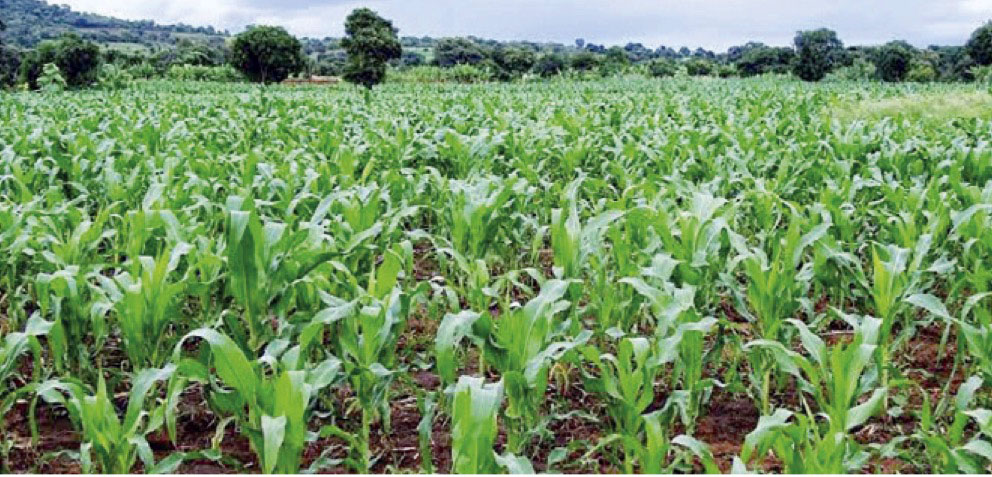
From Okwe Obi, Abuja
Nigerian farmers are facing tough challenges in their efforts to produce enough food for the country.
Standing in the way of this lofty assignment is rising fertiliser prices and a ferocious cartel involved in the alleged diversion of subsidised supplies.
There are also concerns over the distribution of government interventions that threaten to undermine efforts to improve agricultural output.
Although the Federal Government has rolled out programmes to provide fertiliser to smallholder farmers at subsidised rates, questions remain about whether the inputs are reaching the people who need them most. Farmers say access to affordable fertiliser is becoming hellish, with the high cost of the commodity adding to the financial pressure caused by insecurity, limited access to farmland and other rising production expenses.
A 50-kilogramme bag of fertiliser, which some farmers bought for between N20,000 and N30,000 last year and in the early months of 2026, now reportedly sells for between N45,000 and N50,000 in parts of the Federal Capital Territory (FCT), Abuja.
The sharp increase means farmers who cannot obtain subsidised supplies must spend significantly more to prepare their farms for planting and maintain their crops. For smallholder farmers operating on limited budgets, the additional expense could force them to cultivate smaller portions of land, apply less fertiliser than their crops require or abandon plans to expand production.
The consequences extend beyond the farms. When farmers spend more on fertiliser and other inputs, their production costs rise, increasing the pressure to sell their produce at higher prices. If the additional costs cannot be recovered in the market, farmers may earn lower incomes, leaving them with less money to invest in the next planting season.
This presents another challenge for a country struggling to make food more affordable for households already affected by the high cost of living.
Subsidised fertiliser but uncertain access
One of the major concerns surrounding government intervention programmes is the gap between the quantity of fertiliser announced for distribution and the experience of farmers seeking assistance.
While some farmers say they have benefited from subsidised supplies, others complain that access is influenced by political connections, personal relationships and the intervention of third parties. Such complaints have raised concerns about the transparency of beneficiary selection and the possibility that some intended recipients may be excluded.
The allegations highlight the need for effective monitoring of fertiliser distribution, from the point of release to the final beneficiary. Without adequate checks, subsidised inputs intended to reduce production costs could be diverted, resold at commercial prices or distributed to people who are not actively engaged in farming.
The Federal Government, through the National Agricultural Development Fund (NADF), has announced the distribution of hundreds of thousands of bags of fertiliser under its Renewed Hope Farm Input Support Programme (FISP).
The programme is designed to help smallholder farmers obtain essential inputs, reduce their production costs and increase food output. However, the effectiveness of the intervention will depend not only on the quantity distributed but also on whether the fertiliser reaches verified farmers in time for the relevant stages of their farming activities.
Vice President Kashim Shettima recently flagged off the nationwide distribution of 515,720 bags of urea and NPK fertilisers to 128,930 smallholder farmers across 25 states and the FCT.
The intervention is being implemented under the NADF’s Renewed Hope Farm Input Support Programme, which targets farmers cultivating less than 0.5 hectares of land. These farmers constitute an important part of Nigeria’s food production system, particularly in rural communities where households depend on small farms for income and food.
At the flag-off, Shettima said the programme was a major step towards increasing agricultural productivity, strengthening food security and improving farmers’ livelihoods in line with President Bola Tinubu’s Renewed Hope Agenda.
“The provision of 515,720 bags of urea and NPK fertilisers to 128,930 smallholder farmers underscores this administration’s resolve to uplift our farmers and enhance agricultural productivity,” he said.
The Vice President disclosed that 11,210 bags would be distributed to 2,930 registered farmers in the FCT.
He also called for transparent distribution and urged stakeholders to ensure that the fertiliser reached the intended beneficiaries, particularly women, young people and vulnerable farmers.
However, complaints about access to subsidised fertiliser suggest that the success of such interventions must be assessed at the farm level, rather than solely through official distribution figures.
For farmers who receive the inputs, the subsidy can provide some relief from rising production costs. Those left out, however, must contend with prevailing market prices, which may limit the amount of land they can cultivate and the quantity of fertiliser they can afford to apply.
North-West receives 100,800 bags
In the North-West, 25,200 farmers from Kaduna, Kano, Katsina, Kebbi and Jigawa states were listed to benefit from 100,800 bags of fertiliser under the programme.
NADF Executive Secretary, Mohammed Ibrahim, said the initiative was intended to reduce production costs, improve access to quality farm inputs and increase food production.
Under the arrangement, each beneficiary is to receive four bags of fully subsidised fertiliser, while each participating state is allocated 20,160 bags for distribution to 5,040 farmers identified through state governments and the All Farmers Association of Nigeria (AFAN).
Ibrahim said the North-West intervention formed part of the nationwide plan to distribute 515,720 bags to 128,930 smallholder farmers.
He added that the fertiliser was produced locally, could be traced and was clearly marked “Not for Sale” to discourage diversion.
The fund also announced plans to deploy more than 1,800 extension advisory workers nationwide to provide technical guidance to farmers.
The extension workers are expected to help farmers understand how to use fertiliser properly, select appropriate application methods and adopt better farming practices. Their role is important because access to fertiliser alone does not guarantee higher yields.
The right quantity must be applied at the appropriate time and in a manner suited to the crop, soil conditions and farming environment. Poor application can waste expensive inputs, damage crops or fail to deliver the expected increase in production.
Other News
South-West, South-South interventions
In the South-West, NADF announced the distribution of 80,640 bags of fertiliser to 20,160 smallholder farmers as part of efforts to increase productivity and reduce production costs during the 2026 wet season.
Ibrahim described the programme as a targeted intervention designed to get farm inputs to genuine farmers and strengthen national food security.
“This is not fertiliser distribution for the sake of distribution. It is targeted support designed to get fertiliser to the right farmers, for the right crops, at the right time,” he said.
According to him, the scheme takes account of the agricultural strengths of participating states, with beneficiaries receiving support for priority crops that are important to food production and market stability.
He said the initiative was consistent with the Federal Government’s commitment to food security, agricultural transformation and inclusive economic growth.
The South-South also received an allocation of 80,640 bags for 20,160 farmers drawn from Cross River, Delta, Rivers, Edo and Akwa Ibom states.
Each participating state is to receive 20,160 bags for 5,040 registered farmers, with each beneficiary entitled to four bags under the programme.
Represented by the Head of Investment Department, Olalekan Alabi, Ibrahim said the initiative was intended to ensure that fertiliser reached verified farmers cultivating priority food crops at the right time.
“FISP is not a blanket intervention. It is targeted support designed to get fertiliser to the right farmers, for the right crops and at the right time. Agriculture should be measured by higher yields, improved market access and the impact it makes on people’s lives,” he said.
Ibrahim disclosed that the nationwide programme would benefit 128,930 smallholder farmers through the distribution of 515,720 bags of fertiliser.
He added that the bags were locally produced, traceable and clearly marked “Not for Sale”, with each bag linked to verified beneficiaries to promote transparency, accountability and prevent diversion.
Beyond distribution figures
Despite the scale of the announced intervention, the central question is whether the programme can provide lasting relief to farmers struggling with high input costs.
Fertiliser is a critical farm input because it supplies nutrients needed for crop growth. Urea provides nitrogen, while NPK fertiliser supplies nitrogen, phosphorus and potassium in different proportions. These nutrients support plant development, root growth and crop yields when used appropriately.
However, fertiliser is only one part of the production process. Farmers also need access to suitable land, improved seeds, water, affordable labour, machinery, transport and markets where they can sell their produce at reasonable prices.
Insecurity and conflicts over land have further complicated farming in some parts of the country, preventing farmers from accessing their fields or increasing the risks associated with planting. Women farmers may face additional barriers, including limited access to land, finance and agricultural support services.
These challenges mean that even a well-designed fertiliser subsidy may not deliver its full benefits if other constraints are left unresolved.
There is also a need to ensure that fertiliser is distributed before farmers reach the stages of planting and crop development when the inputs are required. Late delivery can reduce the usefulness of the intervention, even when the supplies eventually reach the intended recipients.
A transparent distribution system should therefore include clear eligibility requirements, publicly accessible beneficiary information, records of the quantities allocated to each state and mechanisms through which farmers can report irregularities. Independent monitoring would also help establish whether the fertiliser reached the people listed as beneficiaries and whether the quantity received matched their entitlements.
The “Not for Sale” label is one measure intended to discourage commercial resale, but the label alone cannot guarantee that diversion will not occur. Effective enforcement, traceable records and prompt investigation of complaints are necessary to protect the programme.
Similarly, the planned deployment of extension workers could improve the value farmers obtain from the inputs, provided the workers are adequately equipped and reach rural communities regularly.
Food security at stake
The stakes are high because fertiliser affordability affects both farm productivity and the cost of food. When farmers cannot obtain the inputs they need, they may produce less than their land could support, potentially reducing supplies of important food crops.
Lower output can place additional pressure on food prices, particularly when combined with insecurity, poor storage facilities, expensive transportation and post-harvest losses. Conversely, better access to fertiliser, improved farming methods and reliable markets can help farmers increase output and earn better incomes.
For the Federal Government, the challenge is to turn announced interventions into measurable improvements in agricultural production and household food access.
The distribution of 515,720 bags to 128,930 farmers, experts note, represents a substantial support package on paper. But its impact will depend on how fairly the inputs are shared, whether they arrive on time and whether beneficiaries can use them effectively.
The reported rise in the price of a 50kg bag to N45,000–N50,000 also highlights the importance of addressing the wider cost of agricultural inputs, rather than relying on distribution programmes alone.
Expanding local fertiliser production, improving competition in the supply chain, reducing transportation costs and strengthening distribution networks could help ease pressure on market prices. Better access to agricultural credit would also enable farmers to purchase inputs without sacrificing other essential production expenses.
Ultimately, the success of the fertiliser intervention should be measured by more than the number of bags distributed at official ceremonies. Higher crop yields, lower production costs, improved farmer incomes and more affordable food for households would provide stronger evidence that the programme is achieving its purpose.
Analysts insist that until farmers can obtain fertiliser at prices they can afford and have confidence that government subsidies reach their intended recipients, the struggle to increase food production will remain difficult.