Follow Us on Google
By Doris Obinna
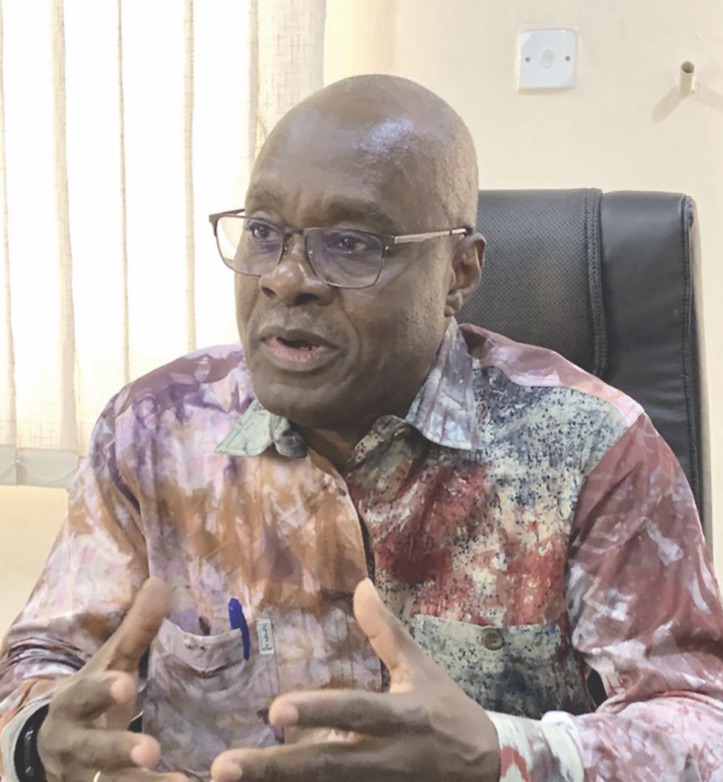
Dr. Alain Damiba, Managing Director, North, West and Central Africa Regional Hub, FP2030. In this interview, he affirms: “Family planning is not a peripheral health intervention. It is a foundational investment in human capital, economic growth and gender equality”
Excerpts:
With your focus on maternal and reproductive health, how do you align with the goals of the “Made Possible by Family Planning” campaign?
There is a very strong link shown by evidence, scientific evidence, between family planning and maternal health and newborn health. When women have an opportunity to space and time their pregnancy, there is an increased likelihood of the mother and the baby being healthier. This has been demonstrated by many studies.
The more we promote family planning, the better outcome we will have for mothers and newborns. Many of the studies have indicated that by promoting family planning, use and access, this could reduce maternal mortality by more than 30 to 35 percent. So it’s a very important and strong link between the two areas.
My career, my work, has always been focused on making sure that family planning is accessible, affordable, and is available for those who want to use family planning. That means family planning is helping women to space and time the birth of their children. And therefore, by doing so, it reduces maternal mortality.
So I see a strong link between what I have been doing in maternal and newborn health and also family planning.
What is your vision for advancing family planning access in the region through this campaign?
Yes, we have a big challenge in our community. Those of us who believe in expanding access and availability of family planning in our region and also around the world, because of the recent financial cuts that we anticipate for supporting family planning. So our vision, our mandate, is to really work closely with countries that have made FP2030 commitments in our region to support them, to figure out the best way to finance their family planning programme, to fund those programmes using national resources, whether they are government resources or civil society or private sector resources, to maintain the momentum that we had and also to reach the impact that we want by 2030.
So we are working hard with our committed governments to raise funds, both at the national level for domestic resource mobilisation, and also from donors, official development assistance, bilateral funding, and multilateral funding, to help countries combine those resources in order to continue improving access to family planning. We are also working hard with civil society organisations, women’s groups, and youth groups to hold the government accountable for the commitments that have been made, so that we ensure the progress achieved so far will continue to be maintained and that we will maximise the chances of achieving the commitments made by the countries.
So what unique opportunities or challenges do you foresee in implementing the campaign across such a diverse and dynamic region?
Yes, maybe I will start with the challenges. One big challenge that I see is that all countries, all governments in all regions, have limited fiscal budgets to allocate to health, and particularly to family planning, because of the competing priorities related to climate change, employment, economic development, agriculture, and extreme violence. So all governments have to invest in so many areas that the risk for us in family planning is that it becomes deprioritised.
So that is a challenge. We have to work very hard with civil society and with our government counterparts to make sure that, despite the fiscal constraints we face in our region, family planning remains a priority. That is really the biggest challenge that I see.
We also need to use data to inform ourselves of where we are and where we want to go, so that we can set appropriate targets. In many of our countries, we face difficulties in obtaining useful data that can be used to build our programme. We are therefore working very closely with the government.
I know governments are also working hard to ensure that the necessary data is available, so that we can plan properly to achieve our goals. Those are some of the challenges that I see. The opportunities are that we are witnessing increased leadership at all levels in our region.
We see leadership at the government level. We see leadership at the regional level. In our region, we also see leadership within civil society organisations, particularly among youth, with a number of youth champions who are articulating the argument that having access to, and the agency to make decisions regarding, family planning can not only improve health but also enhance how women contribute to economic development.
So those innovations also are very important in our region. Many countries are looking at ways to accelerate progress through, for instance, getting the private sector to get involved in family planning such as pharmacies, private clinics, not just the government and not just the public sector. So there are some initiatives that are being taken in our region so that the private sector is working very closely with the public sector.
We also see initiatives related to community approaches, getting communities to be involved in our effort to promote access to family planning through community health workers and also to make sure that communities are informed and have an opportunity to discuss this effort to make family planning accessible. We really have an increasingly larger civil society organisation and community that is also very interested in working with the government to ensure that resources are put forward to promote family planning in our region. So those are some of the positives that I see in our region that will help us achieve our goal.
The campaign targets to raise $1 billion. What best strategies are in place to mobilise resources and to secure commitments from governments and change-makers in our region, in your region, that is including Nigeria?
Other News
There are many approaches that we are using. The first is to continue working with our committed governments in our region to develop arguments and to explain to governments that there are very positive outcomes to be seen when investments are made in family planning, not only for the health of women, children, and families, and the ability of family planning to enable families to space and time pregnancies, thereby allowing women to return to work, start a business, or remain in school. Not only those benefits, but there are also benefits for the country in terms of economic development and opportunities to increase the workforce, because women are able to return to school or to work in order to contribute to the development of their country.
With those arguments, I think we are trying to explain to governments that there are genuinely positive outcomes to expect when investments are made to support family planning. Another thing we are doing is reaching beyond our health community. We are engaging with ministers of finance, ministers of education, ministers of youth, private sector actors, and people outside the health community, because family planning is truly a cross-cutting issue that can support economic development in each country.
The more support we have across the country, not just from the health perspective but also from the perspectives of economic development, gender equality, and beyond, the stronger our case becomes. Once we reach beyond our traditional community, we bring in supporters and other actors. We are therefore trying to change the narrative from family planning being seen solely as a health issue to family planning being recognised as something that can significantly contribute to a country’s economic development.
We are also working to explain this to all actors in society, religious leaders, community leaders, those in the economy, those involved in agriculture, and others. This is something we need to do in each country to enable women and families to thrive. It is about explaining our narrative, bringing in new actors and partners, and working with everyone to support family planning as a cross-cutting area.
Can you walk us through the different phases of the “Made Possible by Family Planning” campaign and how they will unfold in North, West, and Central Africa?
So the way we look at our campaign is that we try to educate, sensitise, and develop arguments about why we believe family planning is important for gender equality, why it is important for health, why it is important for economic development, and why it is important for families, communities, and the whole country.
We believe family planning is an investment that brings significant returns for countries. Once those arguments are developed, we try to reach out to various parts of society. We reach out to the media and journalists, whether in print, on television, or through social media.
We reach out to various constituencies, such as members of parliament and members of government. We reach out to business people and the private sector. We are really trying to reach out to everybody, all components of society, to make the case that family planning is an important investment for countries.
If they want their countries to thrive, if they want to increase their GDP, if they want to develop their country and have a vibrant economy, then everybody should be able to participate. Through family planning, everyone is enabled to participate in the economy, because of the ability to space and time pregnancies, so that people can achieve their individual goals.
Whether it is starting a business or going back to school, family planning really enables people to contribute to the economy. Once we develop those arguments and reach out to our partners and actors beyond health, we then try to create a moment for family planning, which we call a “Made Possible” campaign event. We do this through various platforms.
It could be through a special event. For instance, we had a partnership with fashion shows in some countries. Or it could be theatre.
It could be any activity in society where we can bring the topic of family planning. We try to leverage existing platforms outside of health to talk about family planning with everyone, to sensitise, to educate, and to improve knowledge of family planning, so that they can all be supportive of government and the private sector putting more investment into this area.
These are the phases we undertake. This campaign is really about changing the narrative, reaching out to new partners, and hopefully securing more resources in the end for the family planning community, so that we can increase access to family planning.
How will FP2030 measure the success of this campaign beyond financial targets, especially in terms of impact on individuals and communities?
The first impact is to make sure that we are improving knowledge and exposure to family planning, as well as strengthening the arguments, so that governments and the private sector invest in family planning.
If investment increases in family planning, that means we can measure it through improved access. We are reducing unmet demand because the demand will be satisfied in society. We can measure that by looking at the level of demand in the country.
We can also measure it by the use and uptake of family planning in the countries. We know that the contraceptive prevalence rate can be measured in each country. We know that we can count the number of new users of family planning, as well as continuing users.
Through those measures, we can see that we have more clients, more acceptors of family planning, greater agreement in the country, and more resources allocated to family planning. Therefore, we are having a bigger impact in terms of the use of family planning. We can also measure our impact through the resources raised to support family planning, and we can see whether government funding has increased. We can also see if private sector participation in family planning programming has increased.
So those are some of the measures we can use to assess our progress. The last one I would mention is that if we see a shifting narrative in our communities, at the national level, the subnational level, and in various communities, in the way people talk about family planning, not just as a health issue but also as a development issue, that will mean we have been successful in changing and expanding the narrative around family planning. So those are some of the outcomes that I see as necessary to achieve.