Follow Us on Google

By Purity Francis
The National Agency for Food and Drug Administration and Control (NAFDAC) has secured the conviction of a businessman in Aba, Abia State, over the manufacture and sale of counterfeit Goya Extra Virgin Olive Oil, as the agency intensifies its crackdown on food adulteration and other practices threatening public health.
The conviction an investigation into the alleged illegal production and distribution of imitation olive oil, a product widely used by Nigerians for cooking, skincare and religious purposes.
According to information by NAFDAC, Justice K. O. Ogundare of the Federal High Court in Umuahia, Abia State, delivered the judgment on Wednesday, after finding Mr Innocent Okoye guilty on two counts relating to the manufacture and sale of counterfeit Goya Extra Virgin Olive Oil.
Okoye, identified by the agency as the Managing Director of Chikason Industrial Nigeria Limited, Aba, was sentenced to five years’ imprisonment with an option of a N5 million fine.
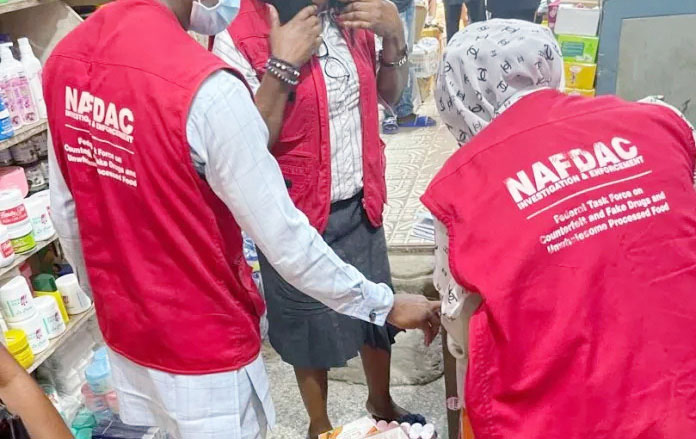
The judgment followed months of investigation and prosecution, arising from an enforcement operation conducted by NAFDAC’s Investigation and Enforcement Directorate in April 2026.
During the operation, officials of the agency reportedly uncovered a facility in Aba, allegedly being used for the production and distribution of counterfeit Goya oil. The enforcement exercise led to the arrest of the suspect, while samples of the products recovered from the facility were forwarded to NAFDAC’s laboratory for scientific analysis.
Following the investigation and laboratory examination, the agency instituted criminal proceedings against Okoye before the Federal High Court in Umuahia. The prosecution subsequently resulted in his conviction on the two counts preferred against him. The development represents another step in NAFDAC’s efforts to hold manufacturers and distributors of counterfeit food products accountable for activities capable of exposing unsuspecting consumers to health risks.
Beyond the violation of product standards and intellectual property rights, food counterfeiting poses significant public health concerns because consumers may be unable to determine the actual ingredients, quality or safety of products fraudulently presented as genuine brands. Counterfeit edible oils, in particular, may contain undeclared ingredients or substances produced under unhygienic conditions, exposing consumers to potentially harmful contaminants.
The risks become more pronounced when such products are consumed regularly or applied to the skin without reliable information about their composition and safety. The conviction came amid sustained warnings by NAFDAC against the circulation of counterfeit Goya oil in Nigerian markets.
In January 2026, the agency raised the alarm over fake Goya oil packaged in polyethylene terephthalate (PET) plastic bottles and sold to unsuspecting consumers as genuine imported products.
The Director of Investigation and Enforcement at NAFDAC, Dr Martins Iluyomade, disclosed during a media briefing in Lagos that the agency had uncovered an illegal production operation at Oke-Arin Market in Idumota, Lagos.
According to the agency, the operators were allegedly processing palm oil with colouring agents before repackaging the mixture as Goya oil for sale.
Iluyomade explained that the authorised Goya oil marketed in Nigeria was imported in original glass bottles through approved distribution channels, warning that products bearing the brand name in PET plastic bottles were counterfeit. The agency consequently urged consumers, traders and religious organisations to be vigilant about the source and packaging of products offered for sale.
NAFDAC also expressed concern that counterfeiters were exploiting the popularity and widespread use of established brands to deceive consumers and profit from products whose quality and safety could not be guaranteed. The regulatory agency maintained that tackling food counterfeiting required stronger cooperation among manufacturers, distributors, retailers, consumers and law enforcement agencies to prevent fake products from entering legitimate supply chains.
It urged Nigerians to report suspicious manufacturing activities, illegal distribution networks and products suspected to be counterfeit to the nearest NAFDAC office or through its official reporting channels.
Consumers were also advised to purchase regulated products from reputable outlets, examine packaging carefully and avoid products whose authenticity cannot be established.
The agency reiterated its commitment to protecting public health through intensified market surveillance, laboratory investigations, enforcement operations and prosecution of individuals and organisations involved in the production and distribution of counterfeit products.
The latest conviction highlights the potential criminal consequences of food adulteration and reinforces the importance of regulatory oversight in ensuring that products offered for public consumption meet prescribed safety and quality standards.
NAFDAC said the prosecution forms part of its broader mandate to safeguard the health of Nigerians by preventing unsafe, falsified and substandard regulated products from circulating in the country’s markets.