Follow Us on Google

By Philip Nwosu
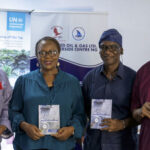
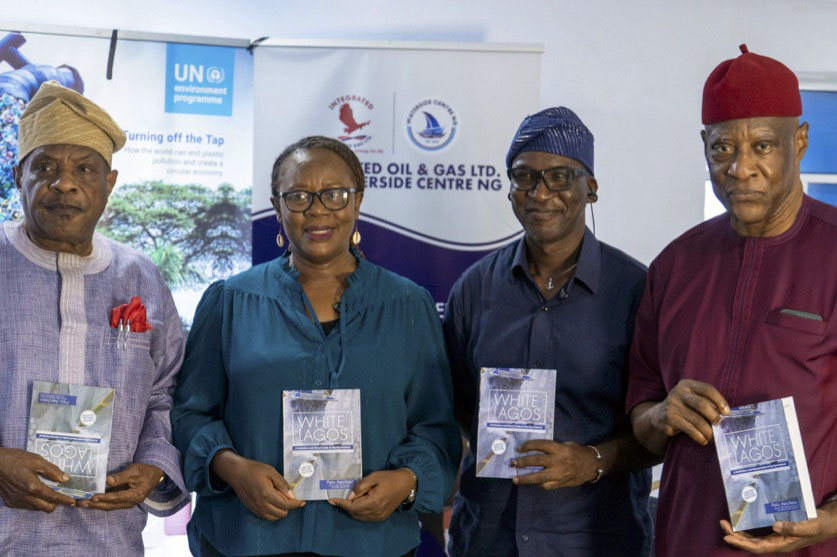
The Waterside Centre in Lagos hosted a public reading and discussion of White Lagos, a book that explores the history, traditions and cultural significance of the Eyo Festival and its place in the identity of Lagos.
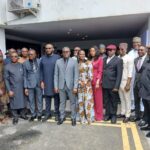
The event, which brought together writers, journalists, cultural enthusiasts, professionals and other members of the public, also marked an important step in the establishment of the Port City Reading Room at the Waterside Centre.
The reading provided an opportunity for participants to engage with the book beyond its pages, examining the history of Lagos, the evolution of its cultural traditions and the responsibility of contemporary society to preserve the stories and practices that have shaped the city.
At the centre of the discussion was the Eyo Festival, one of Lagos’ most recognisable cultural spectacles. The festival, characterised by processions of traditionally dressed Eyo masquerades through parts of Lagos Island, has over the years attracted considerable public attention and visitors.
However, speakers at the event noted that the colourful public display represents only one aspect of a much deeper cultural tradition.
Chairman of Integrated Oil and Gas Limited and Waterside Centre, Capt. Emmanuel Iheanacho, described the establishment of the Port City Reading Room as a significant initiative aimed at encouraging reading, intellectual engagement and the preservation of knowledge.
Iheanacho said societies required spaces where people could step away from the distractions of everyday life and engage with books, ideas and one another.
He expressed concern about the declining reading culture in society, stressing that reading remained an important foundation for education, critical thinking and national development.
According to him, the reading room is intended to provide a platform where people can read books and participate in conversations about issues affecting society.
He also commended the author of White Lagos for documenting an important aspect of Lagos culture, noting that although many Lagos residents were familiar with the Eyo Festival, fewer understood its historical background and the traditions associated with it.
The book, he said, demonstrated the importance of looking beyond the colourful public presentation of cultural festivals to understand the history, people and values that sustain them.
The author of White Lagos, Pelu Awofeso, explained that his interest in the Eyo Festival was influenced by his experience of Lagos and his work as a journalist and writer covering tourism, culture and travel.
Awofeso said his work involved research, conversations and engagement with people connected to the festival and its history.
He noted that documenting cultural traditions was important because oral accounts and community memories could gradually disappear if they were not recorded for future generations.
The author also acknowledged that there are different accounts concerning the origins and development of the Eyo Festival. Such variations, he explained, make research and documentation particularly important in ensuring that cultural conversations remain open and that different perspectives are properly examined.
Participants at the event raised questions about the meaning of the Eyo costume, the various groups associated with the festival and the rituals and traditions surrounding its major processions.
The discussion also touched on the changing character of Lagos and the challenge of preserving its cultural identity amid rapid urbanisation and modernisation.
For many participants, the conversation around White Lagos was therefore not simply about a festival. It was also about the broader question of how Lagos can preserve its history while continuing to evolve as one of Africa’s major commercial and cultural centres.
A major theme that emerged from the discussion was the role of journalists and writers in preserving history.
Awofeso encouraged journalists to look beyond the immediate demands of daily news reporting and consider documenting their experiences and research in books.
He argued that journalism provides journalists with access to people, events and information that can become valuable historical records when properly documented.
Stories published in newspapers and online platforms may serve an immediate public purpose, he noted, but books can provide a more permanent record through which future generations can understand the events, personalities and cultural developments of their time.
The event also provided an opportunity to discuss the relationship between journalism, literature and cultural preservation.
Journalists frequently encounter stories that contain historical and cultural significance, but many of such stories disappear from public memory after their immediate news value has faded.
Turning some of those experiences into books, according to participants, can help create a permanent archive of society.
The Chief Executive Officer of Waterside Centre and convener of the Port City Reading Room, Dr Hope Orivri, said the initiative was conceived as a space for reading, learning and intellectual exchange.
She explained that the Reading Room would provide opportunities for people to interact with books and authors while engaging in conversations about culture, history, society and contemporary issues.
Orivri said the initiative was intended to go beyond conventional reading by encouraging dialogue among participants.
Chief Basil Opara, pioneer Director of Enforcement and Regulation of the Council for the Regulation of Freight Forwarding in Nigeria, also commended the initiative, describing the reading session as a valuable contribution to the revival of reading culture.
Opara congratulated Awofeso for documenting the Eyo Festival and praised the Waterside Centre for creating a platform where books could become the starting point for wider conversations.
He noted that the preservation of history should not be left entirely to government institutions or academics, stressing that individuals, writers, journalists and communities all had roles to play in documenting their experiences.
The reading of White Lagos consequently became more than a literary gathering. It evolved into a conversation about the history of Lagos, the preservation of cultural identity and the importance of creating spaces where knowledge can be shared across generations.
As Lagos continues to expand and transform, the need to preserve its cultural memory remains increasingly important. Events such as the White Lagos reading demonstrate how books can serve as bridges between the past and present, while encouraging society to reflect on what should be preserved for the future.
The opening of the Port City Reading Room at the Waterside Centre is expected to provide another platform for such conversations, bringing together authors, journalists, historians, professionals and members of the public around books and ideas.
For the participants, the central message from the event was clear: a city is defined not only by its buildings, businesses and infrastructure, but also by the stories, traditions and memories of its people.
And in documenting those stories, White Lagos offers another window through which the rich cultural heritage of Lagos can be examined, discussed and passed on to generations yet unborn.