Follow Us on Google
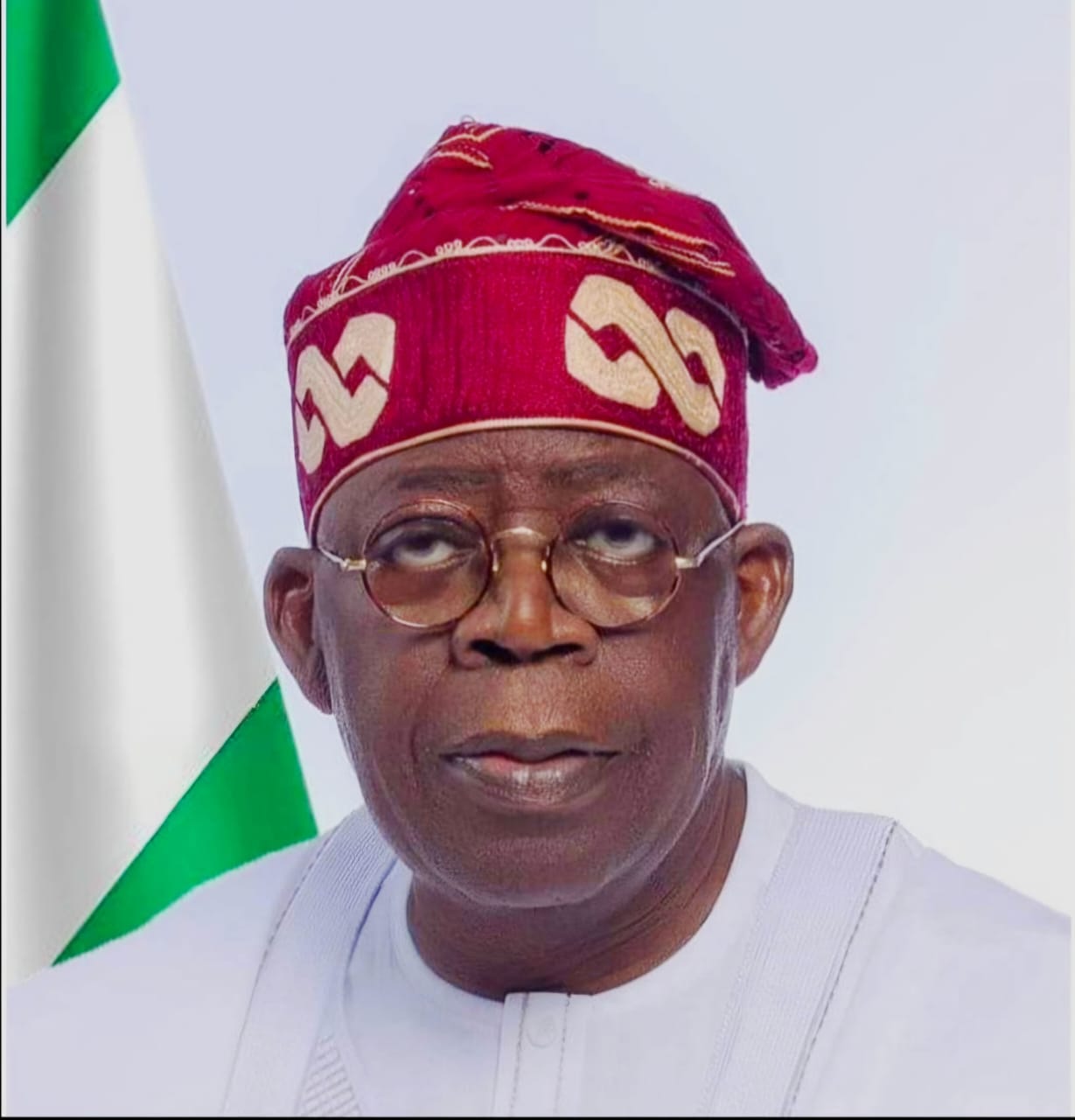
Panelists at The Toyin Falola Interviews on Sunday identified poverty, social exclusion, and systemic marginalisation as major forces driving Nigeria’s worsening insecurity, warning that the crisis reflects deep failures in governance, justice, and social inclusion.
The discussion, themed “Nigeria: Insecurity Problems,” brought together prominent scholars and analysts who argued that the country’s security crisis cannot be solved through military or policing strategies alone because its origins lie in broader structural and socio-economic problems.
The session featured Dr. Hussain Abdu, a public intellectual and international development leader; Dr. Sam Amadi, policy strategist and Director of the Abuja School of Social and Political Thoughts; Dr. Aderonke Esther Adegbite, Associate Professor of Law at Lead City University; and Mr. Majeed Dahiru, journalist and public affairs analyst. The discussion was moderated by Professor Babafemi Badejo, while the programme was hosted by renowned historian Toyin Falola.
Broadcast across multiple digital and broadcast platforms, the event drew a global audience of academics, policymakers, security professionals, and members of the public. Organisers said more than 8.4 million viewers from over 26 countries followed the programme via Facebook, YouTube, Zoom, radio, and television.
Opening the discussion, Dr. Hussain Abdu argued that Nigeria’s insecurity should be seen primarily as a social crisis rather than a purely military or policing problem.
“Insecurity has become a major issue in Nigeria,” he said, “but in the last two years I decided not to examine Nigeria’s current situation from a simple security perspective. I see this more as a huge social security crisis that has presented insecurity as one of the symptoms.”
According to Abdu, treating insecurity only as a security challenge has limited the country’s ability to address its root causes.
“When we see it simply as a security problem, we assume that technocratic fixes will solve it — more arms and ammunition, more policemen, more forest guards, more soldiers, more vigilantes,” he explained. “That is the usual approach. But we have seen all of this not working in the last 25 years.”
He noted that insecurity has spread widely across the country.
“Practically every part of Nigeria has one element of insecurity or the other,” Abdu said. “There is virtually no part of Nigeria that is immune. And when a problem becomes that pervasive, isolating and examining such insecurity concerns does not allow for proper diagnosis.”
Tracing the history of banditry in northern Nigeria, he argued that today’s violence developed gradually from earlier rural conflicts.
“When you mention banditry, the first thing people think is that it just appeared one day. But that is a simplistic analysis,” he said, referring to earlier challenges such as cattle rustling and the phenomenon locally known as “Kwonta Kwonta.”
Dr. Aderonke Esther Adegbite said insecurity in Nigeria should be understood as a complex phenomenon involving social, economic, political, and moral dimensions.
“Insecurity is not limited to physical insecurity; it is a multidimensional concept,” she said. “We could have cyber insecurity, social insecurity, political insecurity, economic insecurity, health insecurity, food insecurity. They are all interwoven.”
According to her, the erosion of trust between citizens and institutions has worsened the crisis.
“Insecurity is that state of uncertainty and unsafety where the victim no longer has faith in any institution — whether government or stakeholders — to provide recourse,” she said.
She raised questions about the moral breakdown accompanying insecurity.
“At what point will a person decide to pick up arms against another person in the same country? At what point will someone decide to rape another person within the same community? At what point will a leader sacrifice his community members just to remain in power?”
Her answer, she said, lies in deep experiences of marginalisation.
“In my opinion, this happens when that person has suffered from one of these several forms of insecurity that we have identified,” she said.
Adegbite added that insecurity. intensifies when social responsibilities collapse.
“When my obligation to you is no longer relevant to me, when government’s obligation to protect the citizen is no longer important to the government, then there will be insecurity,” she noted. “When neighbours no longer see themselves as obliged to live in peace, insecurity becomes inevitable.”
Dr. Sam Amadi traced the country’s crisis to weakening rule of law and economic injustice.
“Nigeria is one of the most terrorised, fragile, insecure countries in the world today,” he said. “The problem is that we have seen deterioration in the status of the rule of law.”
“There is a sense in which law and order breaks down because the law is unbinding,” he added. “It does not bind the criminal, neither does it bind those who exercise state authority.”
He described the situation as widespread lawlessness.
“The rules are absent and also indeterminate,” he said. “The culture, procedures and norms that should make those laws tick are absent.”
Amadi also pointed to poverty and inequality as key drivers of instability.
“There are gross socio-economic iniquities across the regions of the nation,” he said. “Many people in Nigeria are living below minimum. They lack the fundamental dignities of life.”
“This group of left-behinds is a growing army that is in a state of war with society, and the society appears to be against them,” he warned.
Journalist Majeed Dahiru argued that the roots of the crisis lie in the historical structure of the Nigerian state.
“Our founding fathers negotiated from the British authorities a Nigerian state that was structured ab initio along ethno-geographic and religious fault lines,” he said.
“Nigeria was structured in a way that made assimilation very difficult,” he added. “The concept of national citizenship was absent right from the beginning.”
“Identity politics became the norm,” he said. “There was no collective aspiration for the development of a Nigerian interest.”
Dahiru argued that this system created a political culture based on patronage and corruption.
“It became a zero-sum game where the winner takes all,” he said. “Corruption in Nigeria became culturally, politically, traditionally, and religiously a legitimate tool to extract reward from the common pool — what we call the national cake.”
“What we are dealing with in Nigeria goes beyond crime and criminality,” he said. “What we are dealing with are centres of grievances that have deep legitimate roots in the various sections where they are operating.”
“Whether it is Boko Haram in the North, IPOB in the South-East, or agitations for resource control in the Niger Delta,” he added, “these are expressions of accumulated grievances within the Nigerian state.”