Follow Us on Google
By Doris Obinna
Medical experts have called for the integration of African traditional medicines into modern healthcare, highlighting training and documentation as key to strengthening evidence-based practices in the sector.
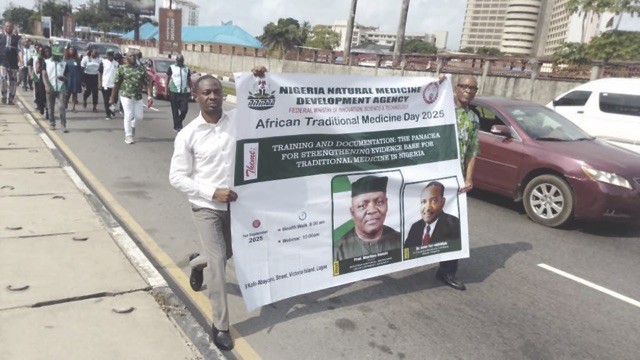
They reiterated this at a webinar organised by the Nigeria Natural Medicine Development Agency (NNMDA), in commemoration of the African Traditional Medicine Day 2025, with the theme: “Training and Documentation: The Panacea for Strengthening Evidence Base for Traditional Medicine in Nigeria.”
Observed every year on August 31, this year’s theme focused on supporting the growth of traditional medicine, including the use of herbs and plant-based preparations (herbal medicines), as well as practical procedures such as traditional bone setting, dieting, herbal therapies, bathing, massage, and surgical procedures.
Speaking, Neurotoxicologist and Integrative medicine expert, Dr. John Tor-Agbidye pointed out that training and documentation were important in building trust and credibility in traditional medicines. According to him, research and development in traditional medicine can only make meaningful progress if it is culturally relevant and widely accepted.
Dr Tor-Agbidye, who is the President, In-Country Medicare Ltd, highlighted the benefits of documentation to include integration into national health systems, encourage innovation and new drug discovery, and protect the cultural heritage for future generations.
He recommended strengthening laws and empowering Traditional Medicine Council, establishment of Traditional Medicine colleges & documentation centers, providing funds, and incentives as well as raising public awareness of evidence-based Traditional Medicine. He noted the evolution of medicine through several phases and underscored the relevance of integrative medicine in modern healthcare delivery.
“Today, we are in the era of Medicine 4.0 (the fourth industrial revolution) to healthcare and medicine. Integrative medicine bridges traditional knowledge with scientific innovation, and this is the pathway to stronger healthcare systems,” he explained.
In her contribution, the pioneer Head of Department, Traditional, Complementary and Alternative Medicine, Federal Ministry of Health, Hajiya Zainab Shariff, pointed out that the country had professional herbal practitioners who could turn natural medicinal plants into ready-to-use medicines for various ailments.
Hajia Sharif who said it was time for practicality of research and discussions, stated that things are beginning to change with recent innovations brought by advancements in technology and research findings.
Earlier in his remark, Director General, NNMDA, Professor Martins Emeje, reiterated the enduring significance
the Africa Traditional Medicine Day, said it has been an annual event for the past two decades celebrating the integral role of traditional medicine in the health and welfare of generations of people on the continent.
According to him, traditional medicine is a must to us as African and must be studied not only as health practice but also as part of language, culture, and spirituality. “There are plans for community health clinics across the country to expand access to natural and traditional healthcare.
“Researchers should dedicate time to understanding the indigenous languages in which traditional medicine knowledge is expressed. Integration with national health policy should respect community knowledge and safety while ensuring standards,” he added.
He further emphasized the need to preserve indigenous languages and cultural practices as part of traditional medicine research, while calling for unity and justice in integrating traditional medicine into national healthcare.
The medical experts charged the NNMDA to collaborate with the National Agency for Food and Drug Administration and Control (NAFDAC) and the Pharmaceutical Society of Nigeria (PSN) to commercialise some of its medicines.
They praised the progress of the NNMDA, highlighting its recent achievement of creating a digital database of traditional medicine practitioners and services, which is expected to evolve into a national registry.
The meeting closed with renewed commitment to strengthen the sector, with participants agreeing that Africans should have the freedom to choose their own path to health while safeguarding the heritage of traditional medicine.