Follow Us on Google
By Ola Muhammad, Birnin Kebbi
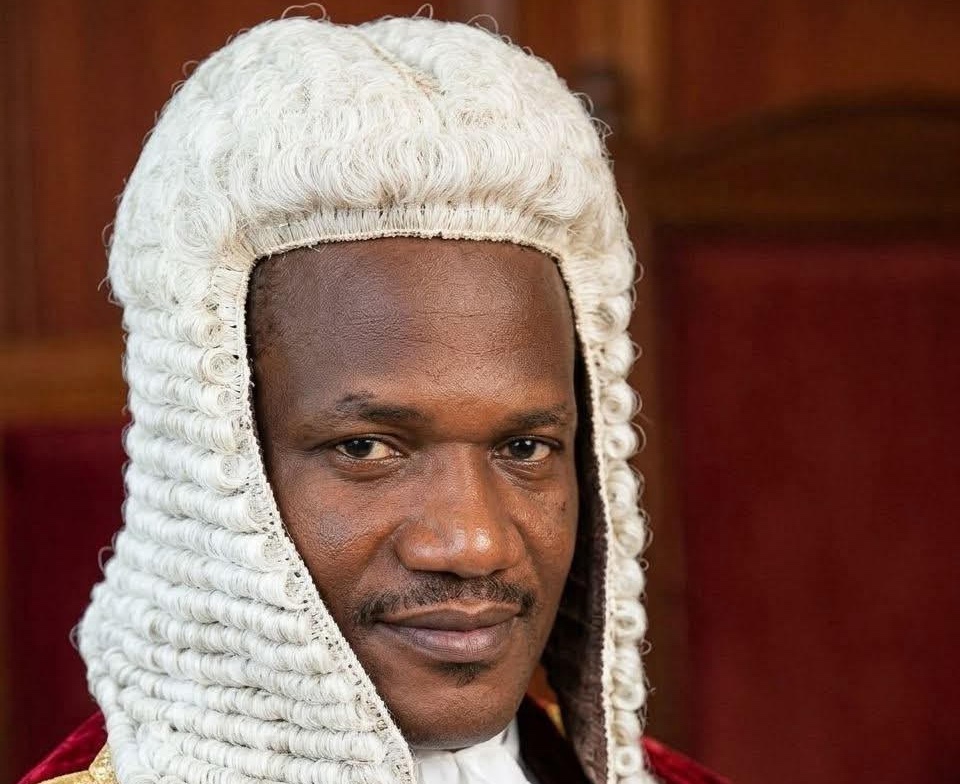
The legal fraternity and the nation mourn the passing of Hon. Justice Umaru Atu Kalgo (Rtd.), JSC, CON, a distinguished jurist, elder statesman and former Justice of the Supreme Court of Nigeria.
According to a resident of the Kalgo community, who wished to remain anonymous, the retired jurist died at about 3:00 am on Tuesday morning after a prolonged illness and was buried by 2:30 pm in Sokoto in accordance with Islamic rites.
His transition, it was noted, marks the end of an era for a legal icon who dedicated nearly five decades of his life to the service of the law, justice and the Nigerian judiciary.
According to records, the late jurist was born on May 12, 1937, in Kalgo, Kebbi State (then part of the North-Western State). He attended Elementary School Kalgo, Middle School Sokoto, Middle School Birnin-Kebbi and Government College Zaria (1953–1958).
Late Justice Kalgo pursued legal studies at the Institute of Administration, Ahmadu Bello University (ABU), Zaria; Council of Legal Education, London; College of Law Holborn, London; and the Nigerian Law School, Lagos. He was called to the Nigerian Bar in 1965.
Other News
Kalgo JSC began his career as an Administrative Officer in Northern Nigeria before transitioning to State Counsel (1965–1972) and later Deputy Solicitor-General of the North-Western State. He was appointed High Court Judge for Kano and North-Western State in 1974, later serving on the Sokoto State High Court Bench. He was elevated to Chief Judge of Sokoto State on January 1, 1981, serving with distinction until 1988.
Kalgo JSC was appointed Justice of the Court of Appeal in February 1988 and was later elevated to the Supreme Court of Nigeria on November 25, 1998, where he served honourably as a Justice of the Supreme Court (JSC) until his statutory retirement at age 70 in May 2007.
Major contributions to the legal profession and development of Nigerian jurisprudence: He penned numerous landmark judgments across constitutional, civil and criminal law during his tenure at the Appellate Court and Supreme Court, leaving behind a rich legacy of case law.
Justice Kalgo played critical roles in national law reform, including serving on the Constitution Review Committee (1987–1988), the Constituent Assembly (1988–1989) and the Law Revision Committee for the Laws of the Federation (1990).