Follow Us on Google
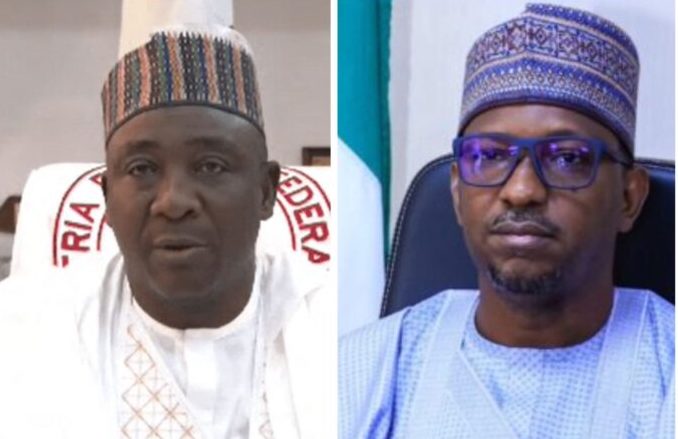
The immediate past leadership of the Nigeria Football Federation (NFF), led by former president Ibrahim Gusau, has pushed back against remarks by National Sports Commission (NSC) Chairman Shehu Dikko comparing federal government funding received by the Federation under Gusau and his predecessor, Amaju Pinnick, insisting the figures require proper context before conclusions are drawn.
Dikko’s Comparison
Speaking on Arise TV over the weekend, Dikko said the Federal Government disbursed about N15bn in total to the NFF during Pinnick’s eight-year tenure between 2014 and 2022, compared with N17bn released in a single cheque under the Gusau-led board. He cited the disparity to press the case for stronger financial accountability and compliance at the Federation, warning that football stakeholders must lead reform themselves or risk having change imposed on them from outside.
Outgone Board Responds
Reacting swiftly, the immediate past NFF leadership said it did not dispute Dikko’s figures, acknowledging that the N17bn intervention did exceed the Federation’s cumulative government funding across the entire Pinnick era. However, it cautioned strongly against treating the volume of funding alone as evidence of wrongdoing, arguing that the Gusau administration had inherited substantial financial debts from the Pinnick-led board, and that a full account of how the N17bn was applied would show a significant portion went toward settling those prior liabilities.
“Of course, N17bn is a fairly tidy sum, but don’t forget that the Gusau-led board inherited lots of debts from the previous board, and one of those huge debts was the 23-month backlog of coach Jose Peseiro’s $70,000-a-month salary. Peseiro’s unpaid salary alone gulped over a million dollars,” a member of the last board said.
“Unfortunately, this was the same salary that the previous board claimed had been bankrolled by Aiteo, but that was not the case — it was the Gusau board that cleared the mess.”
The board member added that the debts inherited from the Pinnick administration also included outstanding match allowances and bonuses owed to Super Eagles players, some dating as far back as qualifiers for the 2018 FIFA World Cup in Russia. He maintained that funding volume “should not be mistaken, on its own, for evidence of impropriety,” insisting that a large chunk of the N17bn intervention was consumed by servicing debts left behind by the Pinnick board rather than being freely available for new spending.
Other News
A Second Source Weighs In
A separate source close to Gusau, speaking independently in Abuja, echoed the same position while also commending President Bola Tinubu’s investment in Nigerian sport more broadly. The source said a significant share of the N17bn went toward settling historical debts, backdated allowances and other liabilities that had accumulated under the Pinnick board — a board on which Dikko himself served as second vice president.
“They say whoever calls for equity must come with clean hands. Can Dikko himself exonerate himself from the mess befuddling Nigerian football, having participated fully on the Pinnick-led board?” the source asked rhetorically, suggesting Dikko bore some responsibility for the very financial legacy now being scrutinised.
“I think some of these clarifications were necessary, because receiving more funding than a previous administration isn’t, by itself, evidence of anything improper. Rather, the question that matters is how it was applied — and without any contradiction, the Gusau-led board used the major part of that N17bn fund to clear the debts left by the Pinnick board,” he added.
The Exchange-Rate Argument
The source further contended that, in real terms, the N15bn received under Pinnick and Dikko was actually larger in value than the N17bn received under Gusau, once currency depreciation is factored in. He noted that during Pinnick’s tenure the naira traded at between roughly N200 and N600 to the dollar, whereas by the time the N17bn intervention was disbursed under Gusau, the exchange rate had fallen to about N1,500 to the dollar — meaning the dollar value of the more recent sum was considerably lower despite the larger naira figure.
As of now, Dikko has not issued a further response to the claims made by the former board members.