Follow Us on Google
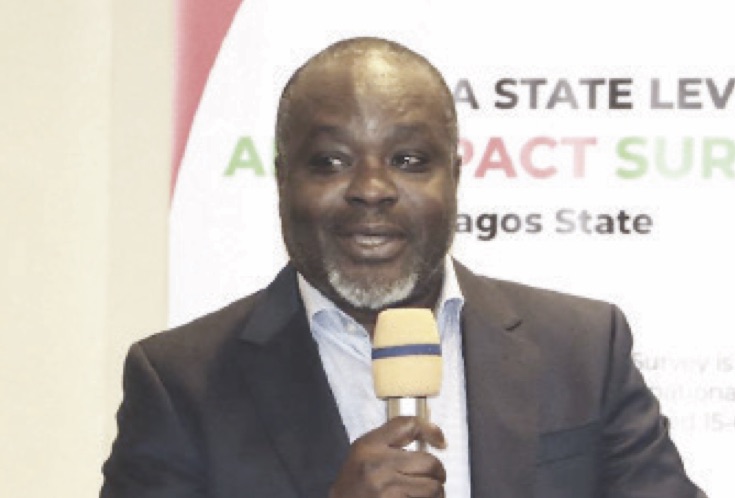
•FG, Lagos team up against HIV epidemic
By Doris Obinna
In the fight against HIV, every number represents a human life, every statistic tells a personal story. Nigeria took a decisive turn as the Lagos State Government, in partnership with the Federal Ministry of Health and international partners, rolled out the Nigeria State-Level Antiretroviral Therapy; ART Impact Survey (AIS). A first of its kind at the state level, revealed how far the state has come in treatment coverage and viral suppression and how far it still needs to go.
At a town hall meeting held on Tuesday in Lagos, stakeholders gathered under the theme “Every Step Counts: Towards an HIV-Free Nigeria” to officially flag off the Lagos phase of the nationwide survey. The exercise, supported by the U.S. President’s Emergency Plan for AIDS Relief (PEPFAR), U.S. Centers for Disease Control (CDC), National Agency for the Control of AIDS (NACA), National AIDS and STIs Control Programme (NASCP), Nigeria Centre for Disease Control (NCDC), APIN Public Health Initiatives, and other implementing partners, will cover 205 enumeration areas, 6,150 households, and approximately 11,397 participants across Lagos’ 20 local government areas.
Speaking, Permanent Secretary, Lagos State Ministry of Health, Dr. Olusegun Ogboye, highlighted the importance of the survey in shaping evidence-based HIV response strategies. “This is an impact survey that will assess HIV prevalence, treatment coverage, and viral load suppression among adults in Lagos. We count on the cooperation of communities, security agencies, and field workers to make it successful. The results you generate will shape national health planning.”
He urged survey teams to approach their work with diligence and integrity, noting that each participant’s contribution was vital to the accuracy and credibility of the exercise.
People-centered exercise
Deputy Director, Epidemiology and Strategic Information at the U.S. CDC, Dr. Ibrahim Dalhatu, disclosed that the initiative represents more than data collection. “This is ultimately about people the same people who will be engaged and who will benefit from the exercise.”
Dalhatu reaffirmed CDC’s commitment to providing technical support, stressing that community access and acceptance were crucial to ensuring credible results.
Similarly, Deputy Director of Prevention at NASCP, Dr. Chioma Ukanwa, underscored the global significance of the survey, calling it “a vital step towards epidemic control.” She urged community leaders to champion sensitization efforts, noting that cooperation at grassroots level would determine the survey’s success.
On his part, the Lagos State AIDS Programme Coordinator, Dr. Oladipupo Fisher, presented the community mobilization and advocacy strategy for the exercise. He explained that the success of the AIS would depend heavily on grassroots participation.
“The mobilization process will be carried out before, during, and after data collection using strategies such as poster placements, town hall meetings, door-to-door visits, and targeted household outreach,” Fisher said. “Our aim is to saturate communities with AIS messages, build trust, and dispel myths about HIV testing.”
According to him, 30 survey teams, supported by trained community mobilizers, will engage directly with residents, distribute brochures, respond to questions, and encourage households to cooperate with field workers.
Progress towards HIV epidemic control
For many stakeholders, the AIS represents both an evaluation of progress and a roadmap for future action. Director of Research, Monitoring and Evaluation at NACA, Mr. Francis Agbo, noted that Lagos was the “next frontier” following a similar survey in Akwa Ibom. “The indicators will help us track progress towards HIV epidemic control and plan for the future,” he added.
Dr. Williams Nwachukwu of the NCDC assured of technical oversight to guarantee quality data collection and analysis, while Dr. Dare Onimode, Project Director of the APIN-PHIS3 Project, described the initiative as another milestone in Nigeria’s fight against HIV.
Representing the Network of People Living with HIV/AIDS in Nigeria (NEPWHAN), Mr. Patric Akpan pledged the community’s full support. “It is essential to generate accurate data because reliable data from Lagos will inform sound policy decisions for Nigeria,” he said.
Towards an HIV-free Lagos
Director of Disease Control at the Lagos State Ministry of Health, Dr. Victoria Egunjobi, stressed the importance of community participation. “Gone are the days when HIV was shrouded in stigma. Today, people living with HIV deserve dignity, respect and universal access to healthcare. This survey is about evaluating progress and closing gaps.”
“With Lagos State Nigeria’s economic hub and most populous state now in focus, the AIS is expected to generate the most reliable state-level data yet, shaping treatment coverage, guiding viral suppression strategies, and ultimately steering the nation closer to the goal of an HIV-free generation.”