Follow Us on Google
From Okwe Obi, Abuja
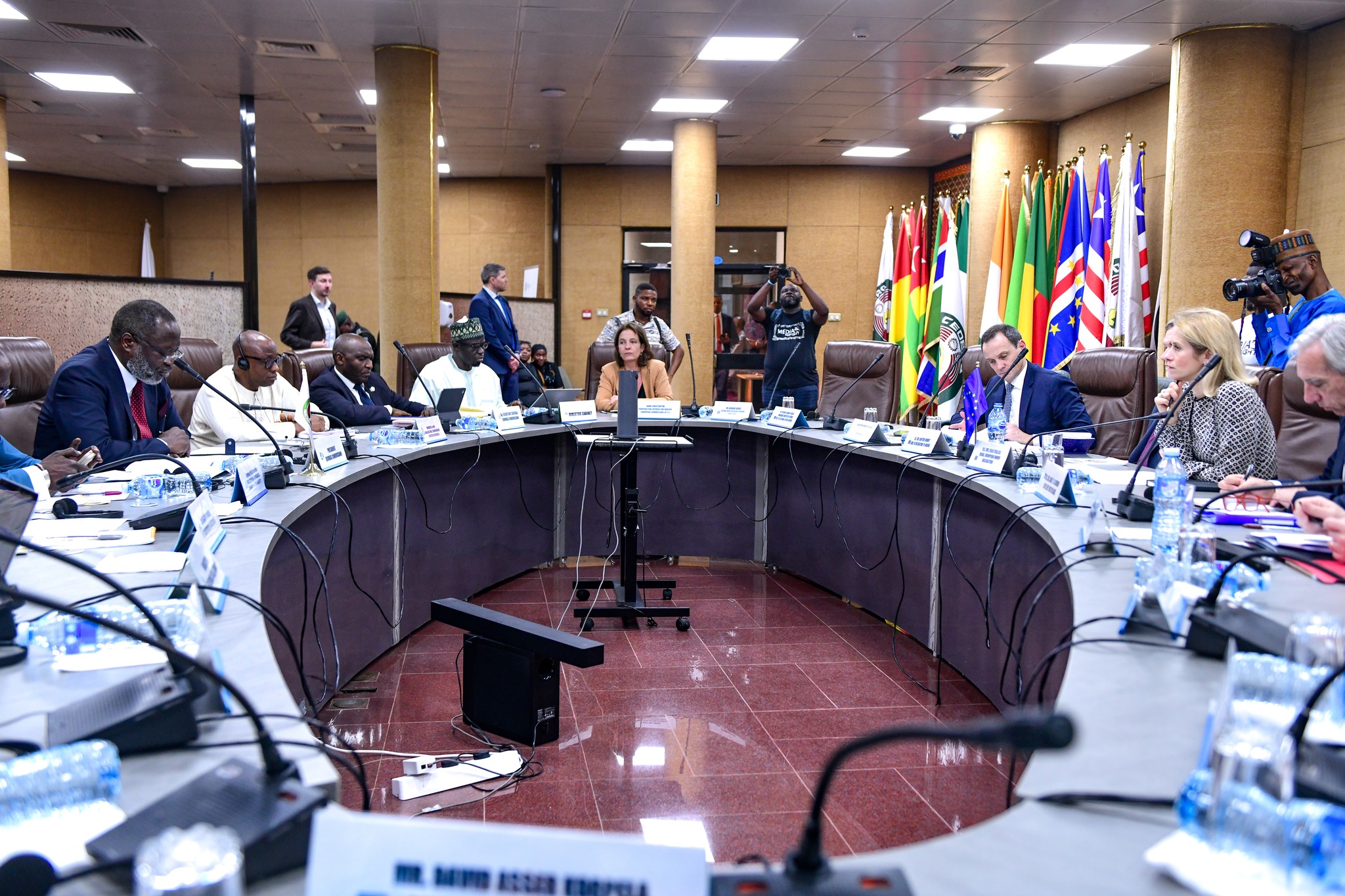
The European Union, the Czech Republic, Austria and Latvia have launched the Twinning Project to improve food security and food systems using climate-smart technologies in Nigeria.
The programme, which is implemented under the EU–Nigeria Twinning Project, is aimed at deploying expertise from the Czech Republic, Austria and Latvia to work with Nigeria to advance climate-smart agriculture and strengthen sustainable food systems in the country.
Minister of State for Agriculture and Food Security Aliyu Sabi Abdullahi, who spoke after the launch of the EU–Nigeria Twinning Project in Abuja, lauded the EU and its member states for their commitment to strengthening Nigeria’s agricultural sector.
Abdullahi noted that Nigeria’s agricultural sector is faced with increasing challenges arising from climate change, variability in rainfall patterns, droughts, floods, land degradation, and emerging pests and diseases, which are affecting agricultural productivity and threatening the livelihoods of farmers.
The minister stressed the need to strengthen the nation’s agricultural systems to become more resilient, productive and sustainable, hence the importance of climate-smart agriculture.
According to him, climate-smart agriculture is not only about responding to climate change but also about transforming agriculture to ensure that farmers can increase productivity while protecting the environment and adapting to changing climatic conditions.
Other News
He stated that through the EU-Nigeria Twinning Project, Nigeria will gain valuable technical expertise and knowledge exchange with European partners. It will also help to review the country’s National Agricultural Resilience Framework and develop technical guidance on climate-smart agriculture techniques, with the goal of improving the policy environment and aligning it with international best practices.
On his part, the Ambassador and Head of Delegation of the EU to Nigeria and ECOWAS, Gautier Mignot, noted the importance of agriculture to Nigeria’s economy and activities. However, he said the sector is faced with significant challenges, including climate change, environmental pressures, food insecurity and structural constraints.
Mignot stated that addressing these issues requires not only investment but also strong institutions and effective, well-implemented policies, adding that the project will support a comprehensive review of the National Agricultural Resilience Framework Policy (NAF) and related climate-smart agriculture policies.
“It will identify key gaps and provide practical recommendations to strengthen implementation.
“The ultimate objective is to enhance institutional capacity and ensure that policy is translated to technical improvements for farmers, agribusinesses, and communities across Nigeria. As was said, the twinning is a very powerful instrument that we’ve been using in the EU for decades now,” she said.
Also, the Director of Planning and Policy Coordination, Ibrahim Tanimu, stated that the project is significant because it brings together technical expertise from European institutions and Nigerian professionals to work jointly on critical areas of agricultural policy and climate-smart development, which will translate into resilient agriculture for food security in the country.
He added that the project responds to emerging challenges, particularly those posed by climate change, food security and the evolving transformation of global food systems, and will assist in the development of technical guidance on climate-smart agriculture practices. This, he said, will translate policy into practical, implementable actions for farmers, institutions and other critical stakeholders across agricultural value chains.